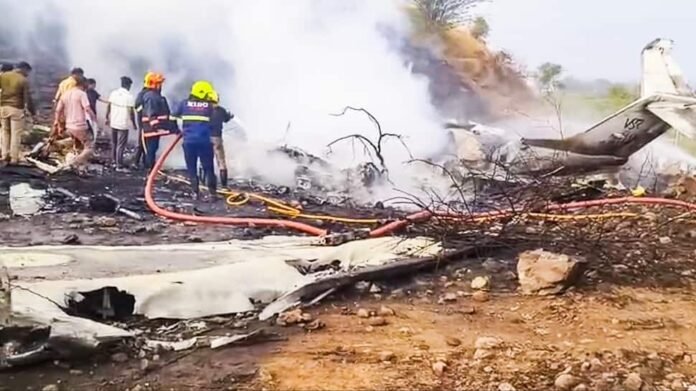
Following the tragic private jet crash in Baramati that claimed five lives, including a prominent political figure, many have questioned why these aircraft aren’t equipped with emergency parachutes. Aviation safety experts explain that while parachutes might seem like a logical safety measure, several critical factors make them impractical and potentially dangerous for private jet travel.
High-Speed Physics Makes Evacuation Impossible
Business jets like the Bombardier Learjet 45 typically cruise at speeds exceeding 800 km/h (500 mph). At such velocities, the air pressure against the fuselage becomes comparable to a solid wall. Any attempt to exit the aircraft at these speeds would result in severe or fatal injuries before a parachute could even deploy.
Cabin Pressurization Creates Physical Barriers
Modern business jets maintain pressurized cabins for passenger comfort at high altitudes. This pressurization creates thousands of pounds of force against the aircraft’s doors, making them physically impossible to open during flight without first depressurizing the cabin—a dangerous procedure in itself.
Structural Design Limitations
Unlike military transport aircraft with rear loading ramps, private jets typically feature side-entry doors positioned forward of the wings and engines. This configuration creates two lethal hazards for potential jumpers: the risk of being pulled into the rear-mounted engines and the danger of striking the tail section due to high-speed airflow patterns.
Environmental Challenges at Cruising Altitude
At typical business jet cruising altitudes of 35,000 to 45,000 feet, two deadly environmental factors make parachute use unfeasible:
– Oxygen deprivation causing unconsciousness within 15-30 seconds
– Extreme temperatures as low as -50°C (-58°F) leading to immediate frostbite
The Low-Altitude Reality
Aviation safety data reveals that 90% of accidents occur during takeoff or landing phases. In these low-altitude situations, there simply isn’t sufficient time or height for parachute deployment to be effective.
Whole-Aircraft Parachute Systems
While some smaller aircraft utilize Ballistic Recovery Systems (BRS) that can lower the entire plane, this technology remains unfeasible for business jets. Current parachute materials and deployment systems cannot safely manage the weight and kinetic energy of aircraft exceeding 9,000 kg (20,000 lbs) without risking structural failure or parachute collapse.