
Toronto Launches Controversial Flood Mitigation in Rockcliffe-Smythe
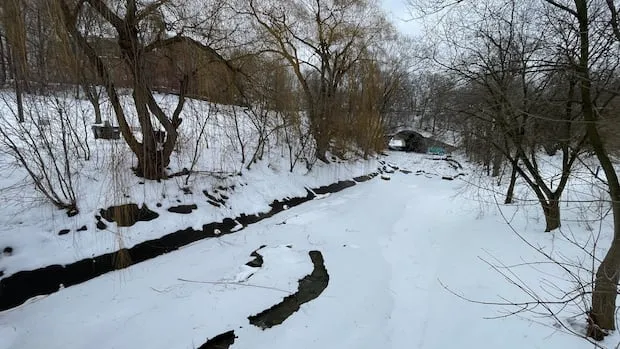
Starting this month, Toronto begins removing 847 trees as part of a flood mitigation project aimed at protecting the vulnerable Rockcliffe-Smythe neighbourhood. The initiative includes widening Black Creek and replacing the Jane Street and Scarlett Road bridges. However, local residents and community advocates argue the plan lacks scientific rigor and could exacerbate flooding.
“Fixing the bridges over here without knowing how to fix the problem upstream is like putting the cart ahead of the horses,” stated Antia Gonzalez Ben, a member of the Black Creek Flood Coalition (BCFC).
Long-Standing Flooding Woes
Nearly 2,500 residents have endured repeated floods and sewage backups, incurring thousands in damages and repairs. Both the city and the Toronto and Region Conservation Authority (TRCA) acknowledged the issue, leading to an environmental assessment in 2013 that shaped the current strategy.
BCFC members, including Sarah McVie, highlight that the plan overlooks the primary trouble spot: a 12-metre upstream channel in Black Creek from Weston Road to Hilldale Road, home to most affected residents. McVie notes the strategy relies on a computer model with flawed calculations, as identified by independent water resources engineer Tim Mereu.
The TRCA confirmed modeling software issues during a recent meeting with McVie, Mereu, and others, though the project now falls under city oversight.
Resident Rally and Demands
Locals rallied at Smythe Park last weekend, where some trees face removal, demanding a project redesign and a dedicated city coordinator. “Every house needs an emergency preparedness kit and we need a coordinator … someone managing the situation,” McVie emphasized.
The three-phase project kicks off with bridge work this late summer or early fall. City spokesperson Krystal Carter affirms the modelling shows significant risk reduction. “Modelling results are consistent with the environmental assessment,” she stated. “Work to increase the span of the Jane Street bridge will begin first, as it provides flood risk relief to the greatest number of properties.”
Carter added the city welcomes resident feedback and ongoing engagement.
Engineer’s Critique of Modeling
Tim Mereu, drawn to the issue four years ago via his son’s area near Lavender Creek, scrutinized the assessment. He found discrepancies: TRCA data claimed frequent floods there, yet residents reported none in decades. The plan widens downstream channels but ignores upstream ones near hardest-hit homes.
Mereu pinpointed model flaws—omitting friction and water speed changes, inflating flow estimates. “Both the physical model I created and reflecting on the error of friction … it is very clear that this little section of channel will continue to flood and therefore the 200 homes will continue to be at risk of flooding,” he explained. Mereu urges halting work for a physics-based overhaul: “A model is just a tool to come up with an answer. There’s physics involved, and the solution has to adhere to the laws of physics.”
In December, the city issued terms for an engineering consultant, including recalculation checks. A January TRCA meeting admitted model anomalies. TRCA’s Sameer Dhalla, director of engineering services, acknowledged technical concerns and plans resolution in the design phase, with more resident meetings ahead.
Despite critiques, the project advances to design and construction, prioritizing bridges.