
Alberta’s latest budget triggers a second consecutive hike in the education property tax rate, targeting $3.6 billion in revenue. Calgary faces a $1.2 billion requisition, meaning 42 cents of every property tax dollar collected in the city flows to the province.
Mayor’s Strong Objections
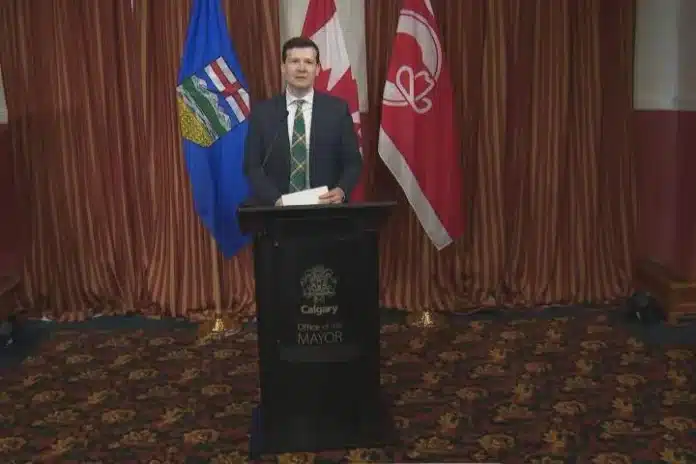
Calgary Mayor Jeromy Farkas voiced sharp disappointment over the budget’s effects on local taxpayers during a Friday press conference. “It is looking a lot like Calgary’s deal in Alberta is very similar to what Danielle Smith says Alberta’s deal is in Canada,” Farkas stated. “But, for us, we want to come to the table, we want to be collaborative, we want to work with the provincial government.”
While acknowledging positives like funding for affordable housing and seniors’ home maintenance, Farkas questioned the value Calgarians receive in return. The hike adds an estimated $340 to the annual bill for a typical Calgary homeowner. In contrast, the city’s December budget limited its property tax rise to 1.6 percent, costing the average homeowner $54 more in 2026.
“We did the work,” Farkas told reporters. “To have a scale of increase 10 times the tax increase being lobbed by the provincial government in a single year without any kind of head start or notice, that is just incredibly egregious.”
Provincial Investments and Omissions
The budget allocates billions for Calgary projects, including continued support for the Green Line LRT, Deerfoot Trail upgrades, and infrastructure near the new event centre. It also provides $67 million over three years for the city’s court of appeal and $10 million for the Office of the Chief Medical Examiner. Additional boosts target facilities like the Foothills Medical Centre Neonatal Intensive Care Unit, Calgary Radiopharmaceutical Centre, Alberta Kidney Care, Bethany Continuing Care Centre, and Bridgeland Riverside Continuing Care Centre.
However, Farkas highlighted the absence of funding for the Prairie Economic Gateway project and the Bearspaw feeder main, which requires urgent replacement after two ruptures in under two years. “If there wasn’t a huge tax increase, I wouldn’t be expecting add-ons for the City of Calgary,” he noted.
Finance Minister’s Defense
Finance Minister Nate Horner justified the increase at a Calgary Chamber of Commerce luncheon, explaining it covers one-third of the $10.8 billion education operating budget. “We didn’t want to put it all onto folks in one year, so we staggered it over two,” Horner said. “I’m surprised that everyone is this surprised, to be honest.”
He emphasized that school construction dominates capital spending, with 14 of 40 new schools planned for Calgary.
Councillors Weigh In
Ward 10 Coun. Andre Chabot, attending the event, argued the investments address provincial duties rather than municipal needs. “The majority of the things he was talking about are things that fall under provincial obligations, not municipal obligations,” Chabot said. “He didn’t talk about water infrastructure for the City of Calgary, he talked about infrastructure, alright, but provincial infrastructure.” He described the budget as “seriously lacking” municipal support.
Ward 13 Coun. Dan McLean called the tax rise a “tough sell” for residents. “This is going to be a really tough sell to Calgarians,” McLean said. “I think it’s very important that we let our residents know what the province is requesting from them and what the city is taking from them, because this is a large increase.”
City’s Planned Response
Farkas announced council will explore responses, potentially including separate property tax bills for residents. A special meeting is set for March 4 to debate options.
For comparison, Edmonton’s education property tax requisition totals nearly $640 million, adding about $154 to the typical homeowner’s bill this year.