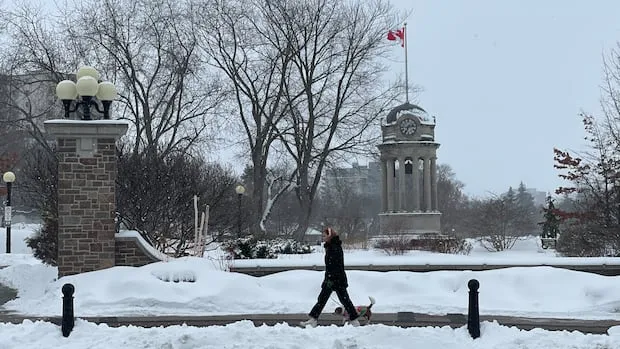
A frigid opening week in February, with temperatures plunging to –28°C, shaped a month that finished one degree below average. This chill extended across the meteorological winter—December through February—in Waterloo region, averaging two degrees below normal and marking the coldest season since 2014-15.
February’s Low Snow and Precipitation
Snowfall totaled 19.5 cm last month, significantly less than the typical 30 cm. Precipitation reached just 33 mm, roughly half the average of 62.7 mm.
Snow Season So Far
The cumulative snowfall for the season hit 226.0 cm by February’s end, tying for the highest recorded at that point. Significant March accumulations would be needed to claim the snowiest season on record.
Snow first fell on November 9. January delivered twice the average snowfall, while December ran three degrees colder than normal, ranking as the second coldest in two decades. November stands out as the snowiest since 1950.
Milder Weather on Horizon
Several storm systems swept southern Ontario in February, bolstering a snowy winter despite below-normal precipitation totals.
Forecasts predict milder conditions through mid-next week. Saturday highs may climb to 14°C, accompanied by shower chances and thunderstorm risks, with up to 15 mm of rain possible.
Flood Watch Activated
The Grand River Conservation Authority issued a flood watch across the entire Grand River watershed, citing melting snow, incoming rain, and risks of ice jams.
Current forecasts indicate relatively light-intensity rainfall continuing through today and Friday, and into the weekend. While projected totals vary, most forecasts call for 20 to 30 mm of rain over the next few days. The snowpack in the northern part of the watershed contains a significant amount of water content. Warm temperatures combined with expected rainfall will result in snowmelt and runoff.
High river levels and unstable ice heighten dangers near waterways. Officials urge extreme caution around all local water bodies.
March Temperature Outlook
Southern Ontario faces average to above-average temperatures in March. This winter brought decades-rare cold and snow to many Canadian regions, with larger temperature swings and active weather signaling spring’s approach.
Environment Canada meteorologist Geoff Coulson cautions that Arctic air will return mid-month. “For people who are not fans of winter, it looks like there’s still winter to get through before we get onto the other side,” Coulson stated.
Weather models for late March suggest potential storm systems featuring freezing rain and snow.