
Marine archaeologists have uncovered a Danish warship sunk by Admiral Horatio Nelson and the British fleet more than two centuries ago. The 19th-century vessel Dannebroge rests 15 meters beneath Copenhagen Harbour’s seabed, providing a direct connection to the historic 1801 Battle of Copenhagen.
The Urgent Excavation
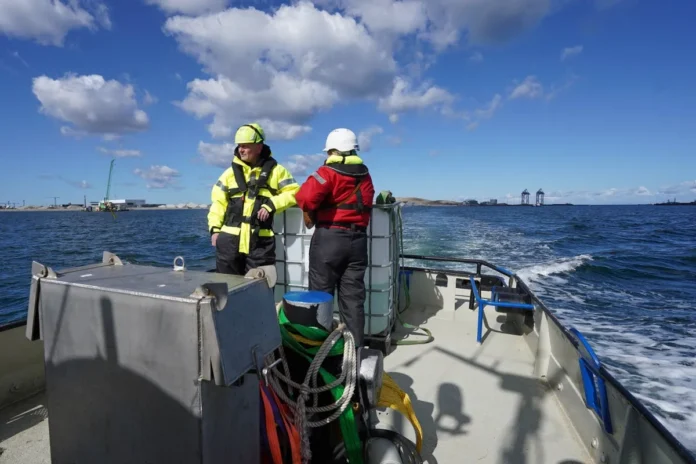
Divers work in near-zero visibility amid thick sediment to excavate the wreck before construction engulfs the site. Denmark’s Viking Ship Museum leads the effort, which marks 225 years since the battle. The area will soon become part of Lynetteholm, a major housing project set for completion by 2070.
Battle of Copenhagen: A Brutal Clash
Nelson’s fleet targeted Denmark’s navy during the blockade-breaking battle, resulting in thousands of casualties over hours of intense fighting. The 48-meter Dannebroge, commanded by Commodore Olfert Fischer, stood at the center as Nelson’s primary focus. Cannon fire ripped through its deck, followed by incendiary shells that ignited a blaze.
Morten Johansen, head of maritime archaeology at the museum, describes the ordeal: “It was a nightmare to be on board one of these ships. When a cannonball hits, wooden splinters fly everywhere, causing far more damage to the crew than the ball itself, much like grenade shrapnel.”
The conflict forced Denmark out of a Northern European alliance. Nelson ignored a superior’s signal, coining the phrase “turn a blind eye,” as he had lost sight in one eye. A truce followed, but the drifting Dannebroge exploded with a roar heard across Copenhagen.
Artifacts and Challenges
Excavators have recovered two cannons, uniforms, insignia, shoes, bottles, and part of a sailor’s lower jaw—possibly from one of 19 missing crew members. Wooden remnants match historical drawings, confirmed by dendrochronological dating to the ship’s construction year. Cannonballs litter the darkened site, stirred into silt clouds.
Diver Marie Jonsson explains the conditions: “Sometimes you can’t see anything, so you feel your way with your fingers instead of your eyes.” Additional finds include bottles, ceramics, and basketry fragments, bringing the crew’s stories to life.
National Significance
Johansen calls the wreck “a big part of Danish national feeling.” Long chronicled in books and paintings, the battle shaped Denmark’s history. Archaeologists aim to reexamine the event through these artifacts, revealing personal tales from 225 years ago.