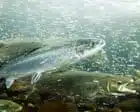
Traces of cocaine polluting rivers and lakes build up in salmon brains, altering their behavior and raising concerns for fish populations.
Study Reveals Changes in Salmon Movement
Juvenile Atlantic salmon exposed to cocaine and its primary breakdown product, benzoylecgonine, swam longer distances and dispersed more widely in a lake. These shifts suggest the pollutants influence fish positioning, feeding patterns, and exposure to predators.
While the full effects from sewage outflows remain uncertain, affected fish may expend extra energy or face heightened predation risks while foraging more actively, according to scientists.
“We don’t fully understand the consequences, but trade-offs likely occur,” stated Dr. Jack Brand from the Swedish University of Agricultural Sciences. “Fish could end up in poorer condition or forage more openly, increasing vulnerability.”
Experimental Design and Tracking
To assess real-world impacts, researchers implanted two-year-old hatchery-raised Atlantic salmon with devices releasing cocaine or benzoylecgonine at natural environmental levels. A control group received neutral implants. All fish carried acoustic transmitters.
The salmon entered Lake Vättern, Sweden’s second-largest lake at nearly 2,000 square kilometers, home to predatory pike. Sensors monitored movements for two months.
All groups settled over time, but cocaine-exposed salmon grew more active late in the study. In the final two weeks, they swam 5 kilometers farther than controls, while metabolite-exposed fish covered nearly 14 kilometers more—twice the distance. Exposed fish also ventured farther north, with metabolite effects most pronounced at 12 kilometers beyond controls, as detailed in Current Biology.
“The metabolite, present at higher wild concentrations, drove the strongest behavioral and movement changes,” Brand noted. “Risk assessments ignoring such compounds overlook major environmental threats.”
Broader Drug Pollution Concerns
Pollution from pharmaceuticals poses a growing biodiversity risk, prompting calls for eco-friendly drug formulations. Past reports highlight trout responding to methamphetamine and perch losing predator caution due to antidepressants. Tests in Suffolk rivers detected cocaine, methamphetamine, and psychiatric drugs in shrimp, though harm levels stayed unassessed.
Prof. Leon Barron, leading Imperial College London’s emerging chemical contaminants team, stresses verifying wild exposure effects against other aquatic chemicals.
“Improved wastewater management, including fewer raw sewage discharges, could mitigate ecosystem risks,” Barron said.
Standard treatments remove many illicit drugs effectively, but storm overflows and plumbing issues introduce raw sewage as a key waterway source.