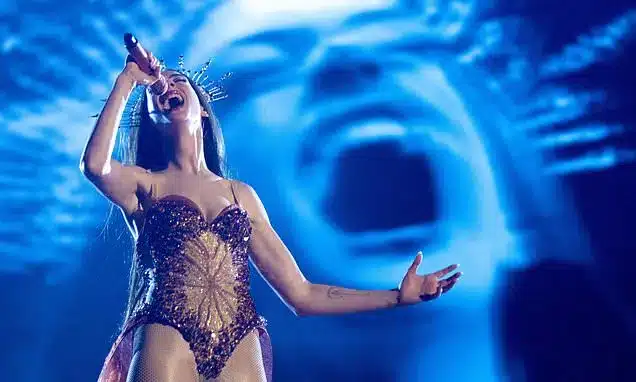
Mother Mary (15, 112 mins) Rating: Two out of five stars. Verdict: Over-the-top psychodrama.
Michael (12A, 127 mins) Rating: Two out of five stars. Verdict: Sanitized pop icon tale.
Mother Mary: A Wacky, Overstretched Spectacle
Imagine a flamboyant perfume ad extended to nearly two hours, blending psychodrama, supernatural horror, and original songs. Anne Hathaway stars as Mother Mary, a troubled pop superstar reminiscent of major icons, desperate for a stage comeback outfit.
Mary arrives disheveled at the home of her former English designer Sam (Michaela Coel), with just three days until her show. Sam seizes the chance for revenge amid their hinted past romance. This setup echoes the tension in couture tales like Phantom Thread, but director David Lowery piles on excess with body horror and a ghostly figure in red.
Lowery’s style recalls his superior A Ghost Story, yet here overwritten dialogue burdens the cast. Coel’s mannered delivery shines awkwardly in intense studio exchanges, heavy with verbose back-and-forth. Lines like Mary’s ‘I want what you want, but I want you to want it for the right reasons’ drag the pace.
Mary commands her fans’ devotion, halo-adorned, performing tracks like “Holy Spirit” amid dancers, but the film’s indulgence tires quickly.
Michael: Polished Yet One-Sided Jackson Biopic
This Michael Jackson film portrays the King of Pop as a messianic figure, focusing on triumphs up to 1988 while glossing over darker aspects. Jaafar Jackson, the icon’s nephew, delivers a striking resemblance in looks, voice, and moves, backed by family executive producers.
The story opens in 1966 Gary, Indiana, where father Joe Jackson drives his sons relentlessly, whipping dissenters and demanding rehearsals to escape steel mill drudgery. Young Michael recites Peter Pan, foreshadowing his Neverland ranch.
Success follows: Jackson 5 dazzles Motown’s Berry Gordy (Larenz Tate), Michael goes solo, undergoes nose surgery, fires Joe via fax from manager John Branca (Miles Teller), and suffers a fiery Pepsi ad mishap in 1984.
Director Antoine Fuqua and writer John Logan prioritize spectacle over nuance, omitting private life rumors like child abuse allegations or settlements. A sequel teases more, but depth remains absent. The $200 million budget fuels dazzling karaoke sequences in theaters now.
Both films screen in cinemas currently.