
Boston Mayor’s Office Allocates Taxpayer Funds for Security at ‘Trans Period Pride’ Event
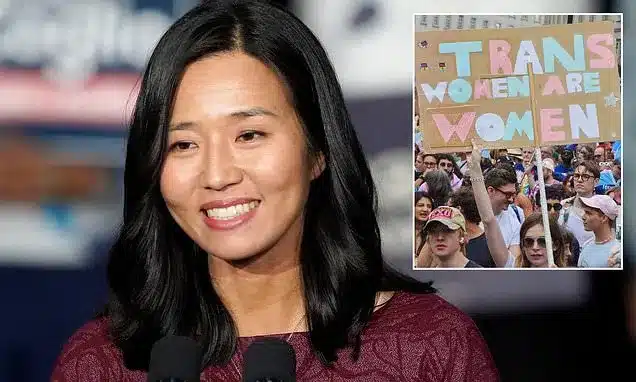
Boston’s mayor’s office has utilized taxpayer money to secure armed police presence at a ‘Trans Period Pride’ event, following significant public criticism. The office of LGBTQIA2S+ Advancement, in collaboration with local LGBTQ organizations, organized the event for June 17 at a Boston Public Library branch. Initially promoted as a “consciousness-raising conversation around transgender experiences with menstruation,” the event faced widespread national backlash and was subsequently canceled last week.
Event Proceeds Amidst Controversy with Enhanced Security
Despite the cancellation of the original event, Mayor Michelle Wu’s office is proceeding with plans alongside Mass NOW and the Massachusetts Transgender Political Coalition. This includes the engagement of armed guards for security. Organizers stated in a recent social media post, “Let us be clear: we are not backing down, we’re doubling down.” They described witnessing an “unacceptable wave of anti-trans hatred and misinformation” directed at the event and confirmed that due to the severity of some threats, the Boston Police Department will be present to ensure attendee safety.
The priority, according to organizers, is to guarantee a safe, confident, and fear-free participation for all attendees. The ‘Trans Period Pride’ event has not been canceled and will now take place at an undisclosed downtown Boston location from 6 to 8 p.m., moving from its originally planned Copley Square venue.
Focus on Inclusivity and Dignity for All Menstruators
An announcement detailed the event’s purpose: “to shed light on the specific challenges, stigmas and misconceptions that transgender people who menstruate face in an affirming, intimate community space.” Organizers emphasized their “unapologetic” commitment to supporting “all menstruators regardless of their gender identity and building a world where all people can access dignity, healthcare and community.” The initiative aims to dismantle barriers built by stigma, sexism, and transphobia, fostering a connection between personal experiences and political action while rejecting shame associated with menstruation and gender diversity.
Organizers reported close coordination with Mayor Wu’s LGBTQ office on safety protocols to manage potential disruptions. The groups expressed gratitude for supporters and looked forward to continuing their work together on June 17.
Event Details and City’s Financial Context
Attendees at the ‘Trans Period Pride’ event are slated to receive a catered meal and free period underwear, provided by Mayor Wu’s office and partner organizations. This announcement follows a week of mounting criticism towards Mayor Wu, who has been a vocal advocate for progressive causes, even as the city grapples with a substantial budget shortfall.
Boston is currently facing a significant deficit, with reports indicating a $50 million shortfall in the city budget and a $53 million deficit for Boston Public Schools, potentially leading to staffing cuts. This financial backdrop has intensified scrutiny on city spending. Notably, an LGBTQ group recently returned city grant funding after Wu’s administration initiated a program offering $500 vouchers for services like haircuts and massages to migrants. This “wellness allowance” initiative, dubbed ‘Belonging Matters,’ prioritizes “low-income, isolated queer and trans migrants, asylum seekers and refugees” and is funded by the city agency overseen by the Mayor’s Office for Immigrant Advancement.
Mayor Wu’s Public Appearances and Salary Increases
Mayor Wu has also faced public attention for her recent scheduling of events. She controversially skipped the annual St. Patrick’s Day breakfast, a traditional political gathering, shortly after attending a Ramadan night market. A spokesperson indicated her absence was due to attending church with her family. This decision followed a public disagreement with the breakfast’s host, Senator Nick Collins, a fellow Democrat who has opposed Wu’s proposal to increase taxes on commercial real estate as a means to avoid raising residential property taxes.
In January, Mayor Wu’s salary increased to $250,000 following her reelection, a rise from $207,000. City Council members also saw a pay increase, now earning $125,000, up from $103,500 in the previous year. During a meeting discussing these pay hikes, a councilor suggested they were necessary to deter unethical practices among elected officials.
Despite these controversies, a September poll from Emerson College indicated that 66 percent of voters approved of Mayor Wu’s job performance.