
Potential for Significant World Cup 2026 Delays Due to Thunderstorms
The upcoming 2026 FIFA World Cup, co-hosted by the United States, Canada, and Mexico, faces the risk of considerable match delays due to thunderstorms, particularly lightning. Several host nations are experiencing peak storm season, with stringent regulations concerning lightning in place, especially within the United States.
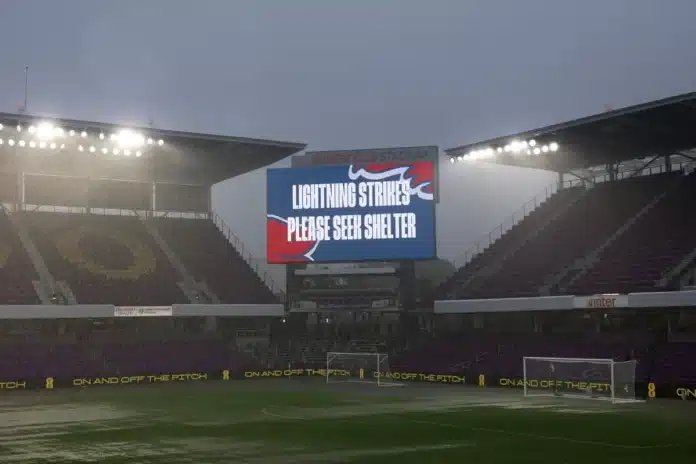
The threat of severe weather has already impacted tournament preparations. For instance, England’s friendly match against Costa Rica was postponed for an hour due to heavy rain and the potential for lightning in the Orlando area. Similarly, New York City, despite experiencing mid-30s temperatures in the tournament’s initial days, saw heavy rainfall, thunder, and lightning less than 24 hours before a scheduled match.
FIFA’s Strict Lightning Stoppage Rules
FIFA is committed to adhering to local regulations during the tournament. According to the National Oceanic and Atmospheric Administration (NOAA), if a lightning strike is detected within an eight-mile radius of a stadium, play must be immediately halted. This protocol was observed multiple times during last year’s Club World Cup held in the US, where six matches were suspended due to electrical storms.
One notable instance involved a match between Chelsea and Benfica. The game, which commenced at 4:38 PM local time, ultimately concluded four hours and 38 minutes after its start, highlighting the potential for extended interruptions.
Addressing Weather Halts on a Case-by-Case Basis
Stadiums located in the Gulf Coast and southeastern regions of the United States are considered most vulnerable to thunderstorms. FIFA plans to manage any weather-induced halts on a match-by-match basis.
When lightning is detected within the eight-mile threshold, a 30-minute countdown commences before play can resume. Any subsequent lightning strike would reset this timer, potentially leading to prolonged delays akin to the Chelsea-Benfica game in Charlotte, North Carolina.
Impact on Synchronized Group Stage Matches
Challenges could arise if storms occur during the final round of group-stage games. Kick-off times for matches within the same group are synchronized to ensure fair play, preventing any team from gaining an advantage by knowing the results of other games. However, weather delays could make this synchronization unavoidable.
In the event that conditions become dangerously severe, forcing a match abandonment, World Cup regulations stipulate that the game will be rescheduled for a future date. Play will resume from the exact minute it was paused, with the remaining duration to be completed.