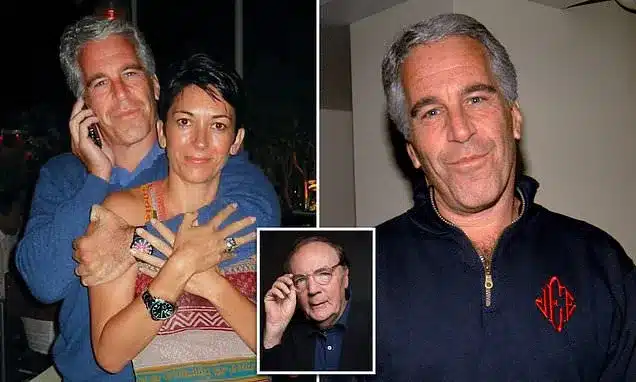
Author Recounts Efforts to Silence Investigation into Jeffrey Epstein
A decade ago, a seemingly chance encounter on Manhattan’s Upper East Side sparked a deep dive into the life of Jeffrey Epstein, a wealthy and registered sex offender. The initial observation, made by journalist Tim Malloy, involved Epstein walking down Madison Avenue in expensive slippers, accompanied by two striking young women. This led to an investigation into Epstein’s opulent townhouse and his alleged abuse of numerous young women.
Epstein’s previous legal entanglements, including a brief prison sentence, had garnered international attention. However, his conviction in Palm Beach resulted in what many perceived as a remarkably lenient punishment, prompting questions about the influence of his powerful connections. Alongside Malloy and fellow journalist John Connolly, a former NYPD officer, I embarked on an investigation prompted by the stark contrast between the allegations and the minimal consequences for Epstein.
Uncovering a Shocking Pattern of Abuse and Lax Enforcement
The scope of the uncovered allegations was staggering, with reports of dozens of girls and numerous police reports, yet Epstein faced little significant punishment. This reality was more disturbing than any fictional narrative I had previously encountered. The findings of our investigation culminated in the book Filthy Rich: The Jeffrey Epstein Story, first published in 2016 and re-released this month to address lingering questions.
The book also details attempts by wealthy and influential individuals to shield Epstein from public scrutiny. Upon learning of our forthcoming book, Epstein and his legal team reportedly attempted to intimidate us, issuing warnings to cease our investigation. However, the truth of the story provided a strong foundation, and the threats did not deter our pursuit.
I had sought to interview Epstein directly to understand his perspective, but he declined. The core of the investigation focused on understanding the nature of his guilt, which he implicitly acknowledged in a 2007 non-prosecution agreement. Our approach involved interviewing a wide range of individuals connected to Epstein, from childhood acquaintances to law enforcement officials and the families of his victims. This, combined with evidence from other inquiries, allowed us to piece together a comprehensive picture.
New Revelations Emerge from Unsealed Documents
The passage of the Epstein Files Transparency Act in November 2025 and the subsequent release of over three million pages of documents by the Department of Justice in January 2026 provided further insights. These unsealed records, despite redactions, identified numerous victims and revealed private communications from prominent figures, including Epstein himself.
When Epstein became aware of Filthy Rich, he consulted with his inner circle. Following failed attempts to halt publication, he sought advice on managing the narrative. In March 2016, he exchanged emails with journalist Michael Wolff, discussing strategies to counter the book’s impact. Wolff advised Epstein on the need for an immediate counter-narrative, emphasizing the potential for the book to garner significant attention, particularly in light of the upcoming 2016 election.
Celebrity and Influencer Reactions to the Book
Some of Epstein’s famous associates offered him counsel on how to handle the book. Woody Allen, in a text message to Epstein, dismissed the book as potentially being mere “foolish tabloid writing.” Deepak Chopra, a spiritual advisor, recommended completely ignoring the book, suggesting it would fade into obscurity like most memories.
Despite these suggestions, Epstein appeared to treat the matter with a degree of levity. When his brother inquired about his media presence, Epstein humorously responded, “Just give it time,” and mused about potentially holding a book signing party for Filthy Rich.
Financial news indicated that Epstein personally acquired at least seventeen copies of the book. His executive assistant reportedly kept a box of these copies in his office closet for guests.
Epstein’s Attempts to Control the Narrative
Epstein’s efforts to control the narrative extended to staging a photo opportunity at a bookstore. He posed with a copy of Filthy Rich, using his 2006 mug shot as the cover image, a photograph I keep as a reminder of his perceived invincibility.
As we stated at the time of the book’s initial release in 2016, “Clearly, the rich have the big advantage when they go to court. Money can do a lot of things.” While this dynamic may persist, the voices of Epstein’s victims are growing stronger, and their power is beginning to be recognized.
Excerpted from Filthy Rich: The Jeffrey Epstein Story: Ten Years Later by James Patterson and John Connolly with Tim Malloy, published by Little, Brown and Company.