
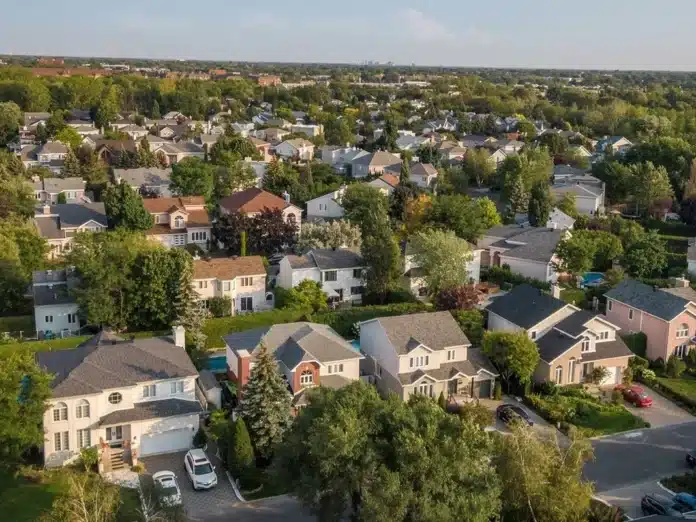
Newcomers to Canada are increasingly entering the housing market and purchasing homes at a faster pace than individuals born in the country, according to recent analysis of housing and immigration data. This trend is observed across several Canadian provinces, indicating a shift in homeownership patterns.
Key Findings on Homeownership Trends
The data, which examined individuals aged 25 to 54 admitted as permanent residents between 2017 and 2021, reveals that recent immigrants are establishing homeownership more rapidly than previous immigrant cohorts. This analysis focused on seven provinces: Prince Edward Island, Nova Scotia, New Brunswick, Ontario, Manitoba, Alberta, and British Columbia.
Provincial Homeownership Data
In Ontario, the homeownership rate for recent immigrants within five years of arrival climbed from 35.7 percent in 2018 to 40.2 percent in 2021. Concurrently, the rate for Canadian-born individuals in the same age group decreased from 50.7 percent to 47.8 percent during the same period.
British Columbia also saw an increase in immigrant homeownership, rising from 33.4 percent to 37.5 percent within five years. Meanwhile, Canadian-born residents’ ownership rate dipped slightly from 44.7 percent to 43.3 percent.
Nova Scotia experienced a significant jump in homeownership for immigrants in their fifth year, from 34.8 percent to 48.1 percent. In contrast, Canadian-born residents saw a slight decline from 51.1 percent to 49.8 percent.
Economic Class Immigrants and Ownership Gaps
Analysis indicates that economic-class immigrants achieve homeownership rates comparable to those of Canadian-born individuals by their fifth year in Canada. This parity is particularly evident in the Maritime provinces and Manitoba. However, the homeownership gap between recent immigrants and Canadian-born individuals is more pronounced in Ontario, Alberta, and British Columbia.
In Prince Edward Island, Canadian-born residents held a 52.5 percent ownership rate, while fifth-year immigrants stood at 49.8 percent. Nova Scotia showed similar figures, with Canadian-born ownership at 49.8 percent and that of fifth-year immigrants at 48.1 percent.
New Brunswick was the sole province where fifth-year immigrants reported a higher homeownership rate than Canadian-born residents, at 56.6 percent compared to 54.8 percent. British Columbia displayed the widest disparity, with immigrants five years post-admission at 37.5 percent ownership versus 43.3 percent for Canadian-born individuals.
Previous Canadian Experience and Financial Implications
Data suggests that a significant majority of recent immigrants who own homes within their first year in Canada have prior experience living in the country on work permits, study permits, or through asylum claims. Over 85 percent of these first-year homeowners had previously resided in Canada as non-permanent residents.
Furthermore, recent immigrant homebuyers tend to have lower incomes but purchase more expensive properties compared to Canadian-born buyers. This financial strategy may contribute to higher mortgage debt and potentially lower retirement savings among these newcomers. The average monthly mortgage payments for recent immigrants were consistently higher than those for Canadian-born individuals from 2018 to 2021, with newcomers paying $1,920 in 2021, against $1,420 for Canadian-born individuals in the same year.
Conclusion on Immigrant Homeownership Path
The findings conclude that the path to homeownership for recent immigrants is characterized by substantial mortgage debt and a primary focus on building equity through principal residence purchases, rather than significant retirement contributions. This approach may leave recent immigrant buyers more susceptible to fluctuations in the housing market compared to their Canadian-born counterparts.