
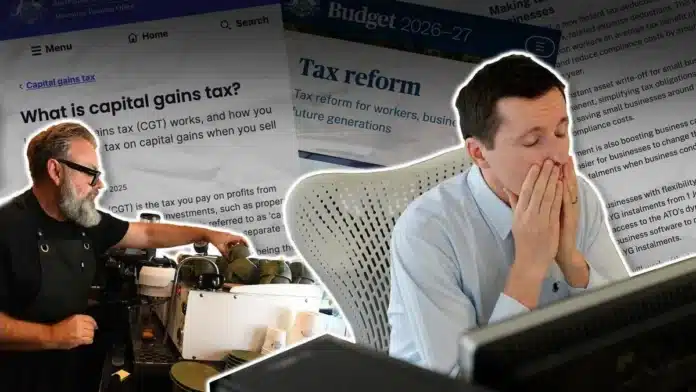
Startup Founders Raise Alarm Over Talent Drain Despite Budget Adjustments
Despite recent federal budget concessions aimed at supporting startups, concerns are mounting that changes to capital gains tax will accelerate a significant brain drain of top talent from Australia. While new provisions will allow “innovative businesses” to retain the existing 50 per cent capital gains tax discount, and expand eligibility for the 50 per cent active asset reduction for small businesses, critics argue these measures may not be enough.
Budget Changes and Their Impact
Labor’s May budget originally proposed replacing the 50 per cent discount with an inflation indexation model and a minimum 30 per cent tax rate. Initially framed as a measure to benefit first-home buyers by increasing taxes on property investors, these changes were broadened to encompass all assets, including shares and businesses. For startups, which often have minimal initial cost bases, this shift could effectively double the maximum tax rate on capital gains to nearly 47 per cent. This increase risks diminishing the incentive for individuals to take the risks associated with starting a new venture.
Attracting and Retaining Talent
The proposed tax adjustments also present a challenge for startups in attracting and retaining skilled employees. Lacking the substantial capital of established corporations for salaries, startups frequently offer employees equity – a share in the company – with the promise of a significant payday if the business’s value increases. However, the altered tax landscape could make these equity incentives less appealing.
One founder, who preferred to remain anonymous to speak candidly, described the current environment for Australian startups as “hard mode.” They indicated that the migration of young talent, typically in their 20s and 30s, to the United States is likely to intensify. Furthermore, even countries like the United Kingdom and New Zealand are becoming more attractive destinations, the founder noted. “Every frontier lab is now chock-full of Australians working in the US,” they stated. “You get paid way more, you get taxed less. You get a bit of an adventure.”
Government Response and Industry Reactions
Consultations are currently underway regarding the specifics of how the new carve-out provisions will be implemented. A swift, two-day parliamentary inquiry into the tax changes is scheduled to deliver its final reports Friday.
Geoff Wilson, Chief Investment Officer at Wilson Asset Management, suggested that the government’s rapid move to protect startups signals an acknowledgment that the initial proposal had flaws. “The fundamental problem remains unchanged,” Wilson commented. “This is still a tax on aspiration, entrepreneurship and productive Australian capital.”
Skye Cappuccio, Chief Executive of the Council of Small Business Organisations Australia, welcomed the carve-out as a positive step but expressed ongoing concerns about the broader implications of the tax changes for investment, entrepreneurship, and productivity.
Shadow Treasurer Tim Wilson criticized the concessions, characterizing them as “polishing a turd.” He argued that by creating additional carve-outs rather than repealing the tax entirely, the government is establishing a distinctly two-tiered system.
Chartered Accountants ANZ commended the decision to raise the eligibility threshold for the active asset discount. Susan Franks, the organization’s Tax Leader, stated, “These businesses are the lifeblood of our economy, and this change will make a real difference.”