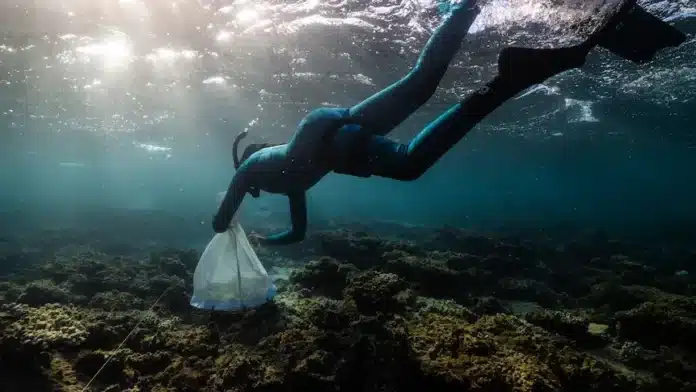
Marine scientists are celebrating the initial signs of recovery from young corals introduced to Western Australia’s Ningaloo Reef. This crucial restoration effort began last year following the reef’s most severe bleaching event on record. Researchers are continuing to monitor the corals, with their work expected to extend over several more years.
Hope Emerges for World Heritage-Listed Ningaloo
The UNESCO World Heritage-listed Ningaloo Reef is demonstrating its first indications of recovery after a challenging year. The damage stemmed from an extended marine heatwave along the coastline, which triggered Western Australia’s most significant coral bleaching event to date.
In response, researchers from the Western Australian Marine Science Institution (WAMSI) initiated a coral larval enhancement trial. The objective was to foster the growth of new coral, known as planula, on the reef to aid its restoration.
Concerns arose when Cyclone Narelle impacted the north-west coast in April, potentially jeopardizing their efforts. However, scientists reported being “blown away” by the coral’s resilience.
“The cyclone essentially tracked the reef at Exmouth where we had concentrated our efforts,” stated chief executive Luke Twomey. “Scientists returned a couple of weeks post-cyclone to find all the small tiles with baby corals remained in place.”
Collaborative efforts involving researchers from the Australian Institute of Marine Science, CSIRO, Southern Cross University, and the Department of Biodiversity, Conservation and Attractions were instrumental. They collected planula during two mass spawning events in Exmouth and Coral Bay, located approximately 1,250 kilometers north of Perth. These collected larvae were then cultured in floating nursery pools before being carefully released onto damaged sections of the reef.
“Essentially, we are providing nature with a helping hand by collecting the coral spawn when it occurs,” Dr. Twomey explained.
Protecting a Vital Reef Economy
The survival of the coral reef is deemed critical, not only for the diverse marine life it supports but also for the local economy that heavily depends on its health. CSIRO marine ecologist Damian Thomson highlighted the strong support for such projects from local residents, many of whom rely on the reef for tourism revenue.
“Local businesses and operators recognize the advantages of preserving a healthy reef,” Dr. Thomson said. “Tourism in the region is largely contingent on people being able to witness and experience vibrant reef systems.”
Pelagia Marine Services, a business involved in marine research and charter vessel operations, is one such entity. “Numerous tourism operators based in Exmouth take thousands of visitors to the reef annually,” shared co-owner Jessica Strickland-Coe. “All of them depend on species that thrive within healthy coral reef ecosystems.
“Therefore, it is absolutely fundamental to the economy of Exmouth and Coral Bay, its residents, and the many businesses that the reef sustains,” she added.
Strickland-Coe noted that many businesses are still contending with the aftermath of Cyclone Narelle, and a compromised reef would exacerbate these challenges.
“Without a healthy Ningaloo Reef, it is difficult to predict the precise long-term impacts on many businesses,” she stated. “And we are referring to businesses beyond just tour operators who guide people to the reef, but also encompassing tourism accommodations, tackle shops, camping suppliers, fuel stations, and other retail outlets that benefit from tourism.”
Challenges Remain for Reef’s Future
While the presence of young corals offers a welcome sign of hope, scientists remain concerned that the reef’s fundamental issues are far from resolved. Australian Institute of Marine Science researcher James Gilmour described the bleached coral reef as a difficult sight.
“We understood that bleaching and climate change had significantly impacted Western Australian reefs, and with continued increases in carbon emissions, bleaching events will likely become more frequent,” Dr. Gilmour commented. “The regeneration efforts serve as a method to slow degradation and improve the reef’s condition until the underlying causes are addressed.”
The coral reef, currently in its nascent stage, will require consistent monitoring in the coming years. Dr. Thomson indicated that they will assess the success of the current interventions and utilize the findings to inform future strategies.
“Corals grow very slowly, so we need to implement these efforts across much larger geographical areas and repeat them annually until we see cumulative positive effects,” he concluded.