Longtime Presenter Shares Journey of Coming Out After Decades on Screen
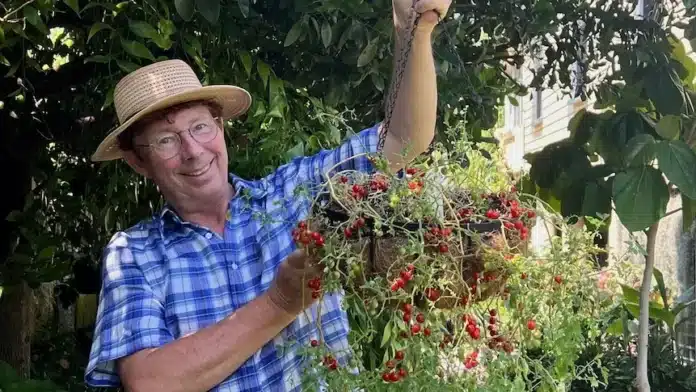
For 26 years, Jerry Coleby-Williams has been a familiar and comforting presence on Australian television, sharing his passion for horticulture with a gentle English accent. However, for much of that time, the beloved presenter of Gardening Australia felt compelled to conceal his identity as an openly gay man. This year, that changed when Jerry and his husband, Thuan, marched with a dedicated float in the Sydney Gay and Lesbian Mardi Gras parade. On the anniversary of the first Sydney Mardi Gras, Jerry is sharing his authentic self publicly for the first time.
Navigating Identity in Post-War England
Growing up in England during the late 1960s and early 1970s, Jerry understood that being gay was largely unacceptable. While private homosexual acts between consenting men over 21 were decriminalised in 1967, societal acceptance lagged significantly behind. “I knew I was same-sex attracted and that it should be hidden from an early age,” Jerry stated. “I didn’t need anyone to tell me my mother would disapprove of learning [I was attracted to men].”
Despite immense societal pressure to remain closeted, Jerry decided to come out in 1978, approximately three years after acknowledging his own sexuality. He described the process as “an act in two parts.” The first involved coming out to his family members, each one-on-one discussion serving as a learning experience. “I used each one-on-one discussion as a learning experience to make the next easier to do,” he explained. “My mother was surprised. Dad had no idea what it meant. My sister said she had assumed I was bisexual — so sweet.”
The second part of his coming out occurred while he was studying at the Royal Botanic Gardens in Kew, London. During a public speaking competition, Jerry publicly disclosed his sexual orientation. The brief allowed for discussions on sex, politics, and religion, but not botany for ten minutes. In front of his teachers, fellow students, and visiting botanists, Jerry delivered a passionate plea for equality. “I came out and made the case for a change in the law to have an equal age of consent [which was 16 for heterosexuals],” Jerry recounted. “I won my case; a majority of the audience raised their hands in support.”
Protesting and Finding a New Home
In the same year he came out, Jerry participated in his first London Pride march. “The whole experience of walking the street with hundreds of out gay men and women protesting, waving banners, being jeered at and insulted along the route was quite overwhelming,” he recalled. At the time, it was illegal for Jerry to have sex with his boyfriend, John, as Jerry was under 21, leading to anxiety about being photographed and outed. “His mother, Brenda, knew and approved of us — she became a dear gardening friend — but she was always anxious about John being sent to prison. So, we were discreet.”
Jerry remembers the significant police presence during the march, noting riot police on horseback in side streets and a dense line of officers along the route’s end. A police helicopter circled overhead, and exits were blocked, forcing marchers to leave the way they came. Despite these intimidating tactics, the defiance of the marchers was met with an “uplifting” after-party at the Union of London Universities, which helped Jerry feel “connected, less isolated, and more motivated.”
After graduating from the Royal Botanic Gardens, Jerry received a botanical scholarship to study the flora of Western Australia. This experience proved life-changing. “The Australian flora at Kew fascinated me and I learned the most charismatic wildflowers grow in the south-west of WA, so I spent most of a year collecting and documenting the flora,” he said. At just 21, Jerry identified new species and varieties, including the critically endangered Harlequin bell (Darwinia polychroma).
“[That discovery] was very special,” Jerry remarked. “The greatest impact was realising that bushland I visited had been pretty much unspoiled by industry — something that no European can ever experience in their native lands.” He sent over 400 specimens back to Kew to expand their collection, many of which had never been grown in Europe previously.
Following a decade in the UK caring for his ailing father, Jerry secured a working holiday visa and contributed to the establishment of the Australian Native Botanic Garden in Mount Annan, Sydney. He permanently emigrated to Australia in 1992.
Hiding in Plain Sight on Television
While managing the living collections at Sydney’s Botanic Gardens, Jerry began his media career as a regular guest on local radio, offering gardening advice. His involvement with Gardening Australia began in 2000 as a guest contributor, eventually leading to a permanent role on the long-running national television program.
The transition to television was not without its challenges. Jerry shared that when his sexuality became known upon joining Gardening Australia, intervention from the show’s anchor, Peter Cundall, was required to secure his position. Jerry’s then-partner, Jeff Poole, recounted waiting in a car while Jerry met with Cundall and the executive producer, Richard Reisz. Jeff eventually introduced himself, recalling Jerry’s attempts to reassure Reisz that he wouldn’t engage in inappropriate on-screen behaviour.
Jeff stated that Jerry later confirmed Reisz was upset about having an openly gay man on the show, while Cundall advocated for Jerry’s retention. Richard Reisz, however, recalled a different impression, viewing Jerry as a strong on-air talent but initially hesitant due to the presence of another English presenter. Reisz maintains that Jerry’s on-screen abilities were the deciding factor, and that Jerry’s sexuality or any intervention from Peter Cundall did not influence this decision.
Jerry remains firm in his assertion that his sexuality was not readily accepted. He cited an incident in 2000 when he bleached his hair, and Gardening Australia informed him they would only resume working with him once his hair returned to its natural colour. Jeff Poole believed this was part of an effort to tone down Jerry’s outward expression of his gay identity, noting the lack of similar demands for female presenters regarding their hair colour.
Further incidents in the mid-2000s involved Jerry being asked to remove symbols of his LGBTQ+ identity, such as a pink triangle on his lapel (a symbol he had worn since 1979) and an earring. At a time when the LGBTQ+ community faced less widespread acceptance, some within the organisation viewed such symbols as contravening internal policies on political impartiality. “A pink triangle was regarded as inappropriate as wearing a political party badge would be,” Jerry explained.
Both Jerry and Jeff emphasized that while individual crew members were generally accepting, the erasure of Jerry’s queer identity was institutional. Jeff recalled instances where segments featuring LGBTQ+ gardeners had queer-coded references omitted, framed as “professionalism” or that Jerry’s choices were “out there” or “too modern for our audience.” Jerry was told the organisation was apolitical, but he countered, “being gay is political!” Ultimately, Jerry chose the path of least resistance to protect his job security, stating, “I have been effectively ‘de-gayed’ for television for 26 years.”
A spokesperson for the organisation commented that Jerry is a “longstanding presenter and valued member of the Gardening Australia team.” They added that the program “encourages every member of the team to bring their authentic selves to work and supports and celebrates people of all backgrounds,” and is “committed to fostering an inclusive workplace that is respectful and welcoming for all.”
Finding Love and the Ongoing Need for Visibility
Jerry met his husband, Thuan, a fellow gardening enthusiast, through a gardening question posed on his Facebook page. “I answer 10,000 questions a year and at the start of 2015, Thuan became one of my most frequent questioners,” Jerry said. He learned that Thuan was a third-generation market gardener from Hue, Vietnam, whose grandparents had cared for the king’s orchard, making him a gardener of significant interest.
Jerry, who leads gardening tours, was planning a visit to Vietnam and shared his itinerary with Thuan, hoping they might meet. Thuan, who was studying in Ho Chi Minh City, agreed to meet for coffee. “He turned up on his motorbike and, thanks to translation technology, the rest is history.” Jerry and Thuan quickly formed a connection, and Thuan eventually joined Jerry in Brisbane.
Two years later, they had an unofficial wedding in the months leading up to the same-sex marriage postal survey. “Thuan is a joy to be with,” Jerry shared. “Loving, kind, patient and very easy to get along with. His experience and personal qualities are hard to beat.” Jerry formalised his union with Thuan after same-sex marriage was legalised in 2017.
While Jerry has benefited from improving LGBTQ+ rights, he remains acutely aware that progress can be reversed. “If we don’t make our presence felt, improvements can be reversed,” Jerry warned. “The LGBTQ+ community still faces risks I have known all my life; bullying starts at school and it continues in the workplace.”
Throughout his life, Jerry has employed various strategies to avoid violence, including taking safer routes home and avoiding certain public transport. “Despite being cautious, I have been raped.” He noted that during a time of intense homophobia, gay men rarely reported sexual assaults due to fear of not being believed. “It is many years since I have had to intervene to prevent a queer bashing at a railway station … [but I still] never look obviously queer on a train in the evening.”
Beyond personal trauma, Jerry recalls the profound impact of the HIV/AIDS epidemic on the gay community. “I lost more friends to AIDS in the 1980s than I care to remember,” he said, referring to “a whole address book of lost lives, friendships and potential.”
Jerry also acknowledges the unique experiences within the queer community, stating, “Change affects people differently, according to geography and timing.” He notes that living in cities has made it easier to navigate his identity, contrasting it with the struggles for acceptance faced by groups like the Sista Girls of the Tiwi Islands. Despite these challenges, Jerry consistently finds strength and support within the LGBTQ+ community, asserting, “We find our own solutions. Everyday living requires strength.”
The Enduring Significance of Pride
For Jerry and Thuan, marching together at this year’s Sydney Gay and Lesbian Mardi Gras was a powerful opportunity to celebrate with the queer community and allies. “It [was] very exciting and uplifting,” Jerry said. He described the event as a “vital, visual, vocal way for the LGBTQ+ community and our allies to express ourselves, to make our presence and our expectations known, and to party.” It also served as a chance to highlight the ongoing need for progress. “If life is safe and secure for the LGBTQ+ community, the better it is for everyone everywhere.”
While Jerry acknowledges the increased visibility the queer community now enjoys, he expresses gratitude for his current ability to speak so openly. “You are the first in 31 years of work with the organisation to show an interest in my personal life [aka my] gay career,” Jerry stated. “Thank you for your interest.”