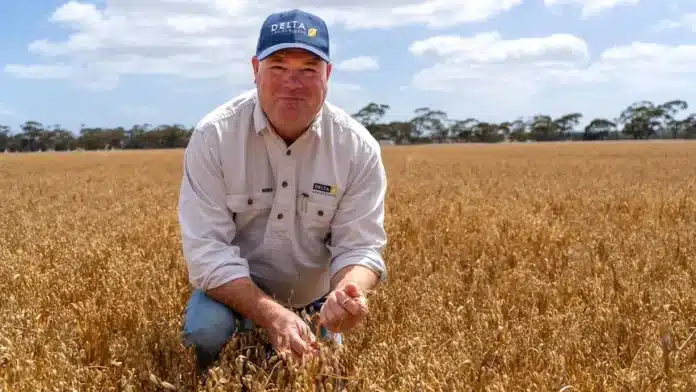
Australian farmers are actively seeking alternatives to the controversial herbicide paraquat, driven by concerns over its supply chain and ongoing debates about its safety. Despite a recent decision by the Australian Pesticides and Veterinary Medicines Authority (APVMA) to permit its continued use under stricter regulations, the herbicide’s future remains uncertain for many agricultural operations.
Controversial Herbicide Under Scrutiny
Paraquat, a widely utilized weed killer, has been a subject of significant debate due to its potential long-term health impacts. While banned in nearly 70 countries, including China where it is no longer used domestically due to public health concerns, Australia has opted to allow its continued application. This decision, however, has not quelled the concerns of its opponents, who continue to advocate for a complete ban. Conversely, many farmers view paraquat as an indispensable tool for effective crop management, particularly in controlling weeds that have developed resistance to other herbicides.
Associate Professor Sarah Rogers from the University of Melbourne’s Asia Institute highlighted the APVMA’s decision as a critical juncture for discussing future agricultural practices. “The paraquat decision is a good opportunity to have these conversations about what the alternatives are,” Professor Rogers stated. “It’s definitely worth thinking about, ‘Can we farm in a way that we are not so dependent on these imported chemicals?'” This perspective underscores a growing sentiment among agricultural experts and farmers to reduce reliance on single, potentially problematic chemical inputs.
Supply Chain Vulnerabilities and Dependence on China
A significant factor influencing the search for alternatives is Australia’s heavy reliance on China for paraquat supply. China, the world’s largest manufacturer of the herbicide, banned its domestic use around 2014, citing health professionals’ concerns. Professor Rogers pointed out the inherent risks in depending so heavily on a single supplier, especially given China’s ongoing industrial restructuring and potential policy shifts.
“I imagine Australia is one of the dominant markets for paraquat because a lot of countries don’t buy it and can’t buy it anymore,” Professor Rogers explained. “I think such deep dependence on a single exporter, whether it’s Europe or China or Vietnam, or wherever it is, is a real problem, and the overall production of herbicide in China is going down. The industry is being restructured into a far smaller number of companies. At some point the Chinese authorities could just say, ‘We’re not producing it anymore.'” This potential for supply disruption leaves Australian farmers in a precarious position, particularly those in sectors with limited viable alternatives.
Impact on Crop Management and the “Double-Knock” Strategy
The new regulations surrounding paraquat use, coupled with supply uncertainties, are expected to create challenges for Australian farmers. Senior agronomist Scott Hutchings, based in Keith, South Australia, noted that the updated conditions could be restrictive, especially for industries like lucerne, which are highly dependent on the herbicide. “Particularly in the lucerne industry, where we’re quite reliant on paraquat. That’s going to be a major issue for us,” Mr. Hutchings said. “I know Lucerne Australia is currently doing trials to try and be ahead of the game and see what other alternatives we have.”
The situation is compounded by the fact that commercially viable alternatives are not expected to reach the market for several years. Mr. Hutchings anticipates a potential gap where farmers might have to use less effective doses of paraquat, or other methods, to manage weeds. “While there are a number of new products that are on the way, we’re really not seeing them forecast for probably close to four years to hit the market, the commercial market,” he stated. “We’re going to have a gap there where we’ll be using what could possibly be sublethal doses of paraquat for the weeds we have.”
The Challenge of Glyphosate Resistance
For years, paraquat has played a crucial role in integrated weed management strategies, particularly in conjunction with glyphosate. Weed researcher Dr. Chris Preston from Adelaide University explained the importance of paraquat in preventing and managing glyphosate-resistant weeds, a common problem arising from the extensive and prolonged use of glyphosate itself.
“Glyphosate has been a fabulous chemical, we’ve used it extensively for over 45 years,” Dr. Preston commented. “Eventually you end up with resistance if you use herbicides over and over again. We’ve used paraquat to back that up and make sure that we don’t have glyphosate-resistant weeds flowing through our farming system.” This practice, known as the “double-knock,” involves using two different herbicides sequentially to ensure effective weed kill and slow the development of resistance.
However, the effectiveness of paraquat under the new, stricter regulations is a concern. Dr. Preston noted that the reduced application rates might make it more challenging for farmers to achieve adequate weed control. “The lower rates we’ve got, they’re going to be challenging for farmers to get the level of weed control,” he said.
Searching for Sustainable Solutions
The search for effective and sustainable alternatives is ongoing. Researchers like Dr. Preston are investigating various strategies, including combinations of different herbicides. “We do have some really promising results… but they’re just not as easy to use as the current chemistry we’ve got,” he admitted. One potential approach involves using sequential applications of glufosinate, another herbicide. However, this method is more expensive and requires greater precision to be effective.
The agricultural industry faces a complex challenge: balancing the need for effective weed control with concerns about chemical safety, supply chain reliability, and the development of herbicide resistance. As farmers and researchers explore new options, the transition away from heavily relied-upon chemicals like paraquat will likely involve significant adjustments in farming practices and potentially higher operational costs in the short to medium term.