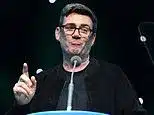
Andy Burnham, widely seen as the presumptive leader of the Labour Party, has signaled a significant shift in the party’s approach to the conflict in Gaza. In a move aimed at appealing to the party’s left wing, Burnham apologized for Labour’s previous stance, stating the party “didn’t get it right” under Sir Keir Starmer and that the United Kingdom had been “too slow to call for a ceasefire.” This public acknowledgment comes as Burnham prepares to potentially lead the party, indicating a desire to address concerns from within the party’s more progressive factions.
Burnham’s New Stance on Gaza
In a video shared on social media, Burnham elaborated on his vision for a potentially tougher approach towards Israel’s military operations in Gaza, particularly following the Hamas attacks in October. He suggested that a government under his leadership would “do more to strengthen our approach.” This includes exploring measures such as “further sanctions, both on those involved in the violence in Gaza, but also looking at measures to ban trade in goods with illegal settlements.”
Burnham’s comments were met with approval from some Members of Parliament (MPs) on the left of the party, including members of the Socialist Campaign Group, which previously supported former leader Jeremy Corbyn. This outreach follows a period where many of these same MPs did not initially back Burnham in his bid for leadership. While he secured the support of 322 Labour MPs, effectively preventing a leadership contest, a notable portion of the 78 MPs who had not yet declared their support by the end of the previous day were from the party’s left, including prominent figures like John McDonnell and Richard Burgon.
Context and Reactions
The announcement regarding Gaza follows an article published in The Times where Burnham outlined his commitment to foreign policy stability. In that piece, he emphasized his dedication to NATO, the nuclear deterrent, maintaining strong ties with the United States, supporting Ukraine, and fostering closer relations with the European Union. The recent shift on Gaza appears to be an extension of this broader foreign policy vision, specifically addressing a highly contentious issue within the party and among its supporters.
Clive Lewis, a former shadow minister and one-time leadership contender, described Burnham’s announcement as “an important and much-needed first step.” Lewis urged for this to be followed by concrete policy changes, including a “full arms embargo and ban on trade with illegal West Bank settlements.” He articulated a sentiment shared by some within the party, stating, “For too long this Labour government has fallen short of its obligations under international law – and of basic morality.” Lewis further emphasized that “Zero tolerance of antisemitism, Islamophobia and all racism, and an unshakeable commitment to human rights and international law, should never have been difficult things for a Labour government to stand for.”
Other MPs also voiced their support. Ian Byrne, MP for West Derby, retweeted Burnham’s message, while Andy McDonald, another former shadow minister, commented, “A majorly positive step in the right direction. Thanks Andy.”
Even figures within the current government acknowledged the sentiment. James Murray, the Health Secretary, agreed that the UK had been slow to call for a ceasefire. When asked about Burnham’s remarks, Murray told Times Radio, “I think that yes, by the time we called for a ceasefire, it was overdue.”
Background on the Gaza Conflict
Israel has conducted military operations in Gaza since a ceasefire with Hamas was mediated by the United States in October. The stated aim of these operations is to target militants who pose a threat to Israeli forces or who were involved in the October 2023 attacks. Nikolay Mladenov, a former U.S. President’s appointed Peace Envoy to Gaza, has indicated that both sides have faced accusations of violating the agreement.
According to figures released by both parties involved, over 1,080 Palestinians, many of whom were civilians, and four Israeli soldiers have been killed in Gaza since the ceasefire took effect approximately nine months prior to the original reporting. The ongoing conflict and the UK’s response remain a significant focus of political and public attention.
Conclusion
Andy Burnham’s recent statements represent a notable recalibration of Labour’s position on the Gaza conflict, seeking to bridge internal divides and appeal to a broader base within the party. By acknowledging past shortcomings and proposing concrete policy considerations like sanctions and trade restrictions, Burnham is attempting to position Labour as a more decisive and principled voice on international human rights and foreign policy issues. The coming weeks and months will likely reveal the extent to which this new stance translates into official party policy and influences future diplomatic efforts.