
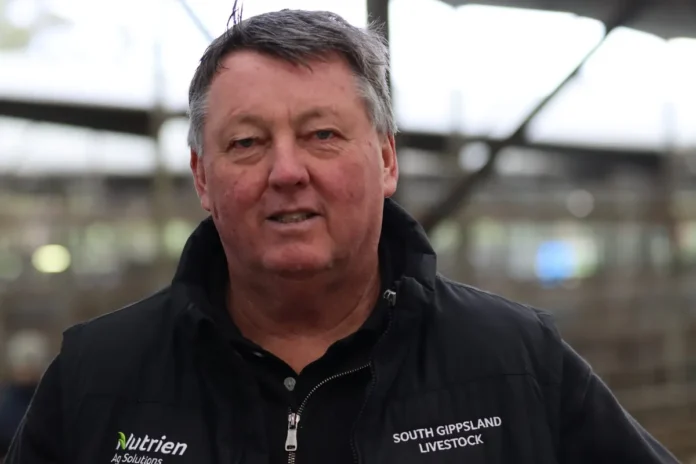
Prices for cows and bulls saw an increase at the recent Leongatha Prime Cattle Sale, signaling a positive shift for producers compared to the previous week. Meanwhile, prices for trade cattle and bullocks held steady, indicating a consistent market trend over recent months. This rebound occurs against a backdrop of global trade dynamics, including China’s tariffs on Australian beef and strong demand from other international markets.
Cattle Price Movements and Market Stability
During the trade cattle section of the sale, industry observers noted that prices were “fully firm.” This stability has been a characteristic of the market for approximately two months. While concerns have been raised about the impact of China’s 55 percent tariff on Australian beef, which is applied once export quotas are met, the effect on cow prices has been relatively contained. In the weeks leading up to this sale, cow prices experienced a minor easing, estimated at a 10 to 20 cent per kilogram correction at the higher end of the market. However, this downward trend appears to have halted, with the latest sale suggesting a recovery.
Meat and Livestock Australia Market Reporter Brendan Fletcher observed that cow prices improved by 10 to 15 cents per kilogram compared to the previous week’s Leongatha sale. This suggests that much of the recent dip has been recovered. Echoing earlier sentiments, Mr. Fletcher reported that trade lots with good finishing quality met firm demand. Similarly, bullock prices remained stable, and heavy bull prices saw a modest increase of approximately eight cents per kilogram.
Global Demand and Export Market Dynamics
Despite the challenges posed by China’s tariffs, which have likely made conditions tougher for Australian beef exporters, confidence remains high regarding global demand. Experts point to the strength of other international markets, particularly the United States, as a key factor supporting Australian beef prices. The American market continues to show robust demand, and potential shifts in supply could further benefit Australian exporters.
Brazil, a significant beef exporter, is approaching its quota limit for beef exports to China. Reports suggest that by the end of July, Brazil may have filled around 90 percent of its beef quota to the Chinese market. This development could reduce competition for Australian beef in the Chinese market and potentially increase demand from other countries seeking to fill supply gaps.
Industry analysts have consistently argued that China’s tariffs on Australian beef should not cause undue panic. The reasoning is based on a global shortage of beef, which is expected to drive demand and maintain solid prices in alternative markets. Even with tariffs, the overall tight supply situation worldwide means that buyers in other nations will likely continue to pay competitive prices for Australian beef.
Balancing Producer and Processor Interests
The current price levels at the Leongatha Prime Cattle Sale are seen as favorable for both producers and processors. If prices remain at these levels, producers are likely to be satisfied. Processors, on the other hand, generally do not wish for prices to increase significantly. If cattle prices become too high, processors may be forced to reduce their slaughter days, impacting the overall throughput of the industry.
This delicate balance is crucial for the sustainability of the cattle industry. Processors face a choice: either pay higher prices for cattle or scale back their operations. The current market conditions appear to be navigating this balance effectively.
Future Outlook: Rainfall and Supply
Encouraging recent rainfall across much of Australia is a positive sign for the future supply of cattle. This improved weather is expected to lead to an increase in the number of fat cattle available in the spring. However, in the interim, the constrained supply is likely to continue supporting high prices. The combination of strong global demand and limited immediate supply suggests that the cattle market will remain robust in the coming months.
The Leongatha Prime Cattle Sale serves as an important indicator of market trends, reflecting both local conditions and the broader impact of international trade policies and global supply-and-demand factors. The recent price increases for cows and bulls, alongside stable prices for other categories, highlight the resilience and adaptability of the Australian cattle industry.