Residents in Mount Morgan, Queensland, are voicing urgent concerns about the escalating fire risk posed by overgrown crown land, particularly after a recent grass fire came perilously close to homes. They are calling on the state government to implement proactive fire mitigation measures on these public lands, which they argue have become a significant hazard due to a lack of maintenance.
The town, situated on the outskirts of Rockhampton, is characterized by a mix of land ownership, including substantial tracts of state-owned land. Many of these areas are currently covered in tall, dry grass, creating a tinderbox environment, especially under the intense Queensland sun. This situation has left residents feeling vulnerable, with some taking it upon themselves to clear vegetation near their properties.
Mount Morgan’s Growing Fire Hazard
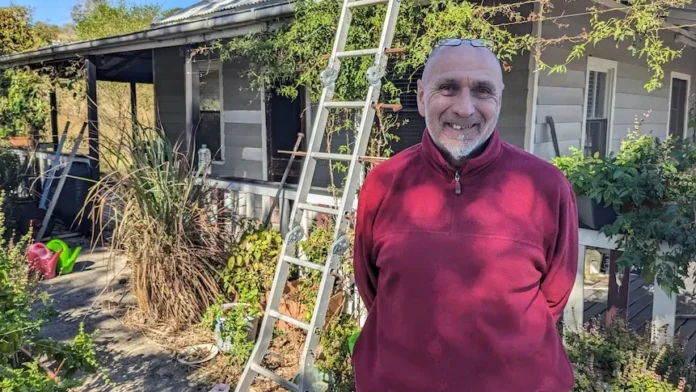
Russell Francis, a Mount Morgan resident, described the situation near his home as a serious fire risk. He pointed to state-owned land adjacent to his property where grass stood over a metre tall, withered and dry. Mr. Francis likened the condition to what would typically result in a fine from local council if it were private property.
“It’s not in a way that is protective of properties neighbouring the crown land,” Mr. Francis stated. “The grasses, you can walk over and stand next to them; they’re over six feet tall, which is fuel for fire.”
His concerns were amplified by a recent incident where a fire on a nearby nature strip produced significant smoke, initially leading him to believe a planned hazard reduction burn was underway. “I thought that the burn-off had started because I could see smoke coming up, and I thought… ‘It’s a little bit early because they’d normally do it probably in the spring rather than winter,'” he recalled. “She was well and truly cooking.”
Frustrated by the perceived inaction on public land, Mr. Francis has resorted to creating fire breaks on the crown land himself, highlighting what he sees as an inconsistency in land management obligations.
Complexities of Regional Land Management
Matt Eckhardt, the Rockhampton area manager for Rural Fire Service Queensland, acknowledged that Mount Morgan is susceptible to bushfires, particularly during warmer periods. He noted that recent rainfall has contributed to a significant amount of vegetation growth, which now serves as ample fuel.
“We do have a good body of fuel for the amount of rain we’ve had over the years,” Mr. Eckhardt explained. “It’s made a lot of green vegetation.”
However, Mr. Eckhardt emphasized that the primary responsibility for managing fire risks typically rests with landowners or owner-occupiers. The challenge in Mount Morgan, as in many regional areas, is the complex mosaic of land ownership. This includes council land, national parks, state land managed by various departments, and private holdings, alongside mining tenure in some areas.
Matt Burnett, president of the Australian Local Government Association, elaborated on these complexities. He explained that while local disaster management groups are often aware of these issues, coordinating effective fire management across multiple land tenures can be difficult.
“You’ve got to get in contact with a lot of different people, a lot of different agencies to make sure that they’re maintaining it properly,” Cr Burnett said. He also pointed to the vastness of regional Queensland and the limitations of local government resources as significant hurdles.
“There is a lot of land owned by the state,” Cr Burnett observed. “It’s very hard for them to manage it all but, as residents can expect, they should be able to at least be good neighbours.”
Calls for Increased On-Ground Presence and Support
Cr Burnett suggested that a more visible “on the ground presence” from relevant state agencies would greatly benefit regional communities. He noted that managing vast tracts of land from distant administrative centers, such as Brisbane, can be inefficient.
“A lot of the issues are really… [that] they’re trying to manage land from Brisbane,” he commented. He also advocated for increased state and federal funding to support local volunteer associations, which he believes are often more effective and cost-efficient in land management.
“Funds from the state and federal government supporting those [volunteer] associations can help manage land as well,” Cr Burnett added. “And more often than not, they do it a hell of a lot cheaper and a hell of a lot better than other levels of government.”
Government Response and Future Plans
In response to the growing concerns, a spokesperson for the state’s Natural Resources Department confirmed that the department is currently assessing fuel-reduction activities in the Mount Morgan area. Hazard-reduction burns are scheduled to take place in July and August of this year.
However, the department could not confirm whether the specific plots of overgrown crown land adjacent to residential properties, such as those highlighted by Mr. Francis, would be included in these planned mitigation efforts. The Queensland Fire Department also noted that private landowners are permitted to conduct hazard reduction burns on their properties, provided they obtain the necessary permits.
The situation in Mount Morgan highlights a broader challenge faced by many regional communities: ensuring adequate fire preparedness and land management across diverse ownership structures, especially when public land poses a direct risk to adjacent private properties.