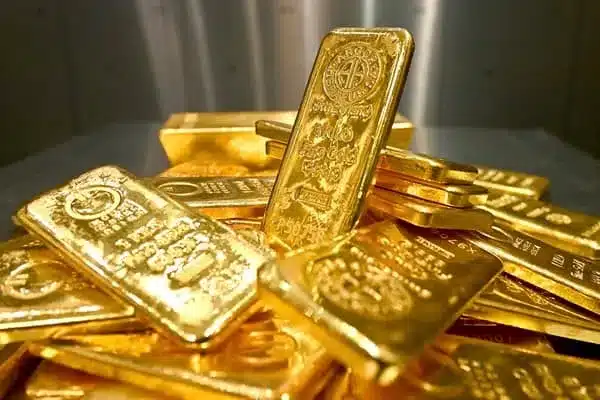
Gold prices have extended their gains for a second consecutive session, reaching approximately $4,120 per ounce. This upward movement follows a familiar pattern where buying interest resurfaces as the precious metal approaches the $3,950–$4,000 range. This zone has repeatedly served as a rebound point during recent price dips, highlighting its significance as both a psychological and technical support level. The consistent recovery from this area suggests that investors are actively seeking opportunities to purchase gold during sharp price declines.
Key Drivers of Gold’s Recent Advance
The immediate catalysts for the current recovery appear to be a softening U.S. dollar and a resurgence of technical buying. Following a prior correction, gold experienced a notable uptick, briefly touching $4,165.87 per ounce in the previous trading day – its highest point in roughly two weeks. This surge was fueled by bargain hunters entering the market and a weakening dollar. The swift return of prices above the $4,100 mark indicates a significant easing of selling pressure compared to the preceding week.
Conflicting Market Forces Influencing Gold
Despite the recent positive momentum, the market’s trajectory for gold remains complex, influenced by several opposing factors. Geopolitical tensions in the Middle East and concerns over the security of energy transportation routes continue to bolster gold’s traditional role as a safe-haven asset. However, these same geopolitical events are contributing to rising oil prices. This, in turn, fuels inflation concerns and increases the probability that the Federal Reserve might maintain elevated interest rates for an extended period. This delicate balance helps explain why gold’s price does not always correlate directly with escalating geopolitical risks.
The Impact of Interest Rates and Yields
Further complicating the outlook are the current levels of U.S. Treasury yields. The yield on the two-year Treasury has climbed to around 4.30%, while the ten-year yield is nearing 4.66%, approaching its highest point of the year. With both real and nominal yields remaining elevated, investors often adopt a more cautious stance towards gold, especially when the U.S. dollar is also demonstrating strength. This environment makes gold a less attractive proposition compared to interest-bearing assets.
The Federal Reserve’s Upcoming Decision
The forthcoming Federal Reserve meeting is poised to be a critical event for the gold market. Investors will be closely scrutinizing not only the decision on interest rates but also the Fed’s assessment of the inflationary impact stemming from higher energy prices. Should policymakers interpret the oil price shock as a temporary phenomenon and see no immediate necessity for further monetary tightening, the U.S. dollar and Treasury yields could potentially ease. Such a scenario would likely create a more favorable environment for gold to continue its recovery.
Conversely, if the Federal Reserve adopts a more hawkish tone regarding inflation risks, signaling a greater likelihood of sustained higher rates, the current upside momentum for gold could be quickly curtailed. This underscores the sensitivity of gold prices to monetary policy expectations and inflation outlooks.
Near-Term Price Outlook for Gold
In the immediate future, gold may see further recovery, potentially targeting the $4,200 level if current buying momentum persists. A decisive move above $4,200 would serve as a strong indicator that the present advance is more than just a short-term technical rebound and could signal a more sustained bullish trend.
On the downside, a weakening of buying momentum could lead to a retest of the $3,950–$4,000 support zone. If prices falter below this critical area, it would suggest that demand at lower levels is insufficient to alter the medium-term price structure, potentially exposing gold to a more significant pullback.
Conclusion: Support Holds, but Caution Remains
The repeated rebounds from the $3,950–$4,000 range confirm the presence of underlying buying interest and the zone’s role as a crucial support base for gold. However, the fact that prices have repeatedly tested this level also indicates that the support may not be entirely robust. While the short-term outlook leans slightly towards further recovery, gold’s ability to decisively break above the $4,165–$4,200 region will be key to confirming that buyers have regained firm control of the market’s direction.