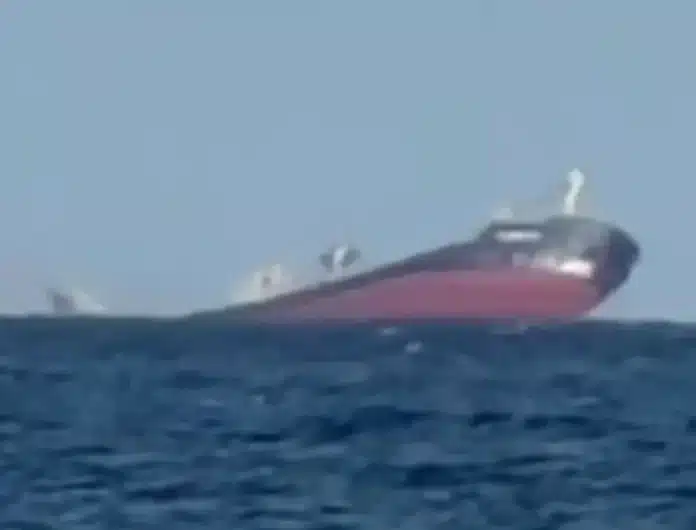
A large cargo ship has sunk in Odesa Bay following a Russian missile strike that reportedly resulted in ten fatalities. The incident occurred on Sunday, with footage capturing the moment the vessel, believed to be a dry cargo ship, capsized and submerged in the Black Sea. This event marks a significant escalation in recent maritime hostilities, with Russia intensifying its attacks on Ukrainian ports.
Escalation in Black Sea Attacks
The strike on the cargo ship is understood to be part of Russia’s retaliatory actions against recent Ukrainian drone attacks. These Ukrainian operations targeted approximately 200 vessels in Russia’s “shadow fleet,” which comprises tankers and cargo ships used for transport. The damaged vessel had reportedly sustained damage several days prior to its eventual sinking on Sunday.
Visuals from the scene show the ship listing heavily, exposing its large, red-painted hull before it disappeared beneath the waves. Initial reports suggest the vessel may have been the Turkish-flagged Golden Leo, potentially carrying grain supplies. The ship was allegedly struck by three Kh-59/Kh-69 cruise missiles as it was departing the port of Odesa on July 19. One missile is said to have impacted the superstructure on the starboard side, triggering a fire onboard.
Fatalities and Rescues
Tragically, ten individuals are reported to have lost their lives in the attack. Eight sailors were successfully evacuated and subsequently transported to medical facilities for treatment. The full extent of casualties and the circumstances surrounding the deaths are still being investigated.
Another Vessel Damaged in the Attack
The same missile strike also impacted another vessel, identified as the AGN Ragnar. This ship, flagged in Palau, was reportedly carrying nearly 2,800 tonnes of corn. While the Ukrainian pilot and seven crew members aboard the AGN Ragnar were rescued, two Indian sailors are reported missing. They are believed to have been thrown into the sea at the moment of impact.
International Condemnation and Context
Ukrainian officials have previously voiced strong condemnation of Russian attacks on grain-carrying vessels, characterizing such actions as potential war crimes. In recent weeks, Russia has demonstrably increased its targeting of deepwater ports located in southern Ukraine. These ports are crucial for the transit of the country’s grain exports and other vital cargo, particularly amid the ongoing conflict.
Broader Russian Retaliation
The retaliatory actions by Russia have not been confined to maritime targets. On the night of July 18, Russia launched a significant barrage of ballistic missiles against Kyiv. This aerial assault, lasting approximately 40 minutes, was described as one of the most intense attacks of the war thus far. The barrage resulted in numerous fires across the capital, claimed at least one life, and injured around 40 people.
Targets during the Kyiv attack reportedly included civilian residences, office buildings, a metro station, and a key logistics hub connected to Ukraine’s armed forces. The coordinated strikes on both maritime and land infrastructure underscore a pattern of escalating military operations and retaliatory measures by Russia in response to perceived Ukrainian provocations.
Impact on Global Supply Chains
The repeated targeting of Ukrainian ports and shipping infrastructure raises significant concerns about the stability of global food supply chains. Ukraine is a major exporter of grain, and disruptions to its shipping capabilities can have far-reaching economic and humanitarian consequences worldwide. The Black Sea remains a critical waterway for international trade, and the ongoing conflict continues to pose substantial risks to maritime security and global commerce.
Conclusion
The sinking of the cargo ship in Odesa Bay serves as a stark reminder of the severe impact the ongoing conflict is having on maritime operations and civilian lives. As Russia continues its retaliatory strikes and Ukraine defends its territory and infrastructure, the situation in the Black Sea remains volatile. The international community continues to monitor these developments closely, with particular attention to the humanitarian and economic ramifications of the intensified attacks on vital shipping routes.