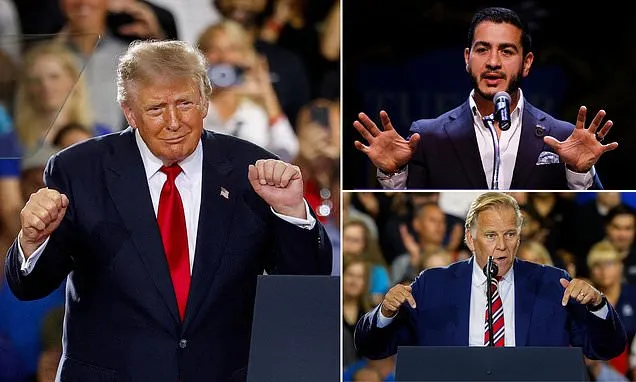
Abdul El-Sayed has secured the Democratic nomination for Michigan’s U.S. Senate seat, narrowly defeating Representative Haley Stevens in a primary race that concluded with a razor-thin margin. The victory sets the stage for a general election contest against Republican Mike Rogers, a race that has already drawn sharp commentary from former President Donald Trump and strategists from both parties.
El-Sayed Secures Tight Victory in Michigan Senate Primary
The Michigan Senate primary, with the seat open due to the retirement of two-term Democrat Gary Peters, concluded with Abdul El-Sayed winning by a single percentage point over Haley Stevens. With 99 percent of ballots tallied, El-Sayed held 48.5 percent of the vote compared to Stevens’ 47.5 percent. The Associated Press confirmed El-Sayed’s win on Wednesday morning, following projections made by NBC News earlier. The close result defied earlier polling, which had suggested Stevens might hold a more comfortable lead.
El-Sayed, a physician and former gubernatorial candidate, addressed supporters in Detroit, framing his victory as a triumph of grassroots support over established political machinery. “We took on a machine,” he stated. “The power of our many is greater than the power of their money.” Stevens formally conceded the race on Wednesday morning and pledged her support to El-Sayed’s general election campaign.
Republican Reaction and General Election Strategy
Former President Donald Trump reacted to El-Sayed’s win on social media, calling him a “Communist loser” while simultaneously characterizing the progressive’s victory as “Great news for the Republican Party.” Trump also commented on the polling inaccuracies, noting that Stevens performed significantly better than anticipated. “As usual, the Polls were way off on this one. She was not expected to do nearly as well as she did,” Trump posted. “Now, the Democrats’ crazy policies will only get worse.”
Conservative strategists have long viewed El-Sayed as a potentially favorable opponent for Republican Mike Rogers, who ran unopposed in the GOP primary after receiving an early endorsement from Trump, which effectively cleared the field. Jessica Anderson, president of the Sentinel Action Fund, a group backing Rogers, stated that the primary result should simplify the choice for voters in November, contrasting “a far-Left socialist” with “an America First leader.” The Sentinel and its affiliated Right Vote group have committed substantial funding, totaling $15 million, to the Michigan race.
Vice President JD Vance also weighed in, expressing concern about a potential El-Sayed presidency. “You never know what a future administration could look like, adding, ‘God forbid you’re gonna have President El-Sayed in three years.’
El-Sayed Challenges Rogers to Debates
Following his primary win, El-Sayed wasted no time in engaging his Republican opponent, formally challenging Mike Rogers to five debates. This move signals El-Sayed’s intent to actively campaign and contrast his platform with Rogers’ on a public stage.
Key Factors and Concerns for the General Election
The race for Michigan’s Senate seat is considered pivotal for control of the Senate, with political analysts rating it as a toss-up. Republicans have not secured a Senate victory in Michigan since 1994. While Rogers is seen by some as a strong contender, his narrow loss to Elissa Slotkin in 2024, by just three-tenths of a percentage point, highlights the competitive nature of statewide races in Michigan.
Concerns have been raised within Democratic circles about El-Sayed’s ability to build a broad enough coalition to win in November. Adam Jentleson, a Democratic strategist, noted that while El-Sayed is talented, it is “not irrational to worry” about his general election prospects, especially as he trails his Republican opponent in key polling. El-Sayed’s primary campaign was marked by significant spending from outside groups, particularly AIPAC’s super PAC, which made its largest single-race investment in history to support Stevens. Democrats collectively spent an estimated $98.2 million in intra-party contests, making it one of the most expensive Senate primaries on record.
El-Sayed’s platform includes advocating for “Medicare for All” and addressing issues such as housing affordability. However, his campaign has also faced scrutiny regarding his wife’s psychiatric practice, which reportedly only accepts out-of-pocket payments. El-Sayed’s general election challenge will involve appealing to a wider range of Democratic voters beyond those who supported him in the primary, including nearly half of the Democrats who voted against him.
Broader Trends in Progressive Victories
El-Sayed’s primary win is part of a broader trend of progressive candidates achieving electoral success. In recent months, several candidates backed by prominent progressive figures have won their primaries, including in New York and Colorado. These victories suggest a growing influence of progressive ideology within the Democratic Party.
Furthermore, Michigan’s early placement in the 2028 presidential nominating contest could offer El-Sayed, if elected to the Senate, a significant platform. The Democratic National Committee has awarded the state one of six early slots for the 2028 primaries, potentially giving him leverage in future national political discussions.
Conclusion: A Competitive General Election Looms
The Michigan Senate race is shaping up to be a closely watched contest. El-Sayed’s narrow primary victory sets him against Mike Rogers in a battle that will likely focus on contrasting ideologies and policy approaches. The outcome could significantly impact the balance of power in the U.S. Senate, with both parties investing heavily in their strategies to win this critical swing state.