
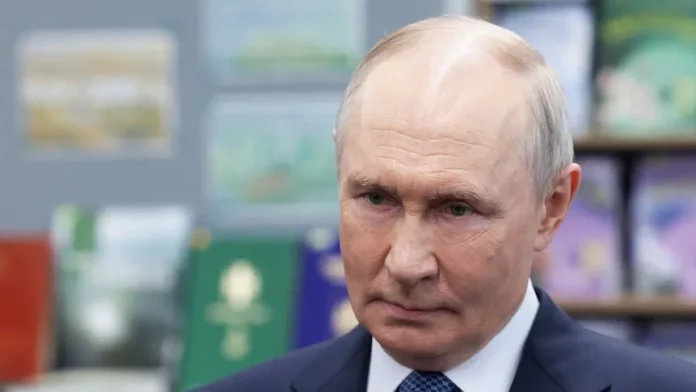
Ukraine has intensified its drone campaign, launching strikes deep within Russian territory on an almost daily basis since June. These attacks have targeted key infrastructure, including oil refineries and, more recently, distribution centers for Russia’s dominant online retailer. The sophisticated, long-range drones have even reached Siberia, covering distances exceeding 2,000 kilometers to strike energy facilities. Ukrainian President Volodymyr Zelenskyy has stated his objective is to make the war’s impact felt by ordinary Russians by disrupting the country’s economy and daily life. However, some analysts caution that this strategy carries significant risks, potentially providing Russian President Vladimir Putin with justification for escalating the conflict and bolstering domestic support for the war.
Escalating Drone Warfare
The frequency and boldness of Ukraine’s attacks on its neighbor have increased markedly in recent weeks. One particularly deadly strike occurred recently, resulting in at least 13 fatalities, including a child. Russian authorities reported intercepting 456 Ukrainian drones during this incident, though some managed to penetrate defenses, striking an oil refinery and a hostel in Nizhnekamsk, a city located over 1,000 kilometers east of Moscow. In a separate incident last week, seven people lost their lives on a beach in southern Russia when a Ukrainian drone was downed and crashed.
Marina Miron, from the Department of Defence Studies at King’s College London, described Ukraine’s current approach as potentially a “last resort” strategy, given the nation’s challenging circumstances. “It seems like Ukraine is in quite a precarious situation… this sort of a strategy is one of last resort, because Ukraine has its back against the wall,” Miron explained.
Justification and Economic Impact
Ukraine has framed these drone strikes as a retaliatory measure against Russia’s ongoing bombardment of civilian areas within Ukrainian cities, which has also seen an uptick. Charles Hecker, an associate fellow at the Royal United Services Institute in London, noted that the campaign appears to be achieving its goal of pressuring Russia’s economy.
“It’s been effective on a number of fronts, it continues to take the Russians by surprise and to remind them that their air defences are surprisingly weak,” Hecker commented. “The damage that Ukraine has done to Russian energy capacity is really quite significant; oil refining capacity in Russia is now down by about 20 per cent.” The persistent attacks on oil facilities have led to widespread reports of long queues at petrol stations across Russia throughout the summer.
While acknowledging the substantial economic strain these attacks have placed on Russia’s energy sector, Hecker suggested that predictions of an “impending collapse” of the Russian economy might be overstated. However, Ukraine’s targeting of Wildberries, Russia’s largest online marketplace and a company often likened to Amazon, is making the war’s economic consequences more tangible for the average Russian citizen.
Potential for Backfire
The reach of Wildberries in Russia is extensive, serving 79 million users monthly and contributing approximately 2% to the nation’s Gross Domestic Product. John Lough, head of foreign policy at the New Eurasian Strategies Centre, raised concerns that this strategy could prove counterproductive.
“It is a real possibility that a section of the Wildberries consumer base will say, yeah, we should be fighting this war more aggressively,” Lough stated. “They could also say we shouldn’t have allowed this to happen because the Ukrainians did this to us with the support of their Western partners and we understand what Putin’s saying, that we are at war with the so-called collective West.”
Even within Ukraine, the long-range drone strategy has faced scrutiny from some opposition members of parliament. They question the associated risks, arguing that Ukraine’s strikes inside Russia could provoke a more severe retaliatory response from Moscow.
Rallying Support for Putin?
Miron warned that the drone campaign might ultimately “backfire” on President Zelenskyy and potentially consolidate public backing for President Putin. “One portion of the [Russian] population might be dissatisfied and afraid [because of the attacks], the other portion of the population, which was neutral or perhaps against the war, might now be supporting the war,” she elaborated. “People could be saying, Putin was right all along, they’re attacking Wildberries — it’s a civilian target, so this can be perfectly used by the Russian government to convince the population of the righteous cause of the war.”
As Ukraine extends its operations into Russian territory, Moscow’s response has been decisive. Russia has targeted critical Ukrainian infrastructure, such as the Odesa Port, repeatedly disrupting vital shipping operations and jeopardizing a key economic artery for Ukraine. Alexey Muraviev, an associate professor and senior research fellow in defence and strategic studies at Edith Cowan University, highlighted the significant disruption Russia’s actions are causing within Ukraine.
“Russia are systematically destroying petrol stations, certainly in Ukraine’s east, which also causes enormous problems with people refuelling, and they are targeting bridges and railway systems,” Muraviev noted. “So Ukraine is actually [receiving] more damage in addition to now growing international criticism while Russian civilian casualties are actually increasing.”
Air Defense Shortages and Escalation
While Russia had been striking Ukrainian cities and civilian infrastructure, including apartment buildings, prior to Kyiv’s recent drone offensive, the situation has escalated. The United Nations recently reported a “disturbing escalation” in civilian casualties, with hundreds killed and thousands injured in Ukraine over the summer. Compounding these challenges, Ukraine is experiencing a critical shortage of interceptor missiles.
“A few days ago, Putin hurled buckets of ballistic missiles at Kyiv and Ukraine wasn’t able to shoot them down,” Hecker observed, referencing an incident where Ukraine suffered a significant spike in civilian casualties. Reports indicate that Ukraine has received only a third of the air defense systems from its allies this year compared to the same period last year, a situation described as “really quite desperate” by Hecker.
A Bid for Negotiations?
Analysts suggest that Ukraine’s increased drone strikes deep into Russia may be an attempt to compel President Putin to return to the negotiating table and seek an end to the war. However, there is currently little evidence to suggest this objective is being met. President Zelenskyy’s strategy of making the war’s impact more acutely felt within Russia is having an effect. The ultimate question remains whether the hardships experienced by his own people as a result of this strategy will yield any positive outcomes for Ukraine.