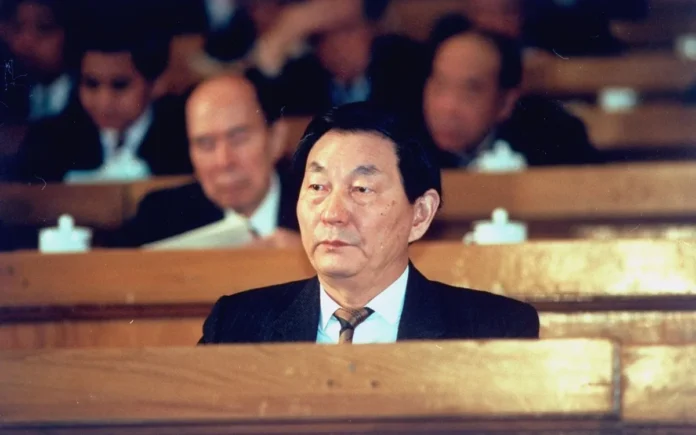
Zhu Rongji, a pivotal figure in China’s modern economic history, has passed away at the age of 97. Serving as Premier from 1998 to 2003 under President Jiang Zemin, Zhu was instrumental in steering the People’s Republic of China towards a market-oriented economy and was a chief architect of its landmark entry into the World Trade Organization (WTO). His tenure is widely credited with laying crucial groundwork for China’s subsequent economic ascent in the 21st century.
A Visionary Leader in Economic Reform
Upon his appointment as Premier, succeeding Li Peng, Zhu Rongji garnered cautious optimism from international observers. Many saw him as a pragmatic leader with whom Western nations could engage constructively. His approach was characterized by a blend of shrewdness and a commitment to reform, often described as embodying an economic vision that embraced free-market principles, drawing parallels to figures like Margaret Thatcher in the West. This was a significant departure from the more centrally planned economic models that had previously dominated.
Zhu’s reputation for effective governance was significantly burnished during his time as Mayor of Shanghai. In this role, he demonstrated a capacity for measured responses to public dissent, a stark contrast to the more forceful actions taken elsewhere. Notably, during the pro-democracy movements, Zhu is recognized for his calm handling of the situation in Shanghai. By appearing on television and explicitly stating his intention not to deploy the military, he is credited with de-escalating tensions. The protests in Shanghai subsequently subsided without the violent confrontations seen in Beijing in 1989, a period marked by the Tiananmen Square military crackdown under Premier Li Peng.
Navigating Global Economic Integration
Perhaps Zhu Rongji’s most enduring legacy is his leadership in negotiating China’s accession to the World Trade Organization. This complex and protracted process required intricate diplomacy and a willingness to undertake significant domestic economic reforms to align with international trade standards. His successful negotiation of these terms opened China to unprecedented levels of foreign investment and global trade, fundamentally altering its economic trajectory.
The WTO entry was more than a symbolic achievement; it was a strategic move that integrated China into the global economic system. This integration facilitated access to foreign markets for Chinese goods and services, while also exposing domestic industries to international competition, thereby spurring innovation and efficiency. Zhu’s foresight in pursuing this goal positioned China as a major player on the world economic stage.
Key Economic Policies and Reforms
During his premiership, Zhu Rongji championed a series of bold economic reforms aimed at modernizing state-owned enterprises (SOEs), reforming the financial sector, and streamlining government administration. These reforms were often challenging, involving significant restructuring and, at times, painful adjustments for many workers.
- State-Owned Enterprise Reform: Zhu initiated a significant overhaul of SOEs, aiming to improve their efficiency and competitiveness. This involved mergers, acquisitions, and, in some cases, closures, leading to substantial layoffs but also creating a more dynamic industrial landscape.
- Financial Sector Modernization: He recognized the critical role of a robust financial system in supporting economic growth. Reforms were introduced to strengthen banking regulations, improve risk management, and develop capital markets.
- Fiscal and Tax System Reform: Efforts were made to centralize tax collection and create a more unified national market, reducing internal trade barriers and improving fiscal discipline.
- Anti-Corruption Measures: Zhu also placed a strong emphasis on combating corruption, recognizing it as a significant impediment to economic development and social stability.
Impact and Legacy
Zhu Rongji’s leadership coincided with a period of explosive economic growth for China. While the benefits of this growth were not evenly distributed, and the reforms brought their own set of challenges, his policies undeniably propelled China onto the global economic stage. He is remembered for his pragmatic approach, his intellectual rigor, and his unwavering commitment to modernizing China’s economy.
His ability to navigate complex domestic political landscapes while engaging effectively with international partners cemented his reputation as a transformative leader. The economic landscape of China today, a global powerhouse, bears the indelible imprint of Zhu Rongji’s strategic vision and decisive leadership during a critical period of transition.
Early Career and Rise to Prominence
Born in Changsha, Hunan province, Zhu Rongji’s early career was shaped by his education in electrical engineering at China’s elite Tsinghua University. He joined the Communist Party in 1949. His early work experience was primarily within state planning and economic management bodies. He served in various significant roles, including vice-minister of the State Planning Commission and vice-governor of the People’s Bank of China, before his appointment as Mayor of Shanghai in 1987.
His tenure in Shanghai, from 1987 to 1991, was particularly crucial in building his national profile. As mayor, he oversaw rapid economic development and modernization in the city, attracting foreign investment and implementing market-oriented reforms. His success in Shanghai provided a blueprint and a testament to his capabilities, paving the way for his subsequent national appointments.
Challenges and Criticisms
Despite his achievements, Zhu Rongji’s reform agenda was not without its critics or its difficult consequences. The restructuring of state-owned enterprises led to significant unemployment, creating social challenges that required substantial government attention and welfare programs. The rapid pace of economic liberalization also raised concerns about increasing inequality, environmental degradation, and the potential for corruption within the evolving system.
Furthermore, the transition to a market economy involved navigating the inherent tensions between economic liberalization and the Communist Party’s political control. Zhu’s ability to balance these forces was a testament to his political acumen, though the long-term implications of this balance continue to be debated.
Conclusion
Zhu Rongji’s passing marks the end of an era for China. His leadership during a period of profound economic transformation was characterized by a bold embrace of market principles and a determined effort to integrate China into the global economy. His legacy is complex, encompassing remarkable economic achievements alongside the social and environmental challenges that accompanied such rapid change. He remains a central figure in understanding China’s journey from a centrally planned economy to a global economic superpower.