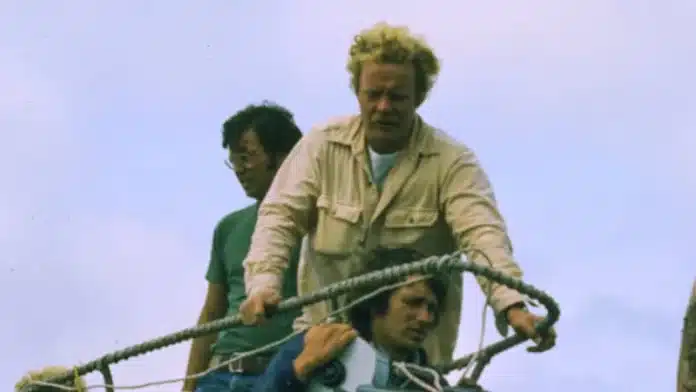
The iconic 1975 film Jaws instilled a primal fear of the ocean for a generation, but behind the chilling on-screen terror lay a production plagued by technical difficulties and on-set tensions. A new play, The Shark is Broken, delves into these off-screen challenges, focusing on the volatile relationships between the film’s three leading actors: Richard Dreyfuss, Roy Scheider, and Robert Shaw.
The Unseen Terror: Jaws’ Mechanical Woes
Steven Spielberg, then only 27, faced immense hurdles directing Jaws. The film’s central antagonist, a 1200-kilogram mechanical shark affectionately nicknamed “Bruce,” was notoriously unreliable. Filming in open water exacerbated these issues, leading to frequent malfunctions that left the animatronic creature unusable for significant portions of the shoot. This absence of the shark became a powerful, albeit unintentional, storytelling device.
Spielberg masterfully compensated for the mechanical failures by employing innovative filmmaking techniques. The menacing point-of-view shots from the shark’s perspective, the terrifying moments of swimmers being pulled beneath the waves by an unseen force, and the simple yet effective two-note musical cue signaling the shark’s approach all contributed to the film’s enduring suspense. These elements, born out of necessity due to the malfunctioning “Bruce,” ultimately amplified the horror and cemented Jaws as a landmark in the creature feature genre.
A Cast Under Pressure
The Shark is Broken dramatizes the off-screen dynamics between the film’s stars, each bringing their distinct personalities and professional ambitions to the set.
- Richard Dreyfuss: The young “New Hollywood” actor was eager to prove his acting prowess in a major blockbuster.
- Roy Scheider: Known for his roles in acclaimed films like Klute and The French Connection, Scheider brought a seasoned presence to the production.
- Robert Shaw: The legendary British actor, with a diverse resume including roles as a Bond villain and Henry VIII, anchored the film with his powerful performance.
The play explores the “structuring absence” of the shark on screen, mirroring how Robert Shaw himself, despite his significant presence, becomes a central, almost absent, figure in the narrative of the production’s challenges.
From Personal Grief to Universal Themes
The genesis of The Shark is Broken lies with Ian Shaw, son of Robert Shaw, who also acts in the play, sometimes portraying his father. For years, Ian avoided discussing his father, who died of a heart attack when Ian was just eight years old. While “nepo babies” are common in show business, Ian Shaw had established his own career independently before conceiving the play.
The idea began to form after a pivotal meeting with Richard Dreyfuss in Birmingham. When Ian introduced himself as the son of his Jaws co-star, Dreyfuss reportedly had a strong, almost overwhelmed reaction. This encounter, coupled with Ian’s recollection of the documented rivalry between his father and Dreyfuss during filming, as detailed in Carl Gottlieb’s book The Jaws Log, sparked the playwright’s interest.
Initially hesitant, Ian Shaw worried about the play’s potential to be in poor taste or cause distress to his large family (Robert Shaw had 10 children from three marriages). However, encouraged by friends to explore the compelling “backstory” of Hollywood’s first true blockbuster, he collaborated with co-writer Joseph Nixon. They aimed to capture the essence of the film’s production, acknowledging the volatile relationships and the immense pressure the cast endured.
From Fringe Festival to West End Success
The initial vision for The Shark is Broken was modest: a small-scale tour of intimate venues across the UK. However, the play’s debut at the Edinburgh Fringe Festival revealed its unexpected potential. The production was notably scrappy, with the actor playing Roy Scheider also serving as the set designer, and the three cast members building the set themselves shortly before performances.
Word of mouth quickly spread about the quality of the show, leading to sold-out performances and attracting attention from producers. The play’s success at the Fringe, a notoriously competitive environment, defied expectations. As Ian Shaw noted, the demand for tickets was so high that it became clear they “needed a bigger theatre.” This grassroots success paved the way for a significant West End run, followed by a season on Broadway.
Capturing Jaws’ Shifting Tones
Critics have lauded The Shark is Broken for its humor, a quality that Ian Shaw believes is integral to Jaws itself. “Jaws is a very funny film,” he stated. “The headline is that it’s a horror film or a thriller. But it’s very funny, and funnier as the years go by.” The play aims to reflect the film’s unique ability to shift tones abruptly, moving from intense thriller to small-town satire to seafaring adventure.
To authentically portray the characters, Shaw and Nixon immersed themselves in available documentaries and interviews. “Some of [the dialogue] is what they actually said. And then you fill in the blanks,” Shaw explained. “You try to guess what they might have said from how they felt.” This approach allowed them to delve into the psychological states of the actors during the challenging filming process.
A Father-Son Reckoning and Universal Resonance
For Ian Shaw, performing in the play, particularly when embodying his father, has been a profound act of reconciliation. A critic observed that Shaw “simultaneously summons his father, redeems him, equals him, and merges with him.” This process of confronting his father’s memory has allowed Ian to explore universal themes of father-son relationships.
“There are pieces of your father within you, and you’re sifting through that,” Shaw reflected. “There are times where you’re not in alignment, but there are times where you’re very strongly in alignment.” Ultimately, the play evolved from a personal exploration of his relationship with his father to a broader commentary on the complex bonds between all fathers and sons.
The Shark is Broken has completed its runs in Sydney and Melbourne, with its journey from a small fringe production to a critically acclaimed stage play mirroring the unexpected triumphs that can arise from challenging circumstances, much like the production of Jaws itself.