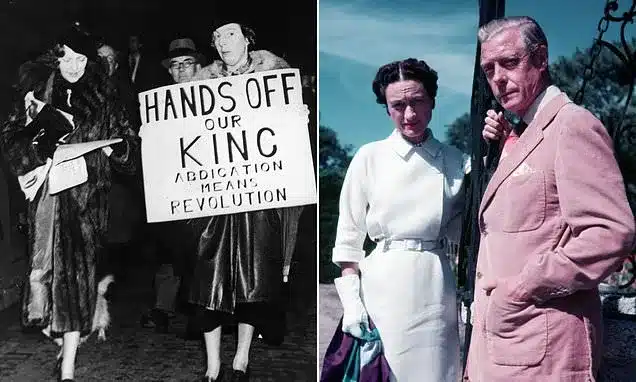
The summer of 1936 proved a pivotal and ultimately disastrous period for King Edward VIII, as a controversial holiday in Balmoral, Scotland, exacerbated his scandalous relationship with American divorcée Wallis Simpson, pushing the monarchy towards an unprecedented crisis. The King’s infatuation with Mrs. Simpson, coupled with her perceived arrogance and lack of discretion, deeply offended Scottish sensibilities and alienated key figures, sowing the seeds for his eventual abdication.
The Growing Scandal of the King and Mrs. Simpson
By 1936, the relationship between King Edward VIII and Wallis Simpson had already garnered significant international attention. Their lavish Mediterranean cruise aboard the luxury yacht Nahlin, during which the King was frequently photographed shirtless, was widely reported and criticized. Mrs. Simpson had already initiated divorce proceedings against her then-husband, signaling the seriousness of her involvement with the King. However, it was the King’s decision to invite Mrs. Simpson to Balmoral, the highly official and historically significant royal estate in Scotland, that transformed a scandalous liaison into a full-blown constitutional crisis.
Sir Winston Churchill, a prominent figure at the time, voiced strong disapproval of Mrs. Simpson’s presence at Balmoral, emphasizing its sacred status and the concentrated attention it drew from Scotland. He suggested alternative arrangements for the King to see her, highlighting the impropriety of hosting her at such a revered location. Despite these warnings, Mrs. Simpson did indeed travel to Balmoral, a decision that would have far-reaching consequences.
The Balmoral Visit: A Clash of Cultures and Expectations
The fortnight Mrs. Simpson spent at Balmoral proved deeply unsettling for the royal guests and staff. The American socialite was perceived by many as cocky and grating, her behavior clashing with the traditional decorum expected at the royal estate. Her presence alienated not only the local community in Aberdeen but also Scotland as a whole. Furthermore, the visit solidified the animosity of the Duchess of York, who would later become the Queen Mother, a sentiment that would endure for decades.
Edward VIII, despite his intelligence and linguistic abilities, appeared consumed by his obsession with Mrs. Simpson. His infatuation led him to shower her with expensive jewelry and considerable sums of money, potentially even buying off her husband. He was seen performing subservient acts, such as adjusting her skirt or fetching her a nail file. State papers were reportedly left strewn by the swimming pool, returned to Whitehall crumpled and bearing marks, indicating a severe lapse in his royal duties.
The King’s disregard for protocol was further evident at official functions. At a dinner honoring Prime Minister Stanley Baldwin in May 1936, the Simpsons were guests, and Mrs. Simpson was accorded precedence over other women. Their inclusion in the Court Circular the following day caused outrage among officials like John Reith of the BBC and Alec Hardinge, the King’s private secretary, who deemed the public flaunting of the affair “almost incredible.”
The Nahlin Cruise and Escalating Public Discontent
The summer cruise on the Nahlin, described by one equerry as “furnished like a Calais whore-shop,” further intensified the scandal. The yacht, carrying a mix of aristocrats and Mrs. Simpson’s friends, visited various European ports, where the couple was photographed and celebrated by the press. While British newspapers remained silent due to a voluntary D-Notice system, exiles abroad sent clippings home, making the scale of Mrs. Simpson’s notoriety evident.
Faced with this growing public awareness, Mrs. Simpson attempted to end the affair in September, expressing concerns about creating disaster together. The King’s response was a desperate plea, threatening self-harm if she did not join him in Scotland. This dramatic exchange underscored the depth of his fixation and the precariousness of the situation.
Confrontation and Alienation in Scotland
The King’s arrival at Balmoral with Mrs. Simpson was met with shock and disapproval. Guests, including the Duke and Duchess of Buccleuch, attempted to reason with Mrs. Simpson, but their efforts were in vain. Meanwhile, the Duke and Duchess of York were staying nearby, pointedly inviting the Archbishop of Canterbury, Cosmo Gordon Lang, a figure Edward VIII disliked due to his past conversations with George V about the King’s “depravities.”
The King’s refusal to attend the opening of the new Aberdeen Royal Infirmary, citing mourning for his father (a reason that did not prevent his brother and sister-in-law from attending), caused significant local resentment. This was compounded when he personally drove to Aberdeen to meet Mrs. Simpson and her friends, an act widely recognized and noted, even by a slow-witted policeman.
Mrs. Simpson’s behavior within Balmoral was a source of constant consternation. Staff were reportedly ordered to fetch her champagne and prepare specific club sandwiches at all hours. She was seen as overbearing, even dictating fashion choices to staff. The King’s habit of passing Cabinet papers to her for her opinion, despite ministers increasingly withholding sensitive documents, further demonstrated his abdication of royal responsibility.
The Humiliation at Balmoral
A critical moment occurred when the Duke and Duchess of York arrived for dinner. As they entered the dining room, Mrs. Simpson stepped forward to greet them as the appointed hostess. The Duchess of York, however, pointedly ignored her, stating, “I came to dine with the King.” This public snub marked a definitive break in relations between the couples and further isolated the King and Mrs. Simpson.
Following this incident, the couple departed Balmoral, unaware of the growing anti-American sentiment and graffiti appearing in Aberdeen. The events at Balmoral served as a tipping point, making abdication seem inevitable. With key figures like Prime Minister Baldwin and senior mandarins eager for a resolution, the King’s phones were tapped, and his family was increasingly alienated.
Abdication and Exile
The British press finally broke their silence on December 2, 1936, leading to Mrs. Simpson fleeing the country. Cornered, Edward VIII signed the Instrument of Abdication on December 10. His loyal attendants refused to join him in exile, with one famously telling the former King, “Your name’s mud!” His marriage to Wallis Simpson in June 1937 was attended by none of his royal relatives.
The abdication was widely seen as a “great blessing and a merciful deliverance” by many, including clergy. While Edward VIII was a man of intelligence and charm, his fixation on Wallis Simpson, particularly after ascending the throne, irrevocably altered his destiny and that of the British monarchy. His reign, though brief, remains a subject of enduring fascination, a stark reminder of the personal desires that can clash with the demands of royal duty.
Decades later, at a plaque unveiling in 1967, Mrs. Simpson, now the Duchess of Windsor, met Elizabeth II. While she curtsied to the Queen, she conspicuously failed to do so to the Queen Mother. An old sailor who served on the Nahlin in 1936 summed up his impression of the royal couple with a blunt assessment: “She was what she was – but he was a rogue and a rascal.”