
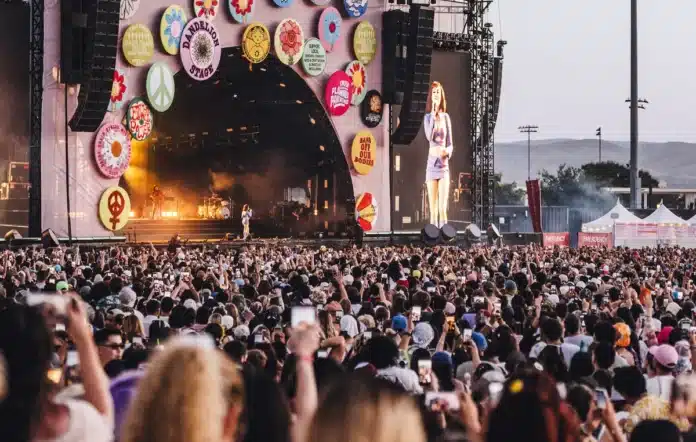
Olivia Rodrigo’s inaugural Daisy Chain Fields festival, held on August 29th at Great Park in Irvine, California, marked a significant event dedicated to celebrating and empowering women in the music industry. The one-day festival featured an entirely female lineup and committed 100 percent of its net proceeds to ten nonprofit organizations focused on advancing the rights and opportunities of women and girls.
A Legacy of Empowerment: Daisy Chain Fields and Its Predecessors
The concept of an all-women music festival echoes the spirit of the Lilith Fair, which gained prominence in the late 1990s during a period when radio airplay for female artists was notably limited. Sarah McLachlan, the founder of Lilith Fair, was honored at Daisy Chain Fields as a special guest, alongside other iconic artists like Alanis Morissette and Stevie Nicks. Rodrigo revealed that McLachlan was the first artist she approached when conceptualizing the festival, highlighting a deep respect for the pioneers who paved the way.
A Diverse and Intergenerational Lineup
Daisy Chain Fields showcased a broad spectrum of musical talent, spanning various genres and generations. The lineup included influential figures from punk and rock, such as Bikini Kill, Garbage, and The Breeders, alongside contemporary stars like Doechii and Chappell Roan, and emerging artists like pop singer Eli and the metal band Die Spitz. This diverse assembly served as a powerful testament to the ongoing solidarity among women and girls striving for a more equitable music industry and a more just world.
The festival grounds themselves were a canvas for this spirit of empowerment. The main pathway, named Daisy Lane, was adorned with quotes and notable achievements from pioneering women across numerous fields. Nine art installations by female artists, including works by Yoko Ono and Jenny Holzer, were featured throughout the park. Additionally, an interactive “complaint department” created by the artist-activist collective Guerilla Girls offered attendees a space to voice their grievances about societal issues.
Memorable Musical Moments
Beyond its thematic significance, Daisy Chain Fields delivered a day filled with exceptional musical performances. Highlights included Die Spitz engaging directly with the audience, Doechii’s vibrant set featuring striking body paint, Mitski’s powerful vocal delivery, and unreleased music from Rachel Chinouriri. Chappell Roan captivated the crowd with her collection of anthemic hits.
Emerging artist Eli made a notable impression with her energetic pop performance, drawing comparisons to early 2000s hits. Her confident stage presence and concluding remarks about social change indicated a promising future in the music industry.
Rodrigo’s Closing Set and Philanthropic Impact
The festival culminated with a memorable performance by Olivia Rodrigo. During her set, she announced that Daisy Chain Fields had successfully raised $10 million, a figure that would be matched by philanthropist Melinda French Gates, doubling the impact for their nonprofit partners. The announcement was met with immense enthusiasm from the audience.
Rodrigo’s performance included fan favorites from her albums ‘Sour’ and ‘Guts,’ the live debut of her new song ‘Serena Joy,’ and selections from ‘You Seem Pretty Sad For A Girl So In Love.’ The set was further elevated by the appearances of special guests.
Collaborations and Tributes
Sarah McLachlan joined Rodrigo on stage for duets of ‘Building a Mystery’ and ‘Angel.’ The latter performance was dedicated to the late Dolly Parton, whom McLachlan praised as a significant figure in country music philanthropy.
In place of Karen O, who was unable to attend due to a family emergency, Alanis Morissette performed ‘Ironic’ with Rodrigo. The festival concluded with a poignant rendition of ‘Landslide,’ featuring Stevie Nicks. The duet under the moonlight, with both artists harmonizing, created an emotionally resonant moment that underscored the festival’s theme of intergenerational connection and collective strength.
A Triumph of Unity and Empowerment
Daisy Chain Fields stood as more than just a music festival; it was a powerful statement on the importance of supporting women in the arts and advocating for their advancement. The event’s success, both musically and philanthropically, highlighted the potential for large-scale initiatives to foster solidarity and drive meaningful change. The festival’s blend of established icons and rising stars, coupled with its commitment to charitable causes, solidified its status as a triumphant celebration of female talent and empowerment.