The UK government has confirmed it will not provide taxpayer-funded financial assistance to bail out Jaguar Land Rover (JLR) as the automaker reportedly plans to eliminate approximately 4,000 jobs from its UK workforce. This decision comes as JLR, which employs around 34,000 people in the UK, has initiated a voluntary redundancy program for its employees.
Jaguar Land Rover’s Restructuring Plans
Reports, including those from The Times, suggest that the voluntary redundancy scheme could lead to as many as 4,000 job losses. These measures are part of a broader strategy by JLR to achieve cost savings of £1.7 billion (approximately A$3.19 billion) over the next two years. This move follows a period of significant financial challenges for the company, which has already received substantial financial backing.
In September 2025, JLR benefited from a £1.5 billion (approximately A$2.82 billion) loan guarantee backed by the British government. Additionally, the company secured a £2 billion (approximately A$3.76 billion) bridge facility to address its short-term funding requirements amidst considerable financial losses.
Government Stance on Bailouts
UK Business Secretary Jonathan Reynolds stated unequivocally that the government would not deploy public funds to support the automaker. He emphasized that his role does not involve intervening to manage private businesses. “A company the size of JLR, which is a huge British success story, at various times in its business cycle, the number of, directly, people it employs will change,” Mr. Reynolds explained in comments to the BBC. “If this is about making sure over time that the workforce is right to make the business as competitive as possible, that’s the conversation we need to have.”
While ruling out a bailout, Mr. Reynolds indicated his intention to meet with JLR representatives on Tuesday, September 8, to explore potential strategies for mitigating the impact of job losses. However, the principle of a government bailout remained off the table.
Potential Policy Shifts and Industry Trends
Amidst these developments, discussions are reportedly underway regarding potential adjustments to UK government policies. One such consideration, as noted by The Guardian, involves potentially softening the current target for 80% of new car sales to be zero-emission vehicles by 2030. Mr. Reynolds has not ruled out modifications to this ambitious goal.
This potential shift aligns with broader international trends. The European Commission has proposed amending its previous mandate, which required manufacturers to sell only zero-emission vehicles by 2035. The proposed change would introduce a 90% target, allowing automakers to continue offering a limited number of hybrid vehicles.
Jaguar’s Brand Reinvention and Financial Performance
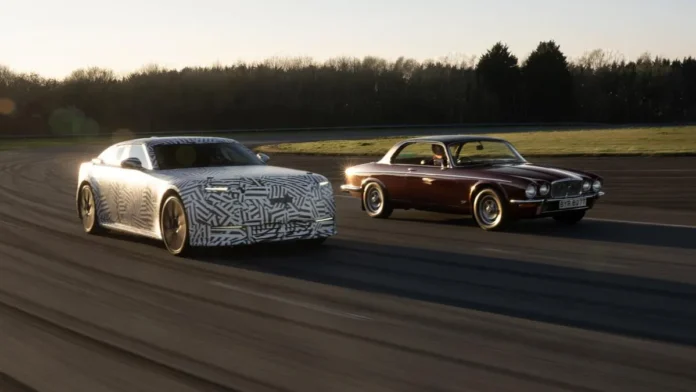
The reported job cuts and restructuring efforts coincide with Jaguar’s significant brand transformation. The company is preparing to unveil the Jaguar Type 01 in New York on October 6, 2026. This new model is central to Jaguar’s strategy to reposition itself as a premium, all-electric vehicle (EV) brand, marking a departure from its historical product lines. This reinvention comes after a challenging financial period for JLR.
Following a substantial after-tax profit of £1.8 billion (approximately A$3.4 billion) in the preceding financial year, JLR recorded a net loss of £244 million (approximately A$458 million) for the 2025–26 financial year, which concluded on March 31, 2026. The company attributed this downturn to several factors, including the lingering effects of a severe cyber-attack, changes in US import tariffs, and the costs associated with the Jaguar brand’s strategic overhaul.
Past Challenges and Industry-Wide Layoffs
JLR has faced a series of significant operational hurdles. Approximately a year prior to these reports, the company was the target of a major cyber-attack that disrupted production across its global factories for about a month. This stoppage incurred an estimated cost of £50 million (approximately A$93.88 million) per week and had ripple effects throughout the UK’s supply chain.
Furthermore, evolving US import tariffs impacted JLR’s export strategy, leading to a temporary pause in shipments to the United States. This was particularly significant given that North America, with the US as its largest market, accounted for 22% of JLR’s global sales in 2025.
The departure of Gerry McGovern, a long-serving designer known for his work on iconic models like the reborn Defender and multiple generations of Discovery and Range Rover, also marked a notable change within the company. His exit followed a period of public speculation and eventual confirmation.
JLR’s workforce reduction plans are not unique within the automotive sector. Other manufacturers are also undertaking significant restructuring and job cuts. Lotus, a British brand owned by China’s Geely, recently reduced its workforce by 550 employees. The Volkswagen Group, a global automotive giant, has approved a major restructuring that could involve up to 100,000 job losses. Similarly, BMW has planned to cut 8,000 jobs by the end of 2027, and Mercedes-Benz completed a voluntary redundancy program that affected approximately 5,500 workers between April 2025 and March 2026.
Company Background
Jaguar Land Rover, headquartered in Coventry, England, has been under the ownership of Indian conglomerate Tata Motors since 2008, having previously been owned by the Ford Motor Company. The company’s strategic decisions and financial performance continue to be closely watched, particularly in light of its ongoing transition to electrification and its significant role in the UK automotive industry.