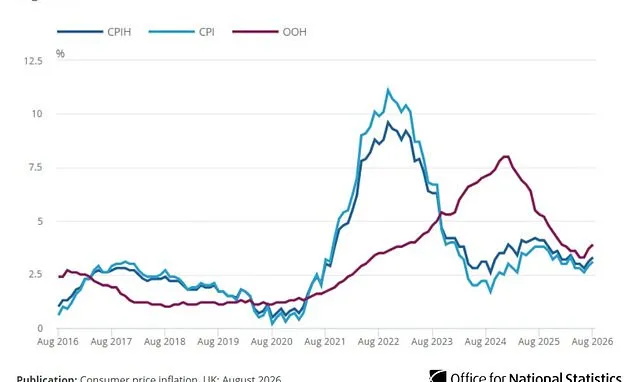
The United Kingdom is facing renewed inflationary pressures as official figures reveal a rise in the Consumer Prices Index (CPI) to 3.1% for the year ending August. This marks an increase from the 2.9% recorded in the previous month, aligning with economists’ expectations but sparking concerns about future price hikes.
Inflationary Trends and Economic Outlook
The uptick in the headline inflation rate comes at a time of significant global uncertainty, particularly concerning energy markets. The deepening crisis in the Middle East has led to soaring oil prices, with Brent Crude reaching $108 per barrel. This volatility in energy costs is a primary driver behind the upward revision of inflation forecasts.
Analysts are projecting that household energy bills could see a substantial increase of up to 25% in January. This potential surge, coupled with broader economic challenges, places pressure on the government as it prepares for the upcoming Budget. The government faces the complex task of managing public finances while mitigating the impact of rising living costs on its citizens.
Potential for Further Rate Hikes
The escalating inflation figures have led some economists to predict that the CPI could reach 4% in the coming year. In response to these projections, financial markets are anticipating a series of interest rate increases by the Bank of England. The central bank’s Monetary Policy Committee is set to announce its latest decision on interest rates imminently, though current market sentiment suggests a pause in rate hikes is likely at this immediate meeting.
The Bank of England’s primary objective in adjusting interest rates is to curb inflation and prevent it from spiraling out of control. By making borrowing more expensive, the aim is to reduce consumer spending and investment, thereby cooling demand and easing price pressures.
Factors Influencing Energy Prices
The recent instability in global energy markets has been exacerbated by geopolitical events. Specifically, the collapse of a ceasefire deal between the US and Iran on July 8th has contributed to a steady rise in gas prices since that date. The interconnectedness of global energy supplies means that regional conflicts and political developments can have far-reaching consequences for commodity prices worldwide.
The price of oil, a key global commodity, is a significant factor influencing inflation. When oil prices rise, the cost of transportation, manufacturing, and energy production increases, leading to higher prices for a wide range of goods and services. This ripple effect is a major concern for consumers and policymakers alike.
Government Fiscal Challenges
Beyond the immediate concern of inflation, the government is grappling with the broader challenge of fiscal management. The upcoming Budget will be a critical juncture for outlining the nation’s financial strategy. Balancing the national budget requires careful consideration of government spending, taxation, and economic growth projections.
The current economic climate, marked by inflationary pressures and potential global economic slowdowns, complicates fiscal planning. Policymakers must navigate these challenges to ensure economic stability and public services are maintained. Discussions around potential tax adjustments and spending priorities are expected to be central to the Budget deliberations.
Impact on Households
For households across the UK, the rise in inflation translates directly into increased costs for everyday essentials. Higher energy bills, rising food prices, and the general increase in the cost of goods and services can significantly impact disposable income. This can lead to reduced consumer confidence and potentially slower economic activity.
The prospect of further interest rate hikes, while intended to control inflation, can also affect households through increased mortgage payments and higher costs for borrowing. This creates a delicate balancing act for policymakers, who must weigh the benefits of controlling inflation against the potential short-term economic disruption.
Conclusion
The latest inflation figures underscore the complex economic landscape facing the UK. With inflation at 3.1% and significant global factors, particularly in energy markets, contributing to upward pressure, the coming months will be crucial. The Bank of England’s monetary policy decisions and the government’s fiscal strategy outlined in the upcoming Budget will be closely watched as the nation navigates these economic headwinds.