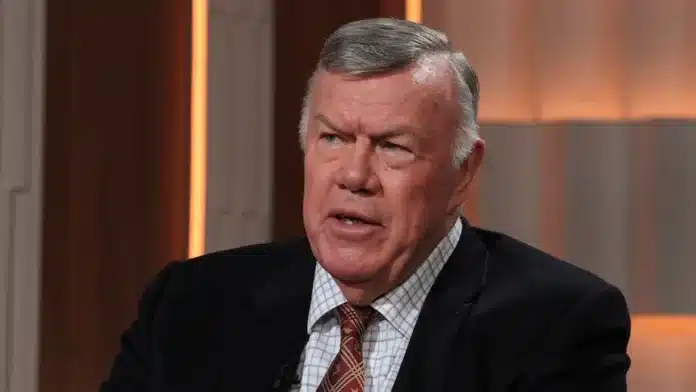
One Nation and agricultural irrigators are advocating for the reallocation of environmental water within the Murray-Darling Basin to support agricultural production during the upcoming season. This call comes amidst concerns over low crop yields and significant job losses in the sector, prompting a debate about the balance between environmental health and economic viability in the region.
The Push to Reallocate Environmental Water
Farrer MP David Farley, representing One Nation, has put forward a proposal in federal parliament to allocate 75 percent of the available environmental water to irrigators. He suggests this reallocation should occur through a transparent, market-based process. Farley urged the government to consider this proposal by early October, ahead of the crucial summer planting season, emphasizing the immediate economic benefits for regional communities.
“Miss it and our regional economies contract for another year, catch it and they respond immediately,” Farley stated in parliament, highlighting the potential for economic revitalization.
The Commonwealth Environmental Water Holder manages a substantial portfolio of over 3,200 gigalitres, intended to enhance the health of the Murray-Darling Basin. However, the agricultural industry argues that a portion of this water could be temporarily diverted to bolster crop production without compromising long-term environmental goals.
Economic Pressures on the Agricultural Sector
The urgency behind this proposal is underscored by recent economic challenges faced by the agricultural sector. SunRice, Australia’s largest rice processor, announced the layoff of 80 workers last month. This decision was a direct consequence of reduced crop production, leading the company to formally request the federal government consider making some environmental water available for purchase by irrigators this summer. The affected SunRice mills are located in Leeton and Deniliquin.
Further compounding these concerns, the Australian Bureau of Agricultural and Resource Economics and Sciences (ABARES) September crop report forecasts a significant decline in rice production. The report predicts a further 22 percent drop, bringing the expected rice harvest to just 130,000 tonnes for the summer season. Cotton planting is also anticipated to decrease by approximately one-third due to prevailing dry conditions.
Environmental Concerns and Water Management
The proposal to reallocate environmental water has met with resistance from environmental groups. Craig Wilkins, co-director of the Murray-Darling Conservation Alliance, argued that environmental water is actively used to support crucial ecological outcomes and is not simply left idle. He stressed that this water is essential for maintaining the health of wetlands, protecting bird populations, and mitigating risks such as avian flu, particularly in the context of potential El Niño conditions.
“We reject this idea that somehow the environmental water is just sitting there doing nothing,” Wilkins stated. “It needs to be available for this concerning trend around El Niño for this summer, we’ve got impacts like bird flu… so we need to get more water onto wetlands to protect our bird life.”
Simon Banks, the Commonwealth Environmental Water Holder, explained that the water entitlements acquired by the government operate under the same allocation rules as those held by irrigators. “When there’s less water, against entitlements, which happens in dry periods, we have typically less water available as well,” Banks commented, illustrating that environmental water availability fluctuates with overall basin water levels.
Federal Water Minister Murray Watt, while unavailable for direct comment, issued a statement affirming the government’s policy. “Our policy ensures water is sold fairly and without bias, when and where it won’t harm the environment, rather than just picking winners,” the statement read, indicating a commitment to balanced water distribution that prioritizes environmental protection.
Regional Impacts and Farmer Perspectives
The debate over water allocation has tangible impacts on farmers and their communities. Brian and Alex Martin, rice farmers from Burraboi, have dedicated 60 hectares to rice cultivation this year. Brian Martin shared his passion for rice farming, describing the satisfaction of managing water during the hot weather. However, he also highlighted the significant community impact resulting from reduced irrigation, noting that approximately half of the irrigated farmland in the Edward Kolety-Wakool region is no longer in use for irrigation since water buybacks were introduced.
“All the towns have seen a decrease… the news agency for the amount of papers they sell, how many beers the pub pours a week, it just snowballs to every aspect of every community around it,” Martin explained, illustrating the ripple effect on local economies. He warned that without government intervention, such as halting water buybacks or facilitating water sales back to farmers, the trend of increasing food prices and production costs would continue.
Meanwhile, other farmers are adapting to the changing water landscape. Noel Baxter, a farmer from the Berrigan district, is planting cotton and maize instead of rice, a crop he has not grown for about 25 years. “Rice is a great crop and a good industry, but water has become very scarce and expensive and it uses more water than alternative crops and the margins on it just don’t stack up,” Baxter said. He added that the persistent uncertainty surrounding water availability discourages many growers from planting summer crops altogether.
Recent Rainfall Offers Limited Relief
Recent rainfall has provided some respite for irrigators in southern New South Wales. Water allocations for general security licence holders in the NSW Murray Valley have seen a 10 percent increase, reaching 28 percent of entitlement. In the Murrumbidgee Valley, allocations have risen by 7 percent to 41 percent of entitlement. While this rainfall offers a degree of relief, the long-term availability of water remains a critical concern for the region’s agricultural future.
Conclusion
The call to reallocate environmental water for agricultural use in the Murray-Darling Basin highlights a complex interplay between environmental stewardship and economic necessity. As farmers face declining production and job losses, and environmental advocates stress the importance of water for ecological health, the government faces the challenge of finding a sustainable and equitable solution for water management in this vital region.