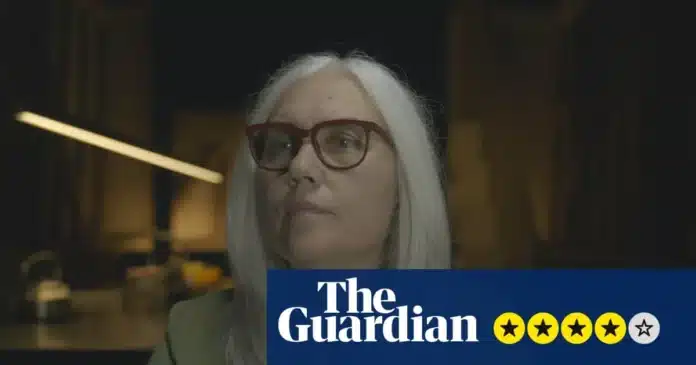
The filmmaking duo Christine Molloy and Joe Lawlor, known for their intricate psychological dramas and self-reflexive essay films, present ‘Act 3,’ a deeply personal and stylistically distinctive work. This latest offering delves into themes of history, identity, and the artists’ own creative journey, examining their lives and artistic output through a metatextual lens. The film is structured around a candid, self-aware dialogue between Molloy and Lawlor, reflecting on their four-decade partnership and creative endeavors.
Exploring Queer Art History and Personal Narratives
At the heart of ‘Act 3’ is a contemplation of the lives of Lucy Schwob and Suzanne Malherbe, a significant 20th-century French artistic couple. Schwob and Malherbe, who adopted the masculine-sounding pseudonyms Claude Cahun and Marcel Moore respectively, were lovers who later became stepsisters. Their story, marked by artistic innovation and historical upheaval, serves as a central motif for Molloy and Lawlor’s exploration. The film touches upon their life in Nantes, their association with Parisian surrealist circles in the 1930s, and their arrest for anti-Nazi activities in occupied Jersey during World War II, from which they were spared execution due to the impending liberation.
Molloy and Lawlor’s intention to create a conventional drama about Cahun and Moore appears to be encountering funding challenges, reportedly due to concerns about the narrative’s third act. This perceived anticlimax in the historical subjects’ later lives—a period of uneventful existence in Jersey after surviving the war—becomes a springboard for the filmmakers to reflect on their own lives. Now in their 60s, Molloy and Lawlor consider their own ‘third act,’ the final stage of life, drawing parallels and contrasts with the artistic trajectory of Cahun and Moore.
Metatextuality and Creative Process
The film’s structure is characterized by a unique, almost hypnotic dialogue between Molloy and Lawlor. Filmed in a shot-reverse-shot format, it fosters an atmosphere of intense introspection, as if they are speaking under a trance. Their conversation weaves through memories of their younger selves, their wedding in their early twenties, and personal family matters, such as Joe Lawlor’s brother John and his partner living in Thailand. This personal narrative is interspersed with archival footage, juxtaposing contemporary digital recordings with earlier analogue film material shot during family visits.
A particularly poignant and disturbing memory shared involves a traumatic experience in Southeast Asia, witnessing a corpse drifting down a river. This event profoundly impacted the artists, later informing their 2016 film ‘Mister John,’ which starred Aidan Gillen as a man who, while attending his late brother’s funeral in Thailand, becomes increasingly entangled with his brother’s identity. Molloy and Lawlor revisit this experience, recognizing its deeper significance regarding themes of death and its cyclical nature, a relevance that perhaps eluded them at the time of its initial processing into film.
Lawlor also reflects tenderly on his father’s death from a heart attack, contemplating the possibility of inherited predispositions or preordained fates. This personal reflection adds another layer to the film’s exploration of mortality and the passage of time, culminating in what is described as a powerful ‘third-act payoff’ within ‘Act 3’ itself.
The Art of Connection and Disconnection
The relationship between Molloy and Lawlor’s film and the lives and work of Claude Cahun and Marcel Moore is not one of direct, obvious correlation. The filmmakers acknowledge that they may have little in common with the earlier artistic couple, whose work is experiencing a resurgence of interest. However, it is precisely in the act of bridging or failing to bridge this perceived gap that the film finds its mystery and artistic energy. ‘Act 3’ is an austere yet absorbing work, rich in maturity and depth.
Despite the intensely personal nature of the subject matter, the filmmakers’ on-screen personas remain somewhat enigmatic, contributing to the film’s overall mystique. The film’s exploration of queer art history, personal memory, and the creative process offers a contemplative experience, inviting viewers to ponder the connections between disparate lives and the enduring power of art to explore the human condition across generations.