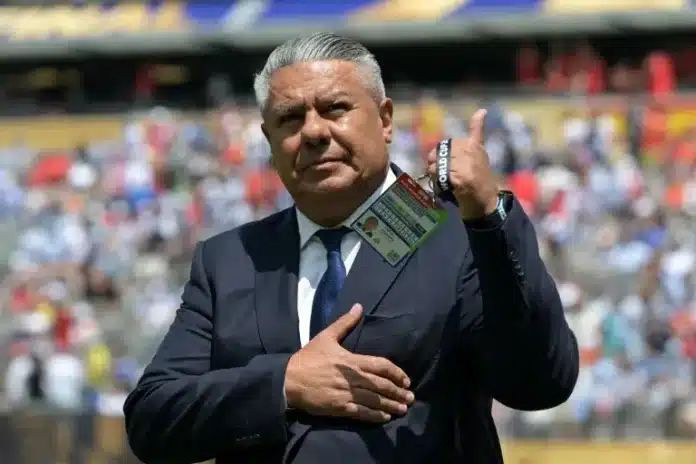
The Argentine Football Association (AFA) has categorically refuted claims that its president, Claudio Tapia, and treasurer, Pablo Toviggino, were detained or questioned by U.S. authorities following the World Cup final. Reports had circulated that the officials were held at New York’s John F. Kennedy International Airport as they prepared to depart with the national squad after their loss to Spain.
AFA Statement Addresses Detention Rumors
On Wednesday, the AFA issued a formal statement addressing the widespread media speculation. The organization explicitly denied all allegations of detention and questioning of Tapia and Toviggino. These reports suggested that U.S. authorities had seized electronic devices from the officials and summoned them to court concerning the AFA’s international contracts. However, the AFA characterized these claims as “absolutely false” and “all lies,” according to a source within the association who spoke to Agence France-Presse (AFP). The FBI has declined to comment on the matter.
U.S. Investigation into a Third Party Acknowledged
While denying the detention of its top officials, the Argentine Football Association did acknowledge that a U.S. investigation is underway, targeting a third party with connections to the AFA. The association confirmed that a district court in Florida had issued a summons for this individual. This party is reportedly being asked to appear before a grand jury to provide documents and communications potentially related to various individuals, including AFA officials.
The AFA’s statement aimed to clarify the situation, distinguishing between the alleged detention of its leadership and the ongoing inquiry involving an external party. The specifics of the third party’s alleged involvement and the nature of their connection to the AFA remain unclear, as the association provided limited details beyond confirming the existence of the court summons.
Background on Claudio Tapia and AFA Investigations
Claudio Tapia has led the Argentine Football Association since 2017. Under his tenure, the AFA has become embroiled in several domestic investigations within Argentina. These probes reportedly include allegations of money laundering and tax evasion. The AFA has faced scrutiny over its financial dealings and operational conduct.
Furthermore, the relationship between Tapia’s AFA and the current administration led by President Javier Milei has reportedly become strained. A significant point of contention is President Milei’s push for the privatization of football clubs across Argentina, a move that Tapia and the AFA leadership have publicly opposed. This opposition highlights a broader ideological divide regarding the future governance and financial structure of Argentine football.
Context of the World Cup Final and Departure
The reports of detention emerged shortly after the conclusion of the World Cup final, where Argentina’s national team suffered a defeat against Spain. The national squad, including its key officials, was preparing for their return journey to Argentina. The timing of the alleged detention, had it occurred, would have placed it during a sensitive period for the AFA, immediately following a major international tournament and amidst ongoing domestic and potentially international scrutiny.
The AFA’s swift and firm denial suggests a strategic effort to manage public perception and protect the reputation of its leadership and the organization. By clearly refuting the detention claims while acknowledging a separate investigation, the association attempts to draw a line between unfounded rumors and verifiable facts.
Potential Implications and Future Outlook
The situation underscores the complex landscape in which the AFA operates, navigating both domestic football politics and international legal inquiries. The acknowledgment of a U.S. investigation, even into a third party, could signal potential future developments or require further cooperation from the AFA. The association’s ability to maintain transparency and address these issues will be crucial for its ongoing operations and reputation.
As investigations continue, both domestically and potentially abroad, the AFA and its leadership face the challenge of assuring stakeholders of their integrity and adherence to legal and financial regulations. The denial of the detention allegations represents the first step in addressing the recent wave of reports, but the broader inquiries suggest that scrutiny of the AFA’s affairs is likely to persist.
The AFA’s commitment to football governance and its role within the Argentine sports ecosystem remain central, even as it contends with these external pressures. The organization’s future actions and communications will be closely watched by fans, media, and regulatory bodies alike.