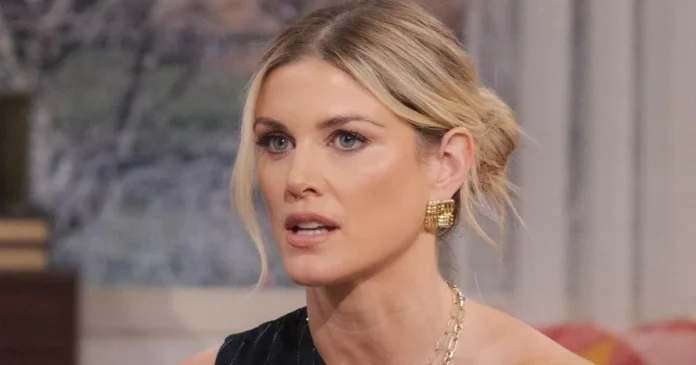
Ashley James, the 38-year-old This Morning presenter, publicly discloses for the first time that she endured a rape at age 21 while studying at Nottingham University. The assault by a male friend, who attacked her while she was unconscious after a night out at a club, haunts her every day—especially since welcoming children Alfie, 5, and Ada, 2.
Details of the Traumatic Ordeal
James describes the incident as “one of the very worst moments of [her] life” and “hugely traumatic.” She stresses that her account aims to highlight how prevalent such assaults are and expose flaws in the support system.
In her new book Bimbo, James recounts years of “shame and silence,” hoping to shift conversations around victim-blaming and disbelief toward survivors. She struggled to process the event because the perpetrator was a trusted friend, leading her to direct blame inward rather than recognize him as a rapist.
“I didn’t come forward… because the man wasn’t a stranger in a dark alley. He was a friend,” she writes. “And because of that, the only person I blamed was myself. For years. Even after it happened, I was more worried about him not liking me than I was about my own trauma.”
James kept the assault secret, even attempting to maintain the friendship. She still finds it difficult to label him a rapist, despite being unconscious and unable to consent. “Yes, I was drunk. Yes, I was wearing going-out clothes… But I was with friends—people I trusted.”
Inspiration from Gisele Pelicot
James draws inspiration from Gisele Pelicot, the 73-year-old French woman whose husband’s prolonged rapes and invitations to others gained global attention. Pelicot’s declaration, “Shame must change sides,” resonated deeply, motivating James to challenge the notion that rapists are merely “a few bad apples or strangers in alleyways.”
Calls for Cultural and Systemic Change
“Sexual assault is an area where there’s still a lot of shame and taboo,” James states. “The system still doesn’t support women. It almost feels like the woman is put on trial more than the man who is accused of rape.”
She argues society has not advanced sufficiently, urging education on consent for boys and an end to victim-blaming questions like “What was she wearing? Was she drunk?” James advocates telling girls to avoid modifying their behavior and others to stop scrutinizing victims’ clothing or alcohol consumption. “It doesn’t matter what you are wearing [or] if you had zero drinks or 1,000 drinks.”
“We don’t teach girls that, one day, if they get the chance, their male friends might try to rape them,” she adds, calling for better tools to handle rejection and consent.
Alarming Statistics on Sexual Assault
The Crime Survey for England and Wales estimates around 900,000 people aged 16 and over experienced sexual assault in the year ending March 2025, including 739,000 females and 162,000 males. Rape offences have risen substantially in recent years.
In 2023, more than 8,800 rape incidents were reported to the politan Police in London—an average of 24 per day. The force reports rape charges have more than doubled since 2022 and commits to improving responses to minimize victim impact.
Charities highlight these “horrifying” figures but note the true scale likely exceeds reports, as many assaults remain unreported.
Support for Rape Survivors
If you have experienced rape, help is available. For immediate risk, dial 999. Otherwise, reach a safe place and contact police via 999 or 101. An Independent Sexual Violence Advocate (ISVA) can assist throughout reporting, with the option to withdraw anytime.
Preserve evidence by avoiding washing, bathing, or changing clothes if possible—store items in a plastic bag. Rape Crisis offers a 24/7 line at 0808 500 2222 or online chat for those 16+.
Seek A&E for injuries or a Sexual Assault Referral Centre (SARC) otherwise—find locations via the NHS. Historic cases have no time limit for reporting. Victim Support provides aid at 0333 300 6389.