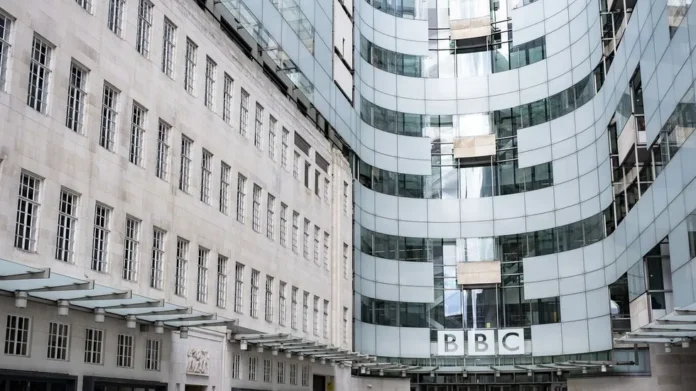
The BBC confronts severe financial challenges, planning to eliminate between 1,800 and 2,000 jobs—approximately 10% of its workforce—to curb operating costs. Interim Director General Rhodri Talfan Davies shared this update with employees during an all-staff meeting, emphasizing the urgency of the measures.
Key Financial Pressures
Davies outlined the core issues: “Put simply, the gap between our costs and our income is growing.” He attributed this to high production inflation, strained licence fee and commercial revenues, and global economic instability. The broadcaster targets at least £500 million ($680 million) in annual savings over the next two years, affecting its roughly 21,500 full-time equivalent staff.
Union Warns of Devastating Impact
Philippa Childs, head of broadcasting union Bectu, described the cuts as “devastating for the workforce” and the organization, especially after prior redundancy rounds. These reductions mark the largest since 2011, with fuher details expected within three to four months.
Leadership Changes Ahead
Davies steps down in mid-May, succeeded by Matt Brittin, a former Google executive who recently joined The Guardian’s board. His appointment brings limited prior media experience to the role.
Broader Challenges: Lawsuits and Scandals
The job cuts coincide with ongoing issues, including a Florida lawsuit from Donald Trump. He accuses the BBC of “intentionally, maliciously, and deceptively doctoring” a January 2021 speech ahead of the US Capitol riot, demanding $10 billion in damages. Former Director General Tim Davie resigned last November amid bias allegations tied to such coverage.
Additionally, the BBC negotiates its funding with the government ahead of the 2027 royal chaer renewal. Any inflation-linked licence fee rises may be offset by fewer contributors. Recent scandals involve staff misconduct; last week, ex-employee Dylan Dawes received a guilty verdict from Cardiff Crown Cou for downloading over 6,000 indecent images of children.