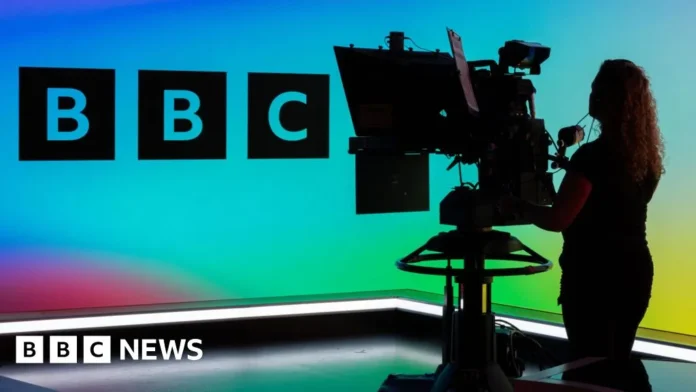
The public service broadcaster plans to recommend changes to its board appointment process amid concerns over potential political interference. Government officials currently appoint five members of the 14-person board, including the chairman, but ministers are examining modifications as part of a broader organizational review.
Upcoming Consultation Response
The broadcaster releases its response to the government’s consultation on Thursday. This document calls for all board appointments to follow a new, transparent, and consistent procedure to safeguard independence.
Recent Controversies Fuel Scrutiny
Board appointments drew sharp focus after the director general and head of news resigned last November. Critics described the episode as a “politically motivated coup,” a notion Sir Robbie Gibb, former Downing Street communications director appointed to the board by the Conservative government, rejected as “ridiculous.” Gibb’s influence faced intense examination late last year.
Previous independence concerns surfaced with the 2021 appointment of Richard Sharp as chairman. A former Conservative donor and ex-boss of Rishi Sunak, Sharp stepped down two years later over connections to Boris Johnson.
Addressing Perceptions of Independence
The Thursday submission highlights a “risk around the perception of independence.” Officials are evaluating updates to the royal charter, the framework governing the broadcaster’s operations.
Survey data from last year reveals 91% of respondents view separation from the government as essential.
“When it comes to independence, perceptions matter as much as reality, and the audience has spoken,” a source close to the broadcaster stated. “This charter must find ways to reassert the broadcaster’s editorial, creative and operational independence, so it can continue to be a universally-supported, trusted, unifying force.”
“At the same time, we want to keep modernising the broadcaster and find new ways to open up our thinking, plans and decision making to our audience, so they are more involved and play a greater role in the broadcaster of the future.”
Government Review and Options
The government’s December green paper explores the broadcaster’s future, including optimal board composition for independence and accountability. It contemplates reducing ministerial involvement in appointments while upholding the organization’s authority over the director general and other members.
Additional topics include funding models, accountability measures, decision-making processes, and charter terms.
Key Reform Proposals
The response outlines positions on licence fee adjustments and regulatory changes. Further ideas encompass ending fixed charter periods, introducing citizen assemblies for input, and revamping complaints handling.