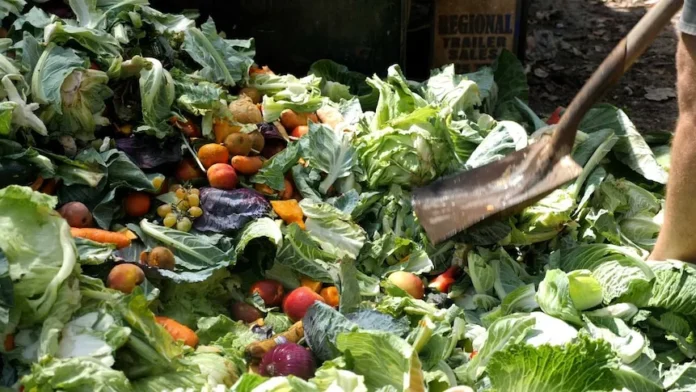
Canberra’s ambitious plan to roll out a territory-wide food and garden waste collection service, known as Food Organics and Garden Organics (FOGO), has been postponed for a third time. The latest target for implementation is now 2030, a significant shift from its originally planned 2023 launch. City and Government Services Minister Tara Cheyne confirmed the new timeline, citing the complexity of the project and market capacity for large-scale capital works as primary reasons for the repeated delays.
FOGO Scheme Faces Extended Timeline
The FOGO collection initiative, designed to divert organic waste from landfills and transform it into compost, has encountered a series of setbacks. Initially slated for a 2023 commencement, the scheme’s expansion was first deferred to 2026. This postponement was attributed to the need to replace Canberra’s recycling center, which was impacted by a fire. Subsequently, in 2025, the projected rollout date was pushed back further to 2028. The most recent announcement during a budget estimates hearing last week has now set the new target for 2030.
Minister Cheyne described the FOGO rollout as a “complex city-shaping project.” She elaborated on the challenges, noting, “There is also only so much capacity in the market when it comes to capital projects, and capital projects of this size.” This indicates that securing the necessary infrastructure and services for such a large-scale undertaking is proving more difficult and time-consuming than anticipated.
Criticism and Concerns Over Delays
The repeated delays have drawn sharp criticism from ACT Greens Leader Jo Clay. Expressing dismay at the news, Ms. Clay stated, “This is not climate action; this shows that climate is just not a priority for this government.” She highlighted the disappointment felt by many Canberrans who are eager to participate in food waste recycling. Ms. Clay questioned the justifications for the postponements, asserting that the technology for FOGO collection is not new or difficult, and that many other regions have implemented similar systems much earlier.
“This is not difficult technology. This is very well established,” Ms. Clay remarked. “And actually, the ACT now is a decade, and two decades, behind a lot of other regions.” She conveyed that constituents frequently inquire about the FOGO scheme’s availability, emphasizing the public’s readiness to adopt the service. “I actually don’t mind how we deliver FOGO services, but we cannot simply put it off for seven years, 10 years, 20 years if we are going to say that we take climate change seriously,” she added.
Infrastructure Requirements for FOGO
A critical component for the territory-wide FOGO collection is the establishment of a dedicated processing facility. This facility must be capable of handling at least 50,000 tonnes of organic waste annually. Minister Cheyne informed the senate estimates committee that the procurement for this facility is being managed through a two-stage process. The request for proposals is anticipated to be released in the coming weeks, with the aim of shortlisting three contractors to develop the new facility.
Despite the territory-wide rollout facing delays, Ms. Cheyne pointed out that FOGO services are not entirely new to Canberra. The ACT was among the pioneering jurisdictions in Australia to introduce such a program. A pilot FOGO scheme has been operational since 2021, serving over 6,000 households across areas including Belconnen, Cook, Macquarie, and select apartment buildings in Tuggeranong. Feedback from this pilot program has been largely positive, according to the Minister.
Pilot Program Insights and Public Sentiment
“Attitudes have always been pretty positive about FOGO, but they have also improved over time,” Ms. Cheyne observed. She noted that the pilot program has provided valuable insights, allowing the government to refine its approach, particularly for households where a fortnightly red bin collection might present challenges. “We have been able to shape our response for some households where the fortnightly red bin collection has been challenging for whatever reason. I largely believe those concerns, where they have been raised, have been addressed — and that will inform our overall rollout.”
As of September 2025, a significant portion of Australians, approximately 38 percent, have access to a FOGO collection service. This statistic underscores the growing national trend towards organic waste recycling, making Canberra’s delays more pronounced.
Environmental Implications of Food Waste
Ms. Clay raised serious concerns about the environmental consequences of delaying the FOGO scheme, particularly in light of rising waste emissions in Canberra. She stated that the territory’s waste emissions have increased by 27 percent in the last year. “This is a real problem, because food waste generates climate emissions for 20 years after going into landfill,” she explained. “That food that we send to landfill in 2030 will still be wrecking our climate in 2050.”
The ACT Greens intend to continue advocating for the accelerated rollout of the FOGO scheme. Ms. Clay emphasized the urgency of the climate crisis and the role individuals can play in mitigating its effects. “Our waste emissions are going up; climate change is a problem. We have a climate crisis and people know that they want to solve this, and this is a problem that they can solve in their kitchens. People really want this solution,” she concluded.
Looking Ahead: The 2030 Target
The federal government’s National Waste Policy Action Plan sets a national goal for all Australian households to have FOGO collections by 2030. Canberra’s revised target aligns with this national objective, but the repeated postponements raise questions about the territory’s ability to meet even this extended deadline. The successful implementation of the FOGO scheme hinges on the timely development of the processing facility and the effective management of the procurement process. As the territory government works towards this 2030 goal, ongoing public and political scrutiny is expected, particularly concerning the environmental impact of continued landfilling of organic waste.