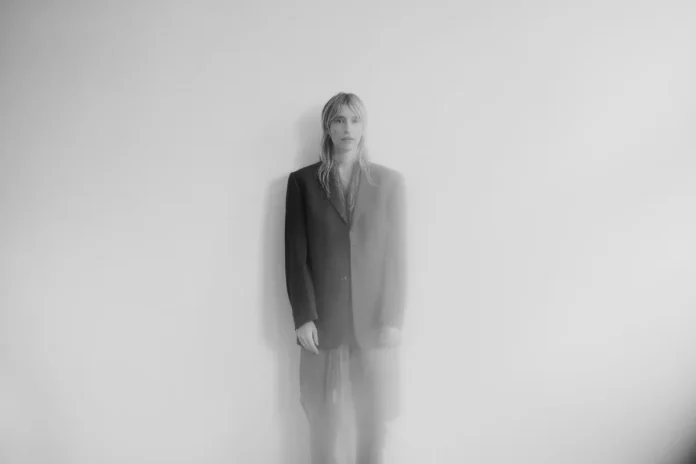
Carmen Villain’s latest album, Memoria, offers listeners vast, layered soundscapes that evoke physical space, though the artist emphasizes that the music itself is not directly inspired by external landscapes. Instead, Villain describes her creative process as akin to ‘filling a space with sounds,’ a metaphysical experience that generates abstract environments for listeners to inhabit with their own memories. The album, while recorded in a functional studio space in Oslo with final touches added in Spain’s Cabo de Gata natural park, transcends its physical origins to become a realm of pure sonic gesture, texture, and light.
The Abstract Landscape of Sound
Villain challenges the notion that her music is meant to mimic or represent specific natural environments. While acknowledging that ‘landscape is a good way to describe music,’ she prompts a deeper consideration: ‘what kind of landscapes can music generate?’ Memoria functions not as a depiction of a place, but as an abstract space designed to activate personal recollections. It is a sonic architecture built from gestures, movements, and shimmering light, intended to facilitate an internal, non-verbal experience.
The creation of individual tracks, such as the granular and abstract “Blue,” often begins with a foundational rhythm. This provides a stable element around which Villain builds complex textures and processed sounds. She explains, ‘I’ll be playing with developing textures and rhythms around it, but [still] allowing it to just be what it is.’ This approach, characterized by a reactive and fluid process, allows for minimal post-production manipulation, preserving the organic development of the sound.
Spectral Dub Influences and Human Elements
The album’s sonic character, sometimes described as ‘spectral dub,’ is evident in tracks like “Blue,” where a pulsating bassline and subtle, peripheral textures create an immersive atmosphere. This genre influence informs Villain’s ability to work reactively, a process she finds liberating. ‘I didn’t need to do a lot of post – no chopping up and moving,’ she notes.
A key element that introduces a distinctly human touch to the abstract compositions is the inclusion of collaborator Johanna Orellana’s flute performances. On “Blue,” Orellana’s contribution is described as a ‘human response’ and ‘a bit of wildness,’ providing a direct, expressive counterpoint to the electronic textures. Villain values Orellana’s intuitive understanding and willingness to experiment, stating, ‘She can understand and read my weird language. Because we know each other so well, it’s become quite direct.’
Villain’s appreciation for visceral, impactful sound is also evident in her fondness for bass. ‘I just think I love bass. I don’t know anyone that doesn’t,’ she remarks, highlighting its universal appeal and ability to evoke physical response, as seen in the infectious energy of dub music at parties.
Beyond Words: The Evolution of Villain’s Music
Carmen Villain’s artistic journey has seen a deliberate move away from conventional lyricism. Her debut album, Sleeper (2013), featured a raw, guitar-driven sound with lyrical content, drawing comparisons to 90s alternative acts. By contrast, 2019’s Both Lines Will Be Blue was entirely instrumental. This shift towards non-verbal expression was a natural progression for Villain, who found working with instrumental elements more compelling. ‘I just found it much more interesting to work on the instrumental stuff and see what could come of that. I didn’t really feel the need to use the voice in that sense anymore,’ she explains.
Despite the absence of sung lyrics, Memoria is imbued with a profound sense of vocal presence. Breath is a recurring motif, shaping tracks like “Hope Synapses” with its synth thrums and “Labour of Imagination” with its stuttering flute passages that mimic the rhythm of dreaming. Listening to the album can feel like being enveloped by sound, a sensation that evokes the physicality of the voice itself—its breath, its texture, its very essence—drawing parallels to Roland Barthes’ concept of the ‘grain of the voice,’ where sound originates from bone, flesh, and breath.
Memory as the Core Theme
The album’s title, Memoria, points directly to its central theme: memory. Villain views her music as an abstract space that serves as a vessel for listeners’ internal landscapes and personal memories, rather than being a landscape in itself. The structural elements of the music, such as repetition and distortion, are employed not as flaws, but as ‘retreating, non-static imperfections’ that mirror the nature of recollection.
‘It’s one of the oldest themes within people who make music,’ Villain reflects. ‘What are we without our memories? Are we blind in sound? Memory is one of those mysteries of life that we all think about.’ This exploration of memory is not just an individual experience but also a communal one.
Live Performance and Shared Experience
The experience of hearing Memoria performed live is described by Villain as a ‘communal thing,’ an ‘exchange’ where the audience’s reception is influenced by the performance space. She notes, ‘The sound is interacting with a memory of the space.’ Whether in an intimate room or a resonant church, the environment shapes the sonic perception, creating a shared, embodied experience that transcends the purely auditory. Ultimately, for Villain, the music is less about conjuring specific visions and more about the profound ‘how it feels,’ inviting listeners into a deeply personal and shared exploration of sound and memory.
Memoria stands as a testament to Carmen Villain’s innovative approach to electronic music, creating abstract sonic worlds that resonate with the deeply personal and universally human experience of memory.