A 72-year-old man, David John Grover, who was facing serious charges, was discovered deceased at the foot of a cliff in Cornwall. Grover, from Margate, Kent, failed to appear for the verdict in his trial at Canterbury Crown Court. His family contends that he was devastated by what they describe as “false allegations.”
Discovery and Emergency Response
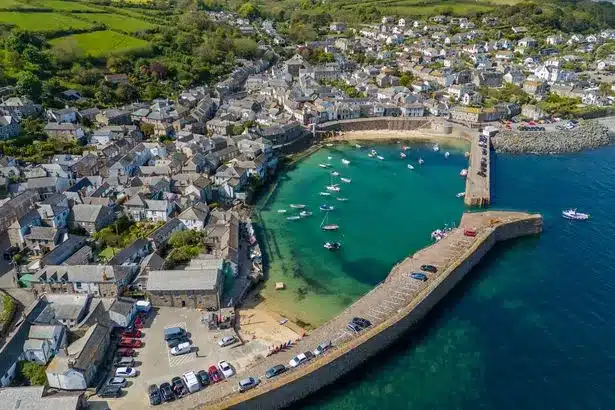
Grover’s body was found on rocks at the base of a cliff in Mousehole, Cornwall, on November 22. The discovery prompted a significant emergency response, involving coastguard cliff rescue teams and RNLI crews who searched the cliffside and the waters below. The location, Mousehole, is near Penzance and approximately 400 miles from his home in Margate.
Absconding from Trial
The day before his body was discovered, Grover was scheduled to hear the verdict in his trial. His failure to attend court led to the issuance of a high-risk missing person warrant by Kent police. Investigations revealed Grover’s movements after leaving the court vicinity. He reportedly took a taxi to Margate train station, withdrew £200 in cash, and then traveled by train to St Pancras in London. The circumstances of his subsequent journey to Cornwall remain unclear.
Inquest into Death
An inquest into Grover’s death was held in Truro. The hearing was told that his health had begun to decline approximately two years before his death, coinciding with the emergence of allegations of a sexual nature against him. These allegations dated back three decades and involved a female under the age of 14.
Charges Faced by Grover
David John Grover faced five charges: three counts of indecent assault, one count of sexual assault, and a fifth charge of inciting a child to engage in sexual activity. These charges stemmed from alleged incidents that occurred over 30 years prior to his death.
Family’s Perspective
Grover’s daughter, Sherie Seal, provided testimony at the coroner’s court. She described her father as a man with a great personality and sense of humor, who was deeply loved by his family and friends. She highlighted his passion for bowling, mentioning he was the captain of the Margate bowling club. He also enjoyed spending time with his dog, which he had raised from a puppy, and playing board games with his grandchildren.
Ms. Seal stated that her father’s health deteriorated significantly after the allegations were made, which she characterized as false and occurring 30 years in the past. She reported that these allegations caused him considerable distress, including sleepless nights. She was present at the trial daily to support him, noting that he appeared “broken” and withdrawn by the time of the closing statements.
She further expressed her father’s disbelief regarding the allegations and his feeling of being mistreated by the police during the investigation. “Dad was a strong living man and he was ruined by an unhinged, lying fantasist,” she told the inquest.
Circumstances of Death
The inquest heard that Grover was familiar with the Penzance area, having booked a short stay at the Queen’s Hotel there the week before his trial was scheduled to begin. A police investigation confirmed that Grover was last seen in court the day before his death and absconded on the day the jury was expected to deliver its verdict.
His death in Mousehole the following day involved efforts to conceal his digital footprint, such as withdrawing cash instead of using electronic payment methods. A postmortem examination indicated that Grover died from drowning.
Coroner’s Conclusion
Andrew Cox, senior coroner for Cornwall and the Isles of Scilly, presided over the inquest. He emphasized that no conclusion had been reached in Grover’s criminal trial, and no conviction had occurred. The jury had not yet delivered its verdict.
Mr. Cox detailed the known movements: Grover traveled from the court to London and then, it is presumed, to Cornwall. However, the exact method of travel from London to Cornwall and Penzance, and how he came to be in the sea, remained unproven. “There is no evidence of how he came to be in the sea and drowned. The obvious implication is that he died from suicide but there is a huge gap in the evidence with nothing that explains how he went from London to Cornwall and what happened when he arrived in Penzance,” the coroner stated.
Given the lack of conclusive evidence regarding the precise circumstances leading to his death, the coroner recorded an open conclusion. The police investigation found no evidence of third-party involvement or suspicious circumstances surrounding Grover’s demise.