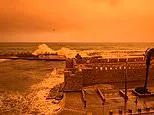
A man in his 50s has died in Athens amid fierce gales and towering waves from storm Erminio, which triggered floods and transport disruptions across the region.
Fatal Accident Near Athens
Emergency responders discovered the victim trapped under a vehicle in Nea Makri, a coastal area northeast of the capital. The fire department handled nearly 500 calls in greater Athens, including over 30 rescues. Officials closed schools east of Athens, along with those in the Dodecanese, Cycladic islands, and Crete.
On Poros island, floodwaters destroyed a bridge, while gale-force winds kept most ferries docked on Wednesday, stranding passengers reliant on these vital links to Mediterranean islands.
Forecast and Widespread Damage
The national weather service EMY predicts severe conditions Thursday, featuring heavy rain, thunderstorms, and potential hail across much of Greece. The storm front should subside by Friday.
Rhodes suffered major impacts, with winds gusting to 70 mph and 15-foot waves battering the coast. Diagoras Airport cancelled dozens of flights due to the chaos.
Saharan Dust Plume Over Crete
A thick Saharan dust cloud enveloped Crete on Wednesday, slashing visibility and forcing Easter holiday flights to divert. At Heraklion Airport, at least two aircraft circled unable to land when visibility fell below 1,000 meters.
A British Airways flight from London diverted to Corfu, and a SKY Express service from Brussels headed to Athens instead. Ongoing dust persists, causing delays and operational issues island-wide.
In Pachia Ammos, a tornado overturned a truck loading exports. Strong southerlies uprooted trees, wrecked greenhouses, and toppled a factory wall in Ierapetra, where massive waves flooded waterfront homes.
Heraklion’s port vanished under a Saharan-like haze, with suffocating dust levels hazardous to health, especially for vulnerable groups. Chania saw rain mix with dust into mud slicks on streets and vehicles, as visibility plummeted citywide.
Monitoring stations report air quality in the ‘very poor’ range, with dust concentrations exceeding 1,000 micrograms per cubic meter—levels far above safe thresholds. Conditions may improve later today.