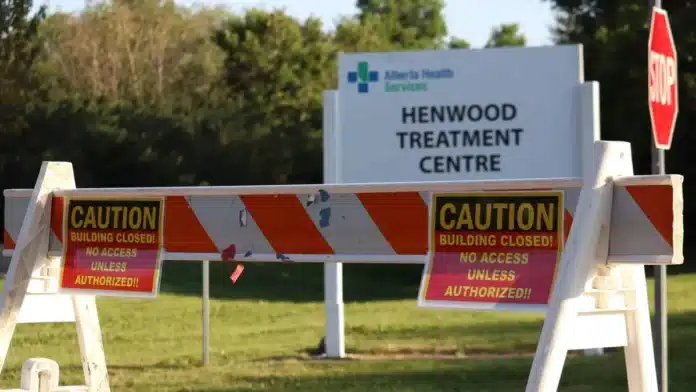
Recovery Alberta, the provincial agency overseeing addiction and mental health services, has permanently closed its addiction treatment program at the Henwood Treatment Centre in Edmonton. The decision has reportedly blindsided staff and left hundreds of individuals seeking help back on a waitlist, raising concerns about the province’s strategy for addiction care. The closure of the Henwood program, which offered 62 residential treatment beds and was the largest provincially-run voluntary addiction treatment center in the Edmonton region, was communicated to staff on August 20th. This development follows a temporary suspension of operations in late June due to significant flood damage.
Details Emerge on Henwood Treatment Centre Closure
Sources close to the situation indicated that staff were informed of the permanent closure of the program at Henwood Treatment Centre, located in the city’s northeast, adjacent to Alberta Hospital. While the facility experienced flooding that necessitated a temporary halt in operations and relocation of clients and staff, many expected a return to normal services after repairs. However, employees reported feeling uninformed about the facility’s future and were surprised by the announcement of the permanent closure.
A spokesperson for the Ministry of Mental Health and Addiction stated that the Henwood Treatment Centre closed “for the foreseeable future following significant damage from overland flooding, with all clients transitioned to alternative addiction treatment and recovery services from local providers.” The ministry added that an investigation into the extent of the damage is ongoing, and decisions regarding the facility’s future will prioritize the safety and well-being of patients, staff, and the community.
Impact on Patients and Staff
The closure affects a range of healthcare professionals, including addiction counselors, mental health therapists, psychologists, recreational therapists, and nurses, many of whom are members of the Health Sciences Association of Alberta (HSAA) or the United Nurses of Alberta (UNA). The UNA confirmed that at least 12 of its members are impacted, with their positions subject to layoff and recall clauses in their collective agreement. The HSAA reported 20 members at Henwood, with some positions potentially relocating to Alberta Hospital, though full details remain unclear for many staff members.
For the hundreds of individuals on Henwood’s waitlist, the closure means a significant setback. Wait times for the four-week residential program at Henwood typically ranged from one to four months. When the center stopped accepting new applications in June, nearly 600 people were awaiting a spot. Staff were reportedly instructed to inform individuals on the waitlist that their referrals were canceled and they would need to reapply once Henwood reopened, a message that caused distress and tears among some clients who had been waiting for months.
“People are desperate,” shared one Henwood employee. “It takes so long to get treatment.” Public reporting of wait times for voluntary addiction treatment programs in Alberta ceased in 2019. An access to information request for wait time data from 2020 onwards was reportedly met with the response that Recovery Alberta does not officially track this information.
Broader Context: Recovery-Oriented Systems and Bed Availability
The closure of Henwood comes as Alberta continues to invest in a “recovery-oriented” model of care, emphasizing abstinence-based programs in designated recovery communities. While five such communities are operational and six more are planned, concerns have been raised by Henwood staff regarding the capacity of these facilities to accommodate the complex needs of their former clients. Recovery communities, often privately operated with publicly funded programs, typically offer longer-term stays (three months to one year) and may not be suitable for individuals not ready for extended separation from their support networks or those with complex health and mental health issues.
Data from the province’s addiction bed dashboard as of August 23rd indicated a low number of available adult addiction treatment beds in the Edmonton health corridor, with only three open beds in the city of Edmonton itself. Henwood’s beds are no longer reflected on this dashboard.
Potential Future Use and Provincial Investments
A confidential Recovery Alberta planning document from 2025, obtained by the Investigative Journalism Foundation, suggested Henwood was initially considered as an interim site for secure “compassionate intervention” beds to support involuntary addiction treatment legislation, with the voluntary program slated for closure for renovations by fall 2026. However, the 2026 budget allocated funds for interim beds at Alberta Hospital instead.
In response to questions about compensating for the loss of Henwood’s 62 beds, the Ministry of Mental Health and Addiction highlighted a recent $30 million investment aimed at adding over 400 new treatment, housing, and stabilization beds in the Edmonton area. This includes new beds at Lakeview Recovery Community and upcoming facilities in Enoch Cree Nation and near Métis Crossing, as well as medical shelter beds at Hope Mission and a new integrated stabilization centre at Edmonton police headquarters. This new centre will house individuals detained for public disorder but not facing criminal charges.
Despite these investments, questions persist about the immediate impact of Henwood’s closure on individuals currently seeking addiction treatment in Edmonton and the province’s overall strategy for providing accessible, voluntary care.