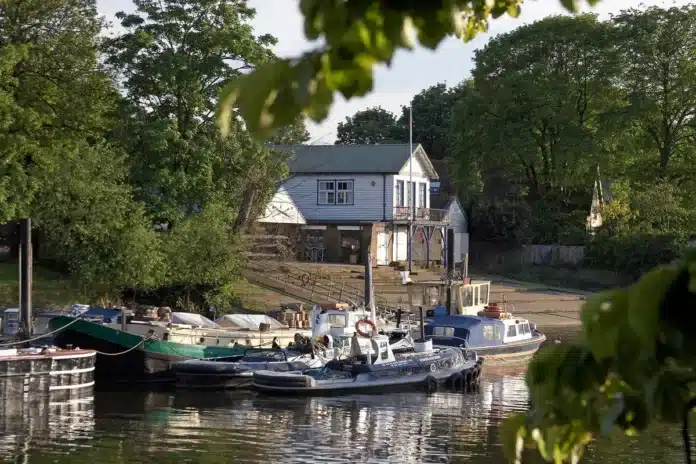
For a limited time, Londoners can step onto Eel Pie Island, a secluded and historically rich island in the River Thames that is usually off-limits to the general public. This unique opportunity allows visitors to explore the island’s artistic community and delve into its vibrant past, offering a rare glimpse into a hidden corner of the capital.
Discovering Eel Pie Island
Eel Pie Island, an 8.9-acre landmass situated in the River Thames, has long been an enigma to many Londoners. While the river itself is a familiar sight, this particular island has remained largely private, accessible only to its small population of approximately 120 residents. Its distinctive name originates from a popular 18th and 19th-century delicacy, the eel pie, which was a cheap and accessible food enjoyed by many. Before this culinary association, the island was known by its older name, Twickenham Ait, a term signifying an island.
This weekend and next, the exclusivity of Eel Pie Island will be temporarily lifted. From July 4 to July 5 and again from July 11 to July 12, the island is opening its gates, inviting the public to experience its unique atmosphere. Visitors will not require an invitation from residents; instead, they can secure a free ticket to cross the aptly named Eel Pie Bridge and explore the island.
Eel Pie Island Artists Event
The primary purpose of these open days is to facilitate the Eel Pie Island Artists event. This initiative is designed to foster a connection between the island’s creative inhabitants and the wider public. Attendees will have the chance to engage directly with local artists, learn about their creative processes, and view their diverse works. Each visitor will be allocated a two-hour slot to ensure a comfortable and uncrowded experience. The available time slots on each open day are:
- 11:00 AM – 1:00 PM
- 1:00 PM – 3:00 PM
- 3:00 PM – 5:00 PM
A Rich Cultural History
Eel Pie Island’s significance extends far beyond its current artistic enclave. In the 1960s, the island was a pulsating hub of cultural activity, most notably home to the Eel Pie Island Hotel. This legendary venue, operational from 1956, hosted an impressive roster of over 900 performances. It became a legendary spot for emerging musicians, including a notable five-month residency by the Rolling Stones. The hotel’s large dancefloor and bar made it a focal point for young people seeking entertainment and a sense of burgeoning social change.
Following the closure of the hotel in 1969, Eel Pie Island transitioned into a centre for counter-culture, becoming the site of the UK’s largest commune. Although the commune’s structures were tragically lost to a fire in 1971, the island’s impact on the London cultural landscape of the 1960s remains a significant part of its legacy.
Other Notable London Islands and Green Spaces
While Eel Pie Island offers a unique experience, London is home to other intriguing islands and tranquil green spaces that provide respite from urban life.
Hallsmead Ait
Another private island, Hallsmead Ait, located near Shiplake Lock on the Thames, was recently put up for auction. This charming, triangular island spans approximately 4.75 acres of woodland and features its own landing pontoon. Its serene setting and unspoilt natural beauty have long been admired by those who travel along this stretch of the river.
Phoenix Garden
For those seeking peace within the city, the Phoenix Garden, nestled between Soho and Covent Garden, offers a vibrant community garden. This urban oasis is a haven of colourful flowers, buzzing insect life, and lush greenery, providing a welcome escape from the city’s hustle.
Kenwood House
History enthusiasts might appreciate Kenwood House in Hampstead. This historic stately home, with origins in the early 17th century, showcases significant remodelling by architect Robert Adam between 1764 and 1779. It is often cited as one of London’s ‘hidden gems’ for its architectural beauty and historical significance.
Wimbledon Common Windmill
Combining outdoor activity with a touch of history, the Wimbledon Common Windmill offers a glimpse into the past as a former working windmill, now functioning as a museum. A nearby cafe provides a pleasant spot for refreshments before exploring the surrounding ‘Womble’ territory.
These diverse locations, from the historically charged Eel Pie Island to tranquil gardens and stately homes, highlight the multifaceted appeal of London’s less-explored areas, offering unique experiences for residents and visitors alike.