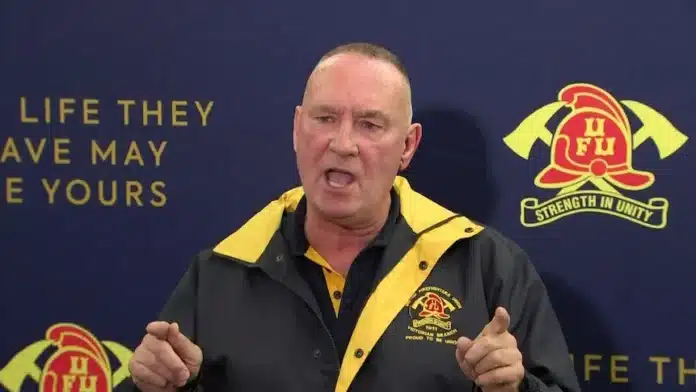
The firefighters’ union has been unsuccessful in its attempt to prevent the public disclosure of a corruption investigation into its dealings with the government of former Victorian Premier Daniel Andrews. The Supreme Court has dismissed the union’s arguments for a judicial review, paving the way for the findings of ‘Operation Richmond’ to be released.
Operation Richmond: A Closer Look
Operation Richmond was initiated by the Independent Broad-based Anti-corruption Commission (IBAC) in 2018 to examine allegations of misconduct surrounding an enterprise bargaining agreement dispute. This dispute occurred in 2016 between the United Firefighters Union (UFU), the Country Fire Authority (CFA), and the Victorian government. The investigation concluded in 2022, but its public release was contingent on the outcome of the legal challenge brought by the union.
While IBAC operates under strict confidentiality laws that prevent witnesses from confirming or denying their involvement, it is understood that the probe included interviews with key figures from the period, potentially including former Premier Daniel Andrews and other senior ministers. The nature of these interviews and the information gathered remain subject to IBAC’s legal framework.
The Union’s Legal Challenge
The United Firefighters Union, along with its secretary Peter Marshall, sought a judicial review of IBAC’s investigation and the potential release of its report. Their core argument centered on preserving the secrecy of the probe, likely citing concerns about reputational damage and the implications of the findings being made public. The union’s legal team contended that certain aspects of the investigation or its potential disclosure warranted further judicial scrutiny.
However, on the morning of the ruling, Justice Claire Harris of the Supreme Court of Victoria rejected these arguments. The judge’s decision means the union’s efforts to keep the corruption probe’s findings under wraps have failed. The court’s proceedings were scheduled to continue later that afternoon, presumably to address any remaining procedural matters following the dismissal of the union’s primary legal bid.
Background: The 2016 Enterprise Bargaining Dispute
The dispute that formed the basis of Operation Richmond stemmed from complex negotiations over an enterprise bargaining agreement in 2016. These agreements typically outline terms and conditions of employment, including wages, working hours, and other benefits. Negotiations between powerful unions, government bodies, and state governments can often be protracted and contentious, involving significant political and industrial relations considerations.
The specific details of the 2016 dispute and the allegations of corrupt conduct investigated by IBAC have not been fully detailed publicly due to the ongoing legal processes and IBAC’s investigative protocols. However, the involvement of a former Premier and senior ministers suggests the investigation delved into high-level government interactions and decision-making processes related to the industrial negotiations.
IBAC’s Role in Public Integrity
The Independent Broad-based Anti-corruption Commission (IBAC) is Victoria’s primary anti-corruption agency. Its mandate is to prevent and expose corruption in the public sector, including government departments, agencies, and public bodies. IBAC conducts investigations into allegations of corrupt conduct, which can range from bribery and fraud to misuse of public office and undue influence.
The commission operates independently and has broad powers to gather evidence, compel testimony, and make recommendations to improve public administration and prevent future corruption. A key aspect of IBAC’s work involves balancing the public’s right to know and the need for accountability with the protection of individuals’ rights and the integrity of ongoing investigations. The confidentiality provisions under which IBAC operates are designed to safeguard the investigative process and prevent prejudice to potential proceedings, while also protecting the identities of those involved until a formal report is released.
Implications of the Supreme Court Ruling
The Supreme Court’s decision to dismiss the firefighters’ union’s bid for a judicial review has significant implications. Primarily, it signals that the union’s legal arguments for maintaining secrecy were not persuasive enough to warrant further court intervention. This clears a major hurdle for IBAC to release the findings of Operation Richmond.
The public release of the report is anticipated to shed light on the alleged corrupt conduct during the 2016 bargaining dispute. The findings could have ramifications for the United Firefighters Union, its leadership, and potentially for individuals within the former Victorian government who were interviewed as part of the investigation. The ruling underscores the authority of IBAC in conducting its investigations and the legal framework that supports its oversight functions in maintaining public integrity within the state.
Conclusion
The Supreme Court’s dismissal of the firefighters’ union’s legal challenge marks a pivotal moment in the long-delayed release of the Operation Richmond report. The investigation into alleged corruption surrounding the 2016 enterprise bargaining agreement dispute between the union, the CFA, and the Victorian government can now proceed towards public disclosure, following IBAC’s conclusion of its inquiries in 2022. This outcome reinforces IBAC’s investigative powers and brings the prospect of transparency regarding the probe’s findings closer to reality.