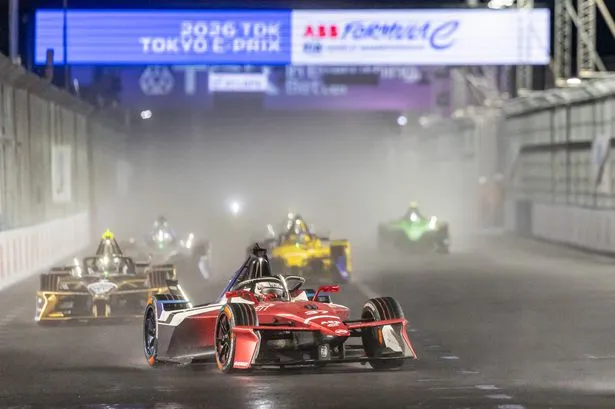
Formula E, the premier all-electric racing series, is undergoing a significant transformation as it matures from its nascent stages into a more powerful and faster entity. According to CEO Jeff Dodds, the series has outgrown its original street circuit format, necessitating a move towards venues capable of accommodating its increasingly potent machinery. The recent London E-Prix at the ExCeL Centre marked the final event at this unique indoor-outdoor venue, signaling a pivotal shift for the sport.
Formula E’s Growth Spurt: The Gen4 Car
The advent of the fourth generation (Gen4) Formula E car represents a major leap in performance, making it incompatible with many of the tight, city-centre circuits that defined the series’ early years. Jeff Dodds, who assumed leadership of Formula E in 2023, explained this evolution by drawing an analogy to human development. He described the early Formula E cars as akin to a child, requiring specific conditions and limitations. The current Gen4 car, however, is now a teenager, possessing significantly more speed, power, and acceleration – so much so that it would be unsuitable for the tracks raced on during the series’ inaugural Gen1 season.
“If you took the Gen4 car and transported it back in time, I don’t think you could put it on any race track that we raced on in Gen1, because it’s too big, too powerful, too fast accelerating,” Dodds stated. “It was a child 12 years ago and needed certain things. It’s now a teenager and it needs different things. It’s just grown up.”
This increased performance is not merely a technical upgrade; it’s a strategic move to solidify Formula E’s position as a leader in electric vehicle technology and a legitimate contender in the motorsport landscape. The series aims to shed any lingering perceptions of being a novelty act and instead demonstrate the tangible advancements and future potential of electric racing technology. The Gen4 car is capable of accelerating from 0 to 100 kilometers per hour in approximately 1.7 to 1.8 seconds, showcasing its formidable capabilities.
Validation from the Top: F1 Drivers’ Praise
The impressive performance of the new Gen4 car has not gone unnoticed by the wider motorsport community. Earlier this year, at the Monaco E-Prix, five Formula 1 drivers, including notable names like Lando Norris, were present. Their feedback on the Gen4 car was overwhelmingly positive, with many expressing excitement about its raw power and potential.
“We’ve got a lot of drivers there saying nice things, saying this is a beast of a car and people are excited to see it in action,” Dodds remarked. “Of course my ears prick up when I hear that, because I’m like a proud dad. When I hear them say nice things about my child, it makes me feel good.” This external validation from established figures in motorsport serves as a significant endorsement of Formula E’s technological progress and its growing appeal.
A New Home: Brands Hatch Beckons
The conclusion of the London E-Prix at the ExCeL Centre signifies the end of an era for Formula E’s unique hybrid venue. While this location offered a distinctive blend of sport and entertainment, the series is now setting its sights on a more traditional, high-speed circuit for its future events. From the upcoming season, Formula E races will be held at the historic Brands Hatch circuit.
Dodds emphasized that while the venue is changing, the core Formula E experience, which includes a strong entertainment component, will be preserved. “We’ll still expect to have music and entertainment, loads of stuff for families to come and do,” he assured. “It’s obviously within proximity of London. But the differences will be that it’s a big old racetrack.”
The move to Brands Hatch will allow fans to witness the Gen4 cars performing at their maximum speed on a full Grand Prix circuit. This offers a different kind of spectating experience, with Dodds noting that the layout allows spectators to view a significant portion of the race from elevated positions. While anticipating a large turnout, the focus remains on integrating Formula E’s signature entertainment elements into the traditional motorsport setting.
Balancing Tradition and Innovation
Formula E aims to respect the rich history of circuits like Brands Hatch and Monaco while simultaneously infusing them with its unique personality and brand of racing. Dodds drew a parallel with the Monaco E-Prix, where Formula E has successfully staged events on a historic street circuit that has hosted racing for decades. Despite the circuit’s heritage, Formula E’s races there have been characterized by high levels of action, including numerous overtakes, demonstrating the series’ ability to put on a compelling show.
“You want to nod to the past. We want to respect that, in the same way as Monaco,” Dodds explained. “They’ve been racing for 93 years on that circuit, the street circuit, but when we show up we have 200 overtakes, we put on our own show, it’s got a load of people come to watch it.” This approach ensures that Formula E can embrace new venues and formats while retaining the core elements that have contributed to its growing popularity and technological credibility.
The Future of Electric Motorsport
The strategic shift by Formula E, driven by the evolution of its car technology and a desire to showcase its capabilities on more demanding circuits, signals a new chapter for the sport. By moving to venues like Brands Hatch and continuing to integrate entertainment, Formula E is positioning itself for sustained growth and broader appeal. The series is no longer just a nascent experiment but a maturing competitor in the global motorsport arena, poised to demonstrate the thrilling potential of electric racing.