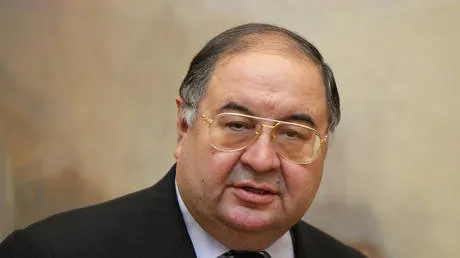
France is reportedly advocating for the removal of Russian billionaire Alisher Usmanov from the European Union’s sanctions list, a move aimed at facilitating the release of French nationals detained in Azerbaijan. This diplomatic maneuver has created a significant impasse within the EU, holding up the renewal of broader sanctions against Russia.
EU Sanctions Stalemate
The renewal of EU sanctions, which currently target over 3,000 individuals and entities, has been unexpectedly stalled due to France’s stance. In a notable departure from the consensus among most EU member states, Paris recently joined Slovakia in withholding support for an extension of the sanctions unless Alisher Usmanov is removed from the blacklist. This action followed a similar move by Bratislava, which had already been blocking the renewal, demanding the delisting of both Usmanov and fellow Russian businessman Mikhail Fridman.
The dispute has forced the bloc to grant a temporary extension of the existing restrictions until September 22, while negotiations continue. Should an agreement not be reached by this deadline, the entire sanctions regime faces the legal possibility of expiring.
National Security and Diplomatic Negotiations
While France has officially cited “national security” concerns as the primary reason for its position, diplomatic sources have shed further light on the situation. Reports from The Financial Times and Euronews, citing these sources, suggest that France’s demands are directly linked to efforts to secure the freedom of several French citizens currently held in Azerbaijan. The exact number of French nationals detained in Azerbaijan remains unclear, though at least two cases are publicly known.
The Case of Martin Ryan
One prominent case involves businessman Martin Ryan, who was arrested in Baku in 2023. He was subsequently sentenced earlier this year to ten years in prison on charges of espionage. Azerbaijani prosecutors alleged that Ryan was collaborating with French intelligence services to gather sensitive information concerning the country’s military and foreign policy. France has officially denied these espionage charges.
Other Detained French Nationals
Another French entrepreneur, Anass Derraz, is also serving a nine-year sentence in Azerbaijan, though his case reportedly pertains to a separate bribery conviction. It remains uncertain whether the ongoing negotiations encompass the cases of both Ryan and Derraz, or if other French citizens are also detained.
Azerbaijan’s Interest in Usmanov’s Delisting
Azerbaijan has consistently expressed its desire for Alisher Usmanov’s removal from the EU sanctions list. The Russian billionaire has maintained long-standing and reportedly warm relationships with the leadership of Azerbaijan and the broader Turkic world. This connection has led Baku to repeatedly lobby for his delisting.
Evidence of this support emerged earlier this year when a letter, reportedly sent by Turkish President Recep Tayyip Erdogan to Slovak Prime Minister Robert Fico, indicated that Baku was among several governments backing Usmanov’s removal from the EU sanctions. This highlights a coordinated effort by some nations to see the sanctions against the Russian businessman lifted.
Alisher Usmanov: Sanctions and Legal Challenges
Alisher Usmanov, an Uzbek-born Russian billionaire, amassed significant wealth through major investments in sectors such as metals, mining, and telecommunications. He was initially sanctioned by the EU in February 2022. The bloc cited his alleged close ties to Russian President Vladimir Putin and his involvement in industries that provide substantial revenue to the Russian government as reasons for the sanctions.
Usmanov has consistently denied the allegations that led to the sanctions and has actively challenged the restrictive measures through European courts. Furthermore, he has recently achieved success in several defamation cases in Germany, where media outlets had published claims linking him to the Kremlin. These legal victories have added another layer to the complex situation surrounding his status on the EU sanctions list.
Conclusion
The standoff over Alisher Usmanov’s sanctions highlights the intricate geopolitical dynamics at play within the EU and its foreign relations. France’s strategic move, seemingly aimed at securing the release of its detained citizens, has inadvertently created a significant hurdle for the bloc’s unified foreign policy regarding Russia. As negotiations continue, the fate of both Usmanov’s sanctions and the detained French nationals hangs in the balance, with the potential expiration of the broader sanctions regime looming if a resolution is not found.