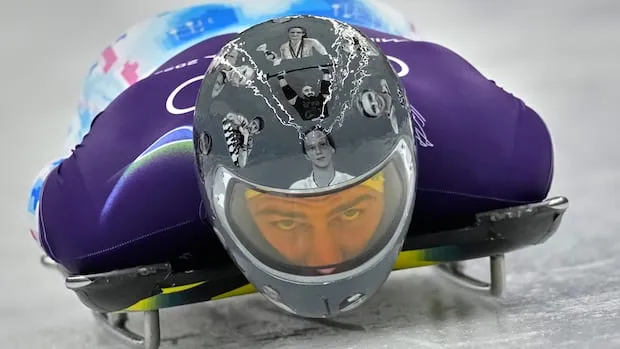
Ukrainian skeleton athlete Vladyslav Heraskevych cannot wear his “helmet of remembrance” during the Winter Olympics competition to honor those killed in the ongoing conflict with Russia, according to the International Olympic Committee.
IOC’s Rationale and Compromise
The helmet displays images of Ukrainian athletes who died since Russia’s full-scale invasion in 2022. IOC spokesperson Mark Adams stated at a news conference, “The IOC fully understands the desire of athletes to remember friends who lost their lives in that conflict.”
Adams noted that Heraskevych has expressed his sentiments through training sessions and social media. However, the helmet violates Olympic guidelines. As a compromise, the IOC permits Heraskevych to wear a plain black armband during events. “We feel this is a good compromise,” Adams added.
Helmet’s Purpose and Design
Heraskevych learned on Monday from an IOC representative that he could not use the helmet in competition, despite wearing it in training. Additional training sessions occur later this week, with races beginning Thursday.
The helmet commemorates Ukrainian athletes killed while defending their country or as victims of the war. Ukraine’s Olympic Committee emphasized that it meets all safety standards and IOC rules, containing no advertising, political slogans, or discriminatory elements, and passed inspections during official training.
Athletes Honored on the Helmet
The design features several fallen athletes, including some of Heraskevych’s friends: teenage weightlifter Alina Perehudova, boxer Pavlo Ishchenko, ice hockey player Oleksiy Loginov, actor and athlete Ivan Kononenko, diver and coach Mykyta Kozubenko, shooter Oleksiy Habarov, and dancer Daria Kurdel.
Heraskevych, who displayed a “No War in Ukraine” sign at the Beijing 2022 Olympics just before the invasion, aims to respect Olympic prohibitions on political demonstrations while highlighting Ukraine’s situation.
Rule 50.2 of the Olympic Charter prohibits any demonstration or political, religious, or racial propaganda at Olympic sites. Following the invasion, athletes from Russia and Belarus faced suspensions from international sports, though the IOC now supports their phased return under strict conditions.