
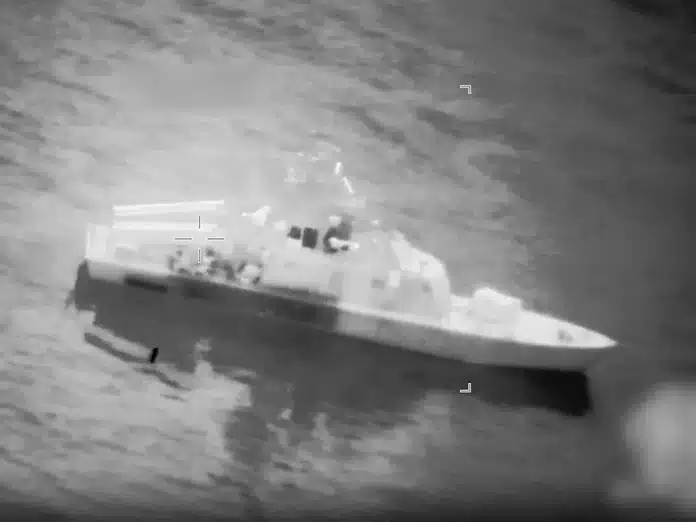
Tehran aims to disrupt oil traffic through the vital Strait of Hormuz after recent U.S. and Israeli strikes on Iran. Fears grow that sea mines could achieve this goal. U.S. forces have targeted 28 Iranian mine-laying vessels, as President Donald Trump announced on Wednesday, over a week into the Middle East conflict. Mining this key shipping lane, similar to Iran’s actions in the 1980s, presents major challenges for Western demining efforts.
What Are Sea Mines?
A former senior French navy officer and subject specialist describes mines as “the weapon of the poor.” Despite their simplicity, they deliver a “fundamental threat to maritime trade and the freedom of action of naval forces.”
Iran’s Mine Stockpile
Researcher Elie Tenenbaum estimates Iran possesses 5,000 to 6,000 naval mines, including drifting types that prove extremely hard to intercept. Contact mines float on the surface or anchor to the seafloor and detonate upon hull contact. The same ex-navy officer calls them “the most rudimentary mine, the cheapest one, and the main threat in the Strait of Hormuz.”
Iran also deploys influence mines suited to the Gulf’s shallow waters. These seabed devices trigger when large ships pass overhead. Speedboats can attach limpet mines to ship hulls for timed explosions.
The U.S. Defense Intelligence Agency notes in a 2019 report that Iran rapidly deploys these mines in the Persian Gulf and Strait of Hormuz via high-speed small boats equipped as minelayers. Many Ashoora small boats feature mine rails holding at least one mine. Converting other small boats allows discreet operations.
Historical Deployments
During the 1980s “Tanker War” with Iraq, Tehran deployed sea mines, prompting U.S. escorts for commercial ships. In the 1991 Gulf War, Iraqi forces laid 1,300 mines, severely damaging two U.S. Navy vessels, including the USS Princeton, which required about $100 million in repairs, according to U.S. researcher Scott Truver of the Naval War College.
Multinational coalition forces spent over two years on intensive mine-countermeasure operations to clear the northern Gulf, Truver reported in 2012.
Demining Challenges
Western nations possess demining capabilities for the Strait of Hormuz, but operations would prove lengthy and complex. The U.S. recently retired four Avenger-class mine hunters from Bahrain, replacing them with combat ships featuring mine countermeasures—not purpose-built for the task.
The Center for Maritime Strategy warned last year that strategically placed sea mines could become the “Achilles heel of U.S. naval operations.” It highlighted that Iran, China, and Russia have adopted these inexpensive weapons, while the U.S. Navy reduces its limited countermeasures without proven alternatives.
Tenenbaum assesses European capabilities as superior to U.S. ones but still “totally inadequate” against this threat. Britain withdrew its last four Gulf-based mine hunters in December, stationed there since 2003. France operates eight specialized ships, reduced from 13, with none recently deployed to the Gulf.
Belgium and the Netherlands lead in expertise but await delivery of advanced ships with mine-seeking drones for safe identification and neutralization. Gulf nations employ demining divers, but the ex-navy officer emphasizes: “to neutralize mines, you have to find them first.”