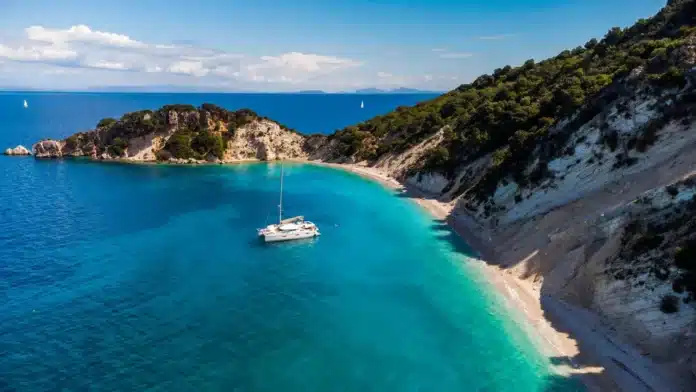
Ithaca, a small Greek island nestled in the Ionian Sea, offers a serene escape steeped in ancient legend and natural beauty. Located just off the coast of its more famous neighbor, Kefalonia, Ithaca is renowned as the mythical homeland of Odysseus, the hero of Homer’s epic poem, The Odyssey. This island, measuring approximately 37 square miles, is home to a permanent population of just 2,000 residents, making it one of the smallest among the Ionian Islands. Its tranquil atmosphere and dramatic landscapes have long drawn those seeking a quieter alternative to the bustling tourist hubs of Greece.
The Allure of Ithaca: Myth and Reality
For centuries, scholars and enthusiasts have debated the precise location described in Homer’s epic, with some historical interpretations suggesting that the island Homer depicted might not perfectly align with modern-day Ithaca. The very existence of Homer himself, and whether The Odyssey was the work of a single author or a collective, remains a subject of scholarly discussion. Regardless of these historical uncertainties, the enduring power of the myth imbues Ithaca with a unique sense of magic and timelessness. Today, the island stands in stark contrast to destinations grappling with overtourism.
A Haven from Overtourism
While Greece as a whole welcomed approximately 43.31 million tourists in 2025, with a notable increase from the previous year, many popular islands face immense pressure. Destinations like Zakynthos, often dubbed the ‘capital of overtourism,’ experience visitor numbers that dwarf their local populations. In 2023, Zakynthos hosted around six million overnight stays, a staggering figure compared to its resident population of just 40,000. Ithaca, by contrast, attracts an estimated 20,000 to 30,000 visitors annually. This significantly lower influx allows travelers to experience undisturbed coastlines and a more authentic, peaceful island atmosphere, offering a welcome respite from crowded environments.
Exploring Ithaca’s Natural Wonders
Ithaca’s coastline is dotted with numerous beautiful beaches, each offering its own charm. Gedaki Beach is celebrated for its crystal-clear waters and secluded coves, perfect for exploration. Filiatro and Polis beaches are also popular choices for sun-seekers. The picturesque Vathy Bay, the island’s main port, provides stunning views of the surrounding landscape, framed by traditional red-tiled roofs.
Activities for Every Traveler
The clear waters surrounding Ithaca make it an ideal location for water sports such as snorkeling, scuba diving, and kayaking. For those who prefer to explore on land, renting a bicycle offers a way to traverse the island’s scenic routes, though visitors should be prepared for its hilly terrain. The island’s development as a tourist destination has been gradual; for a long time, it was known for having only one hotel, simply named ‘Hotel.’ While accommodation options have expanded, many establishments embrace the island’s legendary connections, with names like Homer’s View Villas and Odyssey Apartments reflecting its mythical heritage.
Immersing in Mythological Sites
For visitors eager to delve deeper into the island’s legendary past, the Cave of the Nymphs is a significant site. According to myth, this is where the Phaeacians are said to have left Odysseus sleeping after his journey home. Exploring such locations offers a tangible connection to the ancient stories that have shaped Ithaca’s identity.
Planning Your Journey to Ithaca
Reaching Ithaca requires a bit of planning, as the island does not have its own airport. The most common route involves flying into Preveza International Airport (PVK) on the mainland. From London Gatwick, direct flights to Preveza are available, with journey times around three hours and 20 minutes. Airlines such as easyJet and Jet2 operate services to this region. Alternatively, one could fly to Zakynthos International Airport (ZTH) from London Luton, a flight of approximately three hours and 50 minutes. From Zakynthos, a car rental is necessary for a journey that includes a ferry crossing. Travelers would typically drive to a port in Kefalonia, such as Fiskardo or Vasiliki, to catch a ferry to Ithaca. Another common ferry route departs from Kyllini on the Peloponnese peninsula to the port of Poros on Ithaca. The final leg involves a drive or taxi to reach Ithaca’s main settlements, like Vathy or Kioni.
When to Visit Ithaca
The best time to visit Ithaca for warm, sunny weather is during the summer months. July and August typically see average high temperatures around 30°C, while September remains pleasantly warm with highs of approximately 27°C. For those seeking milder temperatures and fewer crowds, the shoulder seasons are ideal. Even in winter, Ithaca offers a mild climate, with November temperatures reaching highs of around 20°C, and January and February enjoying sunny days with temperatures around 14°C. This makes the island a viable destination year-round for those who appreciate its quiet charm and historical significance.
Ithaca provides a unique blend of natural beauty, historical resonance, and peaceful seclusion, making it an appealing destination for travelers looking to connect with ancient myths and enjoy the tranquility of the Greek islands.