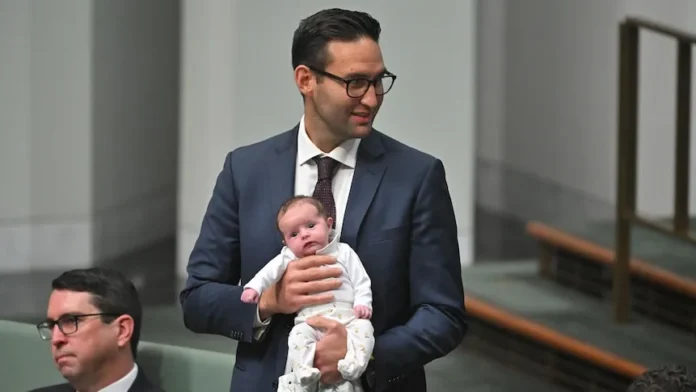
Federal Member for Macnamara, Josh Burns, has spoken about the profound personal challenges he faces as a Jewish parliamentarian in Australia, particularly in the wake of escalating global and domestic tensions. Burns, a member of the Labor party, detailed the emotional and psychological burden of representing a community that has experienced targeted attacks and heightened scrutiny, emphasizing that his identity as a Jewish Australian is intrinsically linked to his public service.
Navigating Identity and Public Life
Elected in 2019, Burns initially sought to represent his electorate without being defined by his religious background. However, events, particularly since October 7, have placed him at the forefront of national discussions concerning antisemitism and the Israeli-Palestinian conflict. He described feeling “thrust” into the spotlight, stating, “I’m just a normal Australian.” His electorate, Macnamara, includes Caulfield, a suburb with Australia’s largest Jewish population, a community he grew up in and feels a deep connection to.
The personal cost of this visibility became acutely apparent following incidents like the fire-bombing of the Adass Israel Synagogue in Ripponlea, within his electorate. Burns recounted the visceral experience of witnessing the synagogue in ruins, remarking, “I’ve seen this in history before and ‘How can this be happening in Australia?'” This sentiment was echoed after the Bondi Beach terror attack, which targeted a Jewish community event. The fear for his own family, as his mother and daughter were attending a Hanukkah event in Melbourne at the time of the attack, underscored the deeply personal nature of these events for him.
The Weight of Representation
Burns articulated the immense pressure of being asked to publicly distance himself from the actions of the Israeli government, a request he receives frequently. He stressed the diversity within the Jewish community, stating, “We are a very complex people. We have a lot of different opinions.” He highlighted that not all Jewish individuals hold monolithic views, and imposing a singular perspective is a misrepresentation of the community’s multifaceted nature.
The MP also addressed the complexities of his relationship with fellow MP Georgie Purcell, who is from the Animal Justice Party and holds pro-Palestinian views. Despite their differing political stances, Burns emphasized their shared values and the robust, respectful political discussions they engage in. He questioned the societal tendency to view political disagreements as insurmountable barriers to association, noting that external commentary often framed their relationship as inherently conflicted. Burns affirmed his commitment to advocating for the community he represents and stated he would never ask Purcell to compromise her own advocacy or beliefs.
Understanding ADHD and Focus
In a candid revelation, Josh Burns shared his recent diagnosis of Attention Deficit Hyperactivity Disorder (ADHD). He described how this diagnosis has provided him with significant strength and a clearer understanding of his own cognitive processes. Burns explained that while he can focus intensely under pressure, managing daily tasks requires conscious effort to avoid being easily sidetracked.
He likened the clarity brought by understanding his ADHD to putting on corrective glasses. “It’s a bit blurry but then when you are on top of it and you take your medication, you can just see clearly, and you can move through things and it’s not daunting to start a task,” he explained. This newfound self-awareness has positively impacted his approach to his parliamentary work, enabling him to tackle tasks with greater efficiency and less apprehension.
A Personal Cost to Public Service
Burns concluded by reiterating the profound personal toll his role has taken, particularly given the intersection of his Jewish identity with his political responsibilities. “It’s probably been the most difficult time of public life for me because it’s so personal — it’s so intrinsic to who I am,” he stated. He acknowledged internal conflicts that can arise when his personal beliefs or community affiliations intersect with the policies of the Labor government, framing these as internal struggles he must navigate.
His experience underscores the unique challenges faced by parliamentarians who are also members of minority groups, especially when those groups are at the center of significant geopolitical and social issues. Burns’ willingness to share these personal struggles offers a window into the human dimension of political representation and the deep connection between identity, public duty, and the personal cost of service.
The MP’s journey highlights the delicate balance required to represent diverse constituents while navigating deeply personal and often fraught political landscapes. His insights into managing ADHD further add a layer of personal resilience and self-understanding to his public persona.