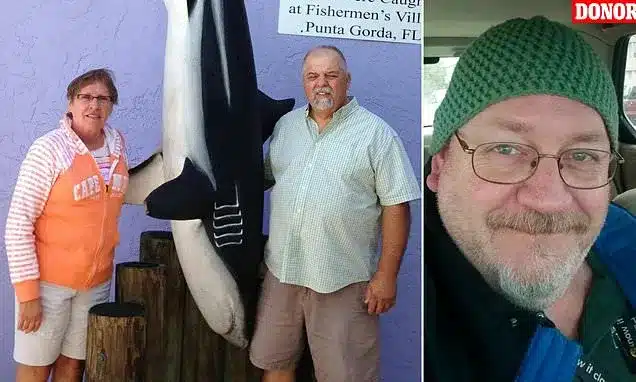
Tragic Transplant Case: Rabies Transmitted Via Donor Kidney
A Michigan grandfather, Barney Kurowicki, who had long awaited a life-saving kidney transplant, succumbed to rabies just weeks after undergoing the procedure. The retired postal worker and farmer from Tecumseh contracted the fatal disease in January 2025, a devastating turn of events that began hundreds of miles away in rural Idaho.
Donor’s Fatal Illness Unidentified
The organ donor, James Martin, 59, had been scratched by a skunk while attempting to protect a rescue kitten. He subsequently fell ill and lapsed into a coma. Despite medical attention, the cause of his sickness remained unidentified, and he tragically passed away. His organs and tissues, having undergone standard screening for diseases like HIV and hepatitis, entered the transplant system.
Transplant Surgery and Emerging Symptoms
Kurowicki had spent over two years on dialysis before being added to the national transplant waiting list in late 2024. Within days, he was offered a donor kidney, and the surgery was performed at the University of Toledo Medical Center in Ohio. However, post-surgery, Kurowicki began experiencing complications initially attributed to cardiac issues. Subsequent tests, however, revealed a devastating diagnosis: rabies transmitted through the donated kidney.
Kim Martin, the donor’s wife, recalled her husband dismissing the skunk scratch as a minor injury. “He’s like, ‘I’ll be fine. It’s just a scratch. I’ll just put, you know, Neosporin on it, and I’ll be fine after I get it cleaned,'” she recounted to Scripps News. Weeks later, his health deteriorated rapidly, leading to a coma from which he did not recover.
Rabies Diagnosis and Public Health Response
Following the transplant, Kurowicki developed tremors, leg weakness, confusion, and urinary problems, according to a Centers for Disease Control and Prevention (CDC) investigation. As his condition worsened, doctors observed hydrophobia, a hallmark symptom of rabies, where swallowing becomes painful due to throat swelling, compounded by a neurological fear of water.
Medical staff alerted the CDC via a specialized rabies consultation hotline. Initial investigations explored potential animal encounters by Kurowicki himself, but testing ultimately confirmed the rabies transmission via the donated kidney. Rabies, once symptomatic, is almost universally fatal. Kurowicki died shortly after the disease was identified.
Broader Exposure and Protective Measures
The discovery prompted an urgent, multi-state public health response to identify and protect others who might have been exposed. Three recipients of cornea grafts from Martin’s donated tissue were advised to undergo treatment and have the grafts removed. Another planned transplant was halted before completion. Fortunately, all cornea recipients survived.
Dr. Christine Hahn, Idaho state epidemiologist, expressed pride in the public health response, stating, “Unfortunately, the gentleman who passed away, the initial recipient, did not survive, but the fact that we were able to jump into action and get these other folks protected just makes me really proud.”
Strain Identification and Rare Occurrence
Investigators later determined that the rabies strain was linked to silver-haired bats, suggesting the skunk that scratched Martin may have contracted the virus from consuming a rabid bat. The CDC emphasized the exceptionally rare nature of this event, noting that only three previous documented cases of rabies transmission through organ transplantation in the U.S. had occurred since 1978.
David McCormick, a medical officer with the CDC’s Office of Blood, Organ and Other Tissue Safety, reassured the public that organ transplantation remains very safe. He also highlighted the complexities of routine rabies testing, which requires specialized centers.
Proposed Screening Enhancements and Legal Action
In response to this tragedy, federal officials have proposed enhancements to donor screening protocols, including more detailed inquiries about potential rabies exposure and clearer procedures for CDC involvement when concerns arise.
Kurowicki’s family has initiated a lawsuit against medical professionals, transplant organizations, and healthcare providers involved in the transplant, alleging deficiencies in the donor organ’s vetting process. The University of Toledo Medical Center stated that a review confirmed adherence to all established safety protocols.
For Kim Martin, the realization that her husband’s donated organ led to another man’s death was profoundly devastating. “My jaw just dropped,” she said. “I would just apologize. We didn’t do this on purpose. We didn’t know.””