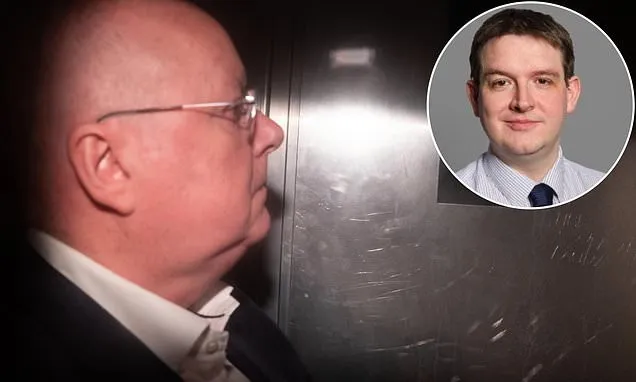
A potential investigation by members of the House of Lords into the Peter Murrell affair could represent a significant political embarrassment for the Scottish National Party (SNP). This development comes as the SNP has historically advocated for the abolition of the House of Lords, viewing it as an outdated symbol of inherited privilege.
Potential House of Lords Inquiry into Murrell Affair
Reports indicate that peers in the House of Lords are considering launching an inquiry into the scandal surrounding Peter Murrell, the former chief executive of the SNP. Murrell was found to have misappropriated party funds over a period of 12 years. His wife, former First Minister Nicola Sturgeon, has stated she had no reason to suspect his actions. The controversy has gained renewed attention as Ms. Sturgeon promotes her recently published memoir.
The situation presents a complex dynamic for current SNP leader John Swinney, as well as for Scottish Labour leader Anas Sarwar, who is also a member of the House of Lords and a UK Government minister. While Mr. Sarwar, like many, has expressed support for abolishing the upper chamber, the Lords are now emerging as a potential body to investigate matters that the Scottish Parliament has thus far declined to examine closely.
A senior crossbench peer, speaking anonymously due to the sensitive nature of the discussions, expressed the sentiment that “Something must be done to clear the matter up – it does no good to have it hanging over everyone’s head.” This indicates the seriousness with which the potential inquiry is being considered by members of the House of Lords. The willingness of the Lords to step into this void highlights concerns about accountability within Scotland’s devolved institutions when the Scottish Parliament itself has not initiated such a probe.
Scottish Parliament’s Stance on an Inquiry
The Scottish Parliament has previously rejected proposals for an inquiry into the Peter Murrell affair. Mr. Swinney, in his capacity as leader, along with allies in the Scottish Greens, has opposed further investigation. Critics argue that this stance has prevented a thorough public examination of how significant sums of money were allegedly diverted from the SNP’s funds, reportedly exceeding £400,000, without the knowledge of key figures, including Ms. Sturgeon.
The fraud allegedly continued even after police investigations began, leading to a costly inquiry that has reportedly cost taxpayers millions of pounds. While the exact source of the misappropriated funds is still debated, much of it is understood to have come from SNP membership fees. A separate issue involves a £660,000 referendum fund, which supporters believed was ring-fenced but the SNP has acknowledged was used for “ongoing activities.” While police and prosecutors did not consider this specific use a crime, it was a factor that contributed to the wider investigation into Murrell’s financial dealings, which included the purchase of a motorhome valued at £124,000.
Allegations also persist regarding a potential £1.5 million that may have gone missing from an earlier independence referendum campaign funding a decade ago. The prevailing response from the SNP and the Scottish Greens has often been to suggest that the matter is resolved and that it is time to move forward.
Broader Implications for Accountability
The prospect of the House of Lords intervening is seen by some as a stark reflection on the Scottish Parliament’s perceived failure to address these issues adequately. It raises questions about the effectiveness of devolved accountability mechanisms when an unelected, upper legislative chamber might be the only body willing and able to conduct a thorough investigation.
Beyond the potential Lords inquiry, Members of Parliament on the Scottish Affairs Committee in the House of Commons are also reportedly considering a similar investigation into “Murrellgate.”
Nicola Sturgeon’s Memoir and Internal Party Dynamics
Peter Murrell is currently serving a prison sentence. Meanwhile, Nicola Sturgeon has released a new edition of her memoir, “Frankly.” The updated version includes a foreword where she reportedly criticizes John Swinney’s leadership and praises the Greens. This has been interpreted by some as contributing to internal party friction.
During the initial publication of her memoir, Murrell had not yet admitted guilt, and Ms. Sturgeon was limited in what she could disclose due to ongoing legal proceedings. Although there are no longer legal restrictions on publishing her statement to the police investigation (Operation Branchform), she has not yet released it. Reports suggest that law enforcement officials felt her previous statement did not fully address all their questions.
Ms. Sturgeon’s recent commentary in her memoir has drawn criticism, even from her former chief of staff, Liz Lloyd, who suggested that while Ms. Sturgeon might be respected within the SNP, Mr. Swinney is more widely liked. Ms. Lloyd’s comments imply a division in perception, with Ms. Sturgeon potentially viewed as a more divisive figure currently.
The article also touches upon a controversial statement made by Green MSP Q Manivannan regarding the ‘spectrum’ of rape offenses, suggesting that such remarks do not align with a hopeful outlook for election campaigns. Furthermore, it references perceived shortcomings during Ms. Sturgeon’s tenure as First Minister, including the handling of transgender reforms and educational attainment gaps.
Conclusion: A Call for Transparency
The ongoing saga surrounding Peter Murrell and the SNP’s finances underscores a broader concern about accountability within Scotland’s political landscape. The potential intervention by the House of Lords, an institution the SNP seeks to abolish, highlights what critics describe as a vacuum in oversight at the devolved level. For confidence in public life to be restored, it is argued that a comprehensive examination of these events is necessary, ensuring that those responsible are held accountable. Until the questions surrounding the Murrell affair are fully resolved, the impact on Scotland’s public trust is likely to persist.