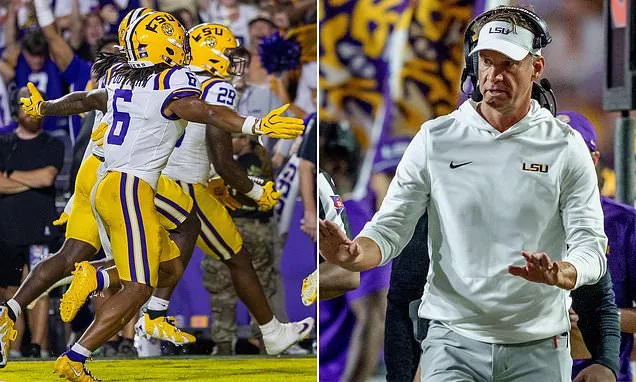
The Southeastern Conference (SEC) has escalated its legal conflict with Louisiana State University (LSU), seeking the authority to expel the school from the league. This development comes as the conference amended its federal lawsuit against LSU, with a meeting scheduled to determine the potential termination of LSU’s membership.
SEC’s Legal Maneuvers and Expulsion Threat
The SEC filed an amendment to its federal lawsuit against LSU in Alabama last Thursday. Reports indicate a meeting was scheduled for Thursday to vote on whether to terminate LSU as a member institution. SEC rules stipulate that a two-thirds majority vote of the conference’s presidents is necessary to expel a member school.
In a statement, the SEC emphasized its right to establish and enforce governance procedures for its member universities. “A commitment to those rules, and to the core principles of the Southeastern Conference, is an essential element of SEC membership,” the conference stated. “Today’s filing is necessary to defend that right and preserve the Conference’s ability to govern competition among its members.”
Lane Kiffin Interview Cited as Evidence
The amended complaint notably includes a halftime interview given by Ole Miss head coach Lane Kiffin during LSU’s dominant 51-10 victory over Clemson. Kiffin’s comment, “Imagine if we had pro players,” made during the broadcast on ABC, is being used by the SEC as evidence.
According to the amended complaint, Kiffin’s remarks “stand in sharp contrast to the silence by the President and Athletic Director of LSU” and “confirm the lack of institutional control over the athletics program at LSU that is required by Article 6 of the SEC Constitution and by the remaining provisions of the Constitution and Bylaws.”
Background: The Player Eligibility Dispute
The core of the dispute revolves around LSU’s ability to roster and play athletes who have previously been professional players. A Louisiana judge recently issued a preliminary injunction against the NCAA, which appeared to clear the way for LSU to include such players. East Baton Rouge Parish Judge William Jorden’s ruling came just before LSU was required to submit its roster to the SEC.
LSU had initially omitted former NFL players Zxavian Harris and Dae ́Quan Wright from its initial roster submission. Tony Clayton, an attorney representing the athletes involved, expressed satisfaction with the judge’s decision, stating, “It ́s not about coach Kiffin. It ́s not about LSU. It ́s about treating these kids fairly.” He further characterized the SEC’s stance as being forced to accept an unfavorable outcome, comparing it to being made to “eat” a “cold cup of gumbo.”
The hearing that led to the injunction involved athletes testifying about their eligibility for a fifth college season, particularly after having pursued professional careers. The SEC Commissioner, Greg Sankey, argued against these athletes’ eligibility.
SEC’s Federal Lawsuit and Penalties
The SEC’s federal lawsuit against LSU, filed in Alabama, alleges that the university “waged a deliberate and coordinated campaign to recruit professional athletes” in violation of league rules. This action was taken while SEC Commissioner Greg Sankey was testifying in a separate case concerning the NCAA’s authority.
Sankey testified for over two hours, defending the SEC’s authority to enforce its rules against former professionals returning to college sports, as well as new penalties including fines, coach suspensions, and loss of voting privileges for member universities. He stated that SEC university presidents had voted 15-0 in favor of these penalties, with LSU abstaining.
The athletes involved argue that they signed professional contracts because the rules allowing for an additional college season were not yet in place at the time of their decisions. The SEC, however, maintains that the central issue is whether the conference can enforce its own rules among its member institutions.
Official Reactions
Louisiana Attorney General Liz Murrill, who filed a brief supporting the athletes, was present at the hearing. Following the proceedings, she publicly dismissed the SEC’s federal lawsuit against LSU as “legal garbage” and “frivolous,” vowing to “continue to do everything we can to protect the school from those threats.”
SEC Commissioner Sankey’s testimony highlighted the conference’s concern about maintaining a clear distinction between professional and college sports and preventing the displacement of incoming athletes from limited roster spots. He emphasized the need for accountability for schools that recruit professional athletes back into the college system.
Conclusion
The escalating legal battle between the SEC and LSU underscores a significant conflict over institutional control, player eligibility, and the enforcement of conference rules. The SEC’s pursuit of expulsion powers and its use of a coach’s interview as evidence signal a determined effort to uphold its governance structure, while LSU and its supporters view the conference’s actions as an overreach.